


Featured Choice



What customers say
★★★★★ 5.0 · 4 reviews
 Velpeau EpBloc Classic Shoulder Immobilizer
“Comfortable, supportive, ideal for recovery!”
“The Velpeau Shoulder Sling EpBlock Classic is incredibly comfortable and offers great support. It helped me...”
 Velpeau Epi Comfort Elbow Support for Tennis & Golfer’s Elbow
“Comfortable, supportive, perfect for relief!”
“The Elbow Support Epi Comfort from Velpeau France is fantastic! It offers great support and relief without ...”
Elbow Support for Home Use: Tennis Elbow & Shoulder Care
Elbow Support for Home Use: Tennis Elbow, Arm Sling & Shoulder Care
Elbow support for home use can make everyday tasks feel more manageable when your arm needs extra stability, gentle compression, or a reminder to avoid overuse. Whether you are comparing a tennis elbow support, an elbow sleeve, a tennis elbow strap, or a related option such as an arm sling or shoulder immobilizer, the right choice depends on your symptoms, your activity level, and your doctor’s guidance. This guide explains how people use common supports at home, what to look for, and how to wear them safely without making unsupported claims about outcomes.
Consult your doctor before using an elbow support, shoulder brace, arm sling, shoulder immobilizer, shoulder support belt, shoulder T pulley, or elbow CPM machine, especially if symptoms are new, severe, worsening, or linked to an injury.


What does elbow support for home use actually do?
Elbow support for home use adds external support around the elbow and forearm so the joint and surrounding soft tissues are not left to handle every movement without guidance. Depending on the style, it may provide compression, help limit irritating motion, apply targeted pressure near the forearm muscles, or remind you to reduce gripping, lifting, twisting, or repetitive strain.

An elbow brace, elbow sleeve, tennis elbow strap, and golfer's elbow brace are not all the same. Some are simple compression sleeves. Others use straps or pads to apply more focused pressure. A firmer elbow brace may provide more structure than a sleeve, while a tennis elbow strap is usually smaller and more targeted.
At home, people often consider elbow support for pain related to repetitive use, sport, desk work, lifting, gardening, cooking, or household tasks. Support can be useful as part of a broader care plan, but it should not replace professional assessment. If you have swelling, numbness, weakness, visible deformity, unexplained bruising, fever, or symptoms after a fall, get medical advice before relying on any support.
Common reasons people consider elbow support
Elbow discomfort often builds gradually. A person may notice irritation when gripping a mug, turning a doorknob, lifting a bag, typing, using tools, or playing racquet and throwing sports. Support can help reduce unnecessary strain during those repeated movements, but choosing the right design matters.
Tennis elbow support for outer elbow strain
Many people link tennis elbow with irritation around the outside of the elbow and forearm muscles used for gripping and wrist extension. You usually wear a tennis elbow support or tennis elbow strap below the elbow on the upper forearm, where it can apply focused pressure to the muscle area involved in gripping tasks. The goal is not to immobilize the whole elbow; it is to reduce stress during specific movements.
A tennis elbow strap can be useful for activities that involve repeated gripping, lifting, or wrist motion. For example, someone may wear it while doing light household chores, using a computer mouse, or returning gradually to recreational activity under guidance. It should feel supportive, not sharp, pinching, or restrictive.
Golfer's elbow brace for inner elbow irritation
People often use a golfer's elbow brace when they feel discomfort closer to the inner side of the elbow, where forearm muscles involved in wrist flexion and gripping attach. Like a tennis elbow strap, this style usually focuses on targeted pressure rather than full-joint immobilization. Placement may differ depending on where symptoms occur and how your doctor or therapist advises you to wear it.
Because inner elbow symptoms can overlap with nerve irritation or other conditions, do not guess if you have tingling, finger numbness, weakness, or symptoms traveling down the arm. In that case, professional guidance is especially important.
Elbow sleeve for compression and everyday awareness
An elbow sleeve is a flexible support that slides over the joint and provides gentle compression. People who want a low-profile option for general support during daily movement may prefer it. A sleeve can also help remind you not to overextend, lean heavily on the elbow, or repeat movements that worsen discomfort.
Sleeves vary in thickness, elasticity, and warmth. A lighter sleeve may be easier to wear during routine tasks, while a thicker sleeve may feel more supportive. The best choice is the one that fits correctly, stays in place, and does not interfere with safe circulation or normal sensation.
Elbow brace for added structure
An elbow brace usually offers more structure than a sleeve. Some braces use adjustable straps, shaped supports, or stabilizing features to limit specific movements. This can be helpful when simple compression is not enough, but it also means fit and correct use become more important.

The Velpeau Epi Comfort is an available elbow support option to consider when you want a support designed specifically for the elbow area. As with any elbow support, the practical value depends on matching the product to your needs, wearing it correctly, and using it as part of a plan that respects your doctor’s advice.
What is the difference between an elbow brace and a sleeve?
The difference between an elbow brace and a sleeve is mainly the level and type of support. An elbow sleeve usually provides broad, gentle compression around the joint, while an elbow brace often adds adjustable straps, firmer structure, or targeted pressure to influence how force travels through the elbow and forearm.
A sleeve may be enough when you want mild compression, warmth, and body awareness during routine movement. It is often easier to put on, less bulky, and simple to wear under loose clothing. However, it may not provide the targeted pressure some people want for tennis elbow or golfer’s elbow discomfort.
An elbow brace may be better when you need more control, a more adjustable fit, or pressure focused near the forearm muscles. A tennis elbow strap is a smaller type of support that focuses on a specific area rather than covering the whole elbow. A golfer's elbow brace may work similarly but you position it according to the affected side and your guidance plan.
To compare them, think in terms of purpose:
- Elbow sleeve: broad compression, joint awareness, low-profile comfort, simple everyday use.
- Tennis elbow strap: targeted forearm pressure for activity-related irritation, often used for tennis elbow support.
- Elbow brace: more structure, adjustability, and support than a sleeve, depending on design.
- Arm sling: temporary arm support when you should reduce movement or the arm needs to rest at the side.
- Shoulder immobilizer: more restrictive shoulder and arm positioning when directed by a doctor.
If you are unsure, start with the question your body is asking. Do you need gentle compression, targeted pressure, or stronger motion control? Your answer can narrow the category before you compare features.
How to choose elbow support for pain at home
Choosing elbow support for pain begins with identifying where symptoms occur, which activities aggravate them, and what kind of support your doctor recommends. The best support is not always the firmest one. It is the one that fits your situation, helps you move more confidently, and does not create new discomfort.

Match the support to the symptom location
Outer elbow pain often leads people to research tennis elbow support, tennis elbow strap options, or a forearm-style tennis elbow strap. Inner elbow pain may lead to a golfer's elbow brace. More general elbow discomfort may call for an elbow sleeve or adjustable elbow brace.
Location alone does not confirm a diagnosis. Nerve-related symptoms, joint irritation, tendon issues, and referred discomfort can feel similar. If your symptoms are intense, changing, or confusing, avoid self-diagnosis and ask a professional.
Think about the tasks you need to do
Home use covers many different activities. Someone who types for long periods may need a low-profile elbow sleeve that does not get in the way. People who lift household items may prefer a tennis elbow strap during specific tasks. Someone advised to reduce motion may need a more structured elbow brace.
Before buying or using support, list the activities that bother your elbow most:
- Opening jars or turning handles
- Carrying grocery bags or laundry baskets
- Typing, gaming, or using a mouse
- Cooking, chopping, stirring, or lifting pans
- Gardening, cleaning, or using hand tools
- Racquet sports, golf, throwing, or gym exercises
- Leaning on the elbow while reading or working
This list helps you choose a support that fits real life rather than a support that only looks good in theory.
Prioritize adjustability and comfort
An elbow support should be adjustable enough to stay secure without cutting into the skin. Straps should lie flat, and edges should not dig into the arm. If the support slips constantly, you may tighten it too much to compensate, which can create irritation or circulation problems.
Comfort also includes temperature and skin tolerance. Some materials feel warm, which may be pleasant for short periods but annoying during active chores. If your skin is sensitive, inspect it regularly and stop using the support if you notice rash, rubbing, unusual marks, or increased discomfort.
Choose a design you will actually use
A support only helps if you can wear it correctly and consistently according to your plan. Complicated braces may be less useful if you avoid putting them on. A simple sleeve may be more practical for light daily use, while a strap may be better for specific tasks that trigger discomfort.
Think about one-handed application, washing, clothing compatibility, and whether the support interferes with safe movement. If you need help putting it on, plan for that before you rely on it during daily routines.
Elbow support fit checklist
Fit is one of the most important parts of safe home use. A poorly fitted support may slide, bunch, pinch, or encourage awkward movement. Use this checklist as a practical starting point, then follow any instructions provided by your doctor.
- Position: The support should sit where it is intended to sit. A tennis elbow strap is not usually centered over the elbow joint; you typically place it on the upper forearm according to guidance.
- Pressure: It should feel secure and supportive, not painful, sharp, or numbing.
- Circulation: Fingers should stay warm and normally colored. Remove the support if your hand becomes cold, pale, bluish, swollen, or tingly.
- Movement: You should be able to move in the way your care plan allows. If the support blocks necessary safe movement or encourages awkward compensation, reassess the fit.
- Skin: Check for rubbing, pressure marks that linger, rash, or irritation.
- Stability: The support should not slide down repeatedly during ordinary movement.
- Function: You should still be able to complete appropriate tasks safely without gripping harder or changing posture in a way that stresses the shoulder, wrist, or neck.
If a support feels better only when tightened aggressively, it may be the wrong size or style. More compression is not automatically better.
How tight should an elbow support be?
An elbow support should be snug enough to stay in place and provide the intended support, but loose enough that it does not cause numbness, tingling, throbbing, skin changes, or swelling in the hand or forearm. You should feel supported, not squeezed.

For an elbow sleeve, the fabric should make even contact around the arm without rolling, bunching, or digging in. If it leaves deep marks, restricts normal sensation, or makes your fingers feel different, remove it and reassess the size. A sleeve that slides down may be too large, stretched out, or not shaped well for your arm.
For a tennis elbow strap, placement and pressure matter more than force. Many people overtighten a tennis elbow strap because they expect stronger pressure to work better. In reality, excessive pressure can irritate tissue or affect circulation. The strap should feel like a controlled contact point, not a clamp.
For an adjustable elbow brace, tighten straps gradually and evenly. Bend and straighten the elbow within the movement range allowed for you. If the brace shifts, pinches, or creates pressure at one edge, readjust before continuing activity.
A simple rule is useful: if you notice numbness, tingling, coldness, color change, increasing discomfort, or swelling, remove the support and seek advice. Support should never make your arm feel worse.
Does an elbow brace help tennis elbow?
An elbow brace may help some people with tennis elbow by applying support or targeted pressure that can reduce strain during gripping and wrist-related tasks. It is best viewed as one part of a broader approach that may include activity changes, exercise guidance, workload adjustments, and medical advice.
A tennis elbow support is often used during activities that bring on pain, such as lifting, carrying, typing, or sports. The support may help you stay aware of arm position and reduce overloading movements. However, do not treat it as permission to push through worsening discomfort.
A tennis elbow strap is a common option because it is small, adjustable, and focused. Placement is important. If the strap sits too close to the painful spot, too far down the forearm, or too tight, it may not feel helpful. If you are using a tennis elbow strap for the first time, ask for guidance so you learn the correct position.
You can consider the Velpeau Epi Comfort when you want an elbow support option for home use. As with any elbow brace, read the product instructions, monitor fit, and use it only in a way that suits your situation. Do not treat any brace as a standalone answer for persistent or worsening pain.
Practical ways to use elbow support at home
An elbow support works best when paired with smarter movement habits. The goal is to reduce unnecessary strain while keeping safe, appropriate movement in your day. At home, that often means changing how you lift, grip, type, cook, clean, and rest.
Use support during aggravating tasks
Many people do not need support for every quiet moment. Instead, they may use an elbow sleeve, tennis elbow strap, or elbow brace during activities that tend to irritate the arm. This might include carrying bags, using hand tools, preparing meals, doing laundry, or working at a keyboard.
Pay attention to what happens during and after activity. If a task still aggravates your elbow even with support, modify the task instead of tightening the support. Smaller loads, two-handed lifting, lighter tools, and more neutral wrist positions can make a meaningful difference.
Reduce gripping force
Elbow pain often flares when the hand grips harder than necessary. This can happen with a computer mouse, phone, steering wheel, kitchen knife, garden tool, or exercise equipment. Support may help, but the habit still matters.
Try holding objects with a relaxed grip when safe. Use larger handles when available. Keep your wrist more neutral rather than bent strongly up or down. When lifting, bring the item closer to your body and avoid twisting the forearm under load.
Adjust your workspace
Desk habits can contribute to elbow and forearm strain. If your elbows are constantly bent tightly, pressed against a hard edge, or floating unsupported while typing, irritation can build. An elbow sleeve may remind you to change position, but the setup should also be addressed.

Consider these adjustments:
- Keep the keyboard and mouse close enough that your shoulders stay relaxed.
- Avoid leaning directly on the elbow for long periods.
- Let the wrist stay neutral rather than cocked upward.
- Use a light touch on keys and mouse buttons.
- Change arm position regularly instead of locking into one posture.
These changes are simple, but they can reduce repeated stress that support alone cannot solve.
Respect symptoms during chores and hobbies
Household tasks can be surprisingly demanding on the elbow. Scrubbing, wringing towels, carrying baskets, chopping food, and using screwdrivers all involve gripping and forearm rotation. A tennis elbow support or golfer's elbow brace may be useful for selected tasks, but pacing still matters.
Break demanding work into smaller portions. Switch hands when safe. Use both hands for heavier items. If pain increases, stop and reassess rather than forcing your way through the task.
How long should you wear an elbow support?
How long you should wear an elbow support depends on why you are using it, the type of support, your symptoms, and your doctor’s advice. It is generally better to follow a specific plan than to wear support continuously without reassessment.
Some people use an elbow sleeve or tennis elbow strap only during activities that provoke pain. A doctor may advise others to use a more structured elbow brace in a more controlled way. The right pattern depends on your condition, your daily demands, and how your arm responds.
Avoid using support as a way to ignore warning signs. If discomfort increases while wearing it, if your hand feels numb or cold, or if swelling appears, remove it and seek advice. If you feel dependent on the support for basic tasks or symptoms persist, your plan may need adjustment.
It is also important not to let support replace movement habits, strength work, flexibility work, or other guidance you have received. Over-reliance can sometimes make people avoid using the arm appropriately. The aim is balanced support, not unnecessary restriction.
Can you sleep with an elbow support on?
You should only sleep with an elbow support on if your doctor has advised it and the support is appropriate for overnight use. During sleep, you are less able to notice tightness, numbness, skin pressure, or circulation changes, so fit and professional guidance matter.
Some people bend their elbows tightly while sleeping, lean on the arm, or wake with discomfort. In those cases, they may wonder whether a sleeve or brace could help. The answer depends on the reason for symptoms. A soft elbow sleeve is very different from a structured elbow brace, and a device that feels fine while awake may feel restrictive after prolonged stillness.
If you are told to use support at night, make sure you understand how it should fit, what warning signs to watch for, and when to stop using it. Do not improvise by tightening straps more firmly before bed. A support that affects circulation or sensation is not safe simply because you are resting.
When should you use an arm sling?
You should use an arm sling when a doctor recommends supporting the arm close to the body, limiting certain movements, or reducing the effort required to hold the arm up after an injury or procedure. An arm sling is not the same as an elbow support because it supports the whole arm rather than applying compression or targeted pressure around the elbow.

At home, an arm sling may help remind you not to reach, lift, or swing the arm during daily movement. An arm sling can also reduce the need to actively hold the arm in position. However, wearing an arm sling without guidance may lead to stiffness, awkward posture, or unnecessary dependence.
If you are using an arm sling, check that the arm sling supports the wrist and hand and that the neck strap does not dig in. Keep your shoulders relaxed. Ask your doctor which hand, wrist, or finger movements are appropriate for you while you use the arm sling.
Shoulder brace, shoulder support belt, and shoulder immobilizer basics
Shoulder products are related to elbow and arm care, but they serve a different purpose. You may use a shoulder brace or shoulder support belt to support shoulder positioning or remind you to limit certain movements. A shoulder immobilizer is generally more restrictive and doctors use it when the shoulder and arm need to stay in a specific position under medical direction.
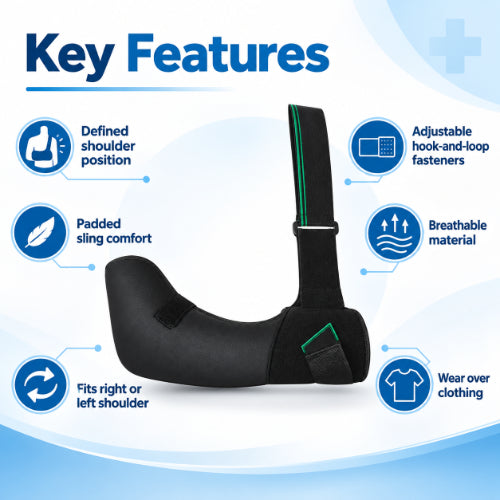
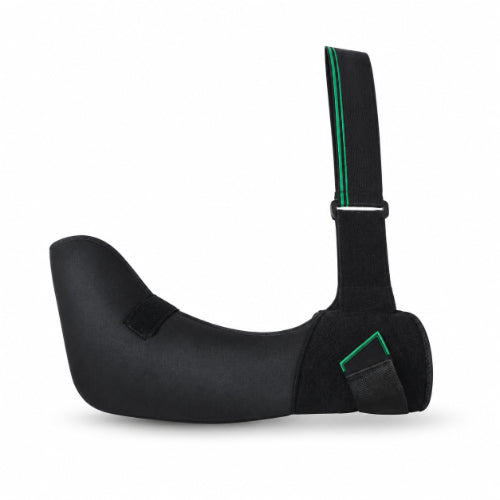
The Velpeau EpBloc is an available shoulder immobilizer option. This shoulder immobilizer is not a substitute for an elbow sleeve, tennis elbow strap, or golfer's elbow brace. This shoulder immobilizer suits situations where shoulder and arm positioning are the main concern, so you should use it according to professional instructions.
Because shoulder positioning affects the elbow, wrist, neck, and upper back, do not overtighten a shoulder immobilizer, shoulder brace, or shoulder support belt. Watch for tingling, hand swelling, neck strain, or increased discomfort. If a shoulder immobilizer changes the way you carry your arm, your elbow may also need monitoring.
Brief note on shoulder T pulley and elbow CPM machine
A shoulder T pulley and an elbow CPM machine are different from wearable supports. A shoulder T pulley typically supports guided shoulder movement exercises, while an elbow CPM machine moves the elbow through controlled motion according to a prescribed plan. Use these items only with clear instruction.

At home, the key issue is not simply having the equipment; it is knowing the correct setup, motion range, body position, and stopping points. If movement causes sharp symptoms, numbness, dizziness, or unusual swelling, stop and seek guidance. Do not increase resistance, range, or use pattern on your own.
Safe home-use habits for elbow support
Good habits make elbow support more useful and lower the chance of avoidable irritation. The support should work with your daily routine, not fight against it. Take a few moments each time you put it on to check placement and comfort.
A simple home-use routine
- Check your skin first. Do not place support over irritated skin, open areas, or areas with unusual swelling unless your doctor has directed you.
- Position the support carefully. A sleeve, strap, and brace each sit differently, so follow the design and your guidance.
- Tighten gradually. Start lighter, then adjust until the support stays in place without squeezing.
- Test gentle movement. Move through the range allowed for you and notice any pinching, slipping, or numbness.
- Use it for the intended task. Wear the support for the activity or purpose recommended, not as a reason to overload the arm.
- Recheck during use. If your hand changes color, feels cold, tingles, or swells, remove the support.
- Clean and inspect it. Follow care instructions so fabric, straps, and closures continue to function properly.
Warning signs to take seriously
Remove the support and seek advice if you notice:
- New numbness or tingling
- Hand or finger swelling
- Skin color changes
- Coldness in the hand
- Increasing discomfort while wearing the support
- A support that leaves deep or painful marks
- Weakness that is new or worsening
- Symptoms after a fall or sudden injury
These signs do not automatically mean something serious is happening, but they do mean the support is not something to ignore.
Mistakes to avoid when using elbow support
Most mistakes come from trying to make a support do more than it is meant to do. A brace or sleeve can be helpful, but it cannot compensate for poor fit, excessive strain, or missing medical guidance.
Tightening it too much
A very tight elbow support may feel secure at first, but it can create pressure problems. Numbness, tingling, swelling, throbbing, or skin marks are signs that the fit needs attention. Support should be firm enough to stay put, not so tight that it changes sensation or circulation.
Wearing the wrong type for the task
A tennis elbow strap targets one area. An elbow sleeve is broader and softer. A structured elbow brace provides a different level of control. If you use the wrong style, you may not get the support you expect and may compensate with awkward movement.
Ignoring the wrist and shoulder
The elbow does not work alone. Wrist position, grip strength, shoulder posture, and neck tension all influence how force moves through the arm. If your elbow support helps only briefly, look at the full movement pattern instead of focusing only on the sore spot.
Continuing activities that worsen symptoms
Support is not a license to push through tasks that keep aggravating your arm. If a movement repeatedly increases discomfort, modify it. Use lighter loads, better posture, two hands, different tools, or more breaks.
Skipping professional advice
Home supports are easy to buy and use, but that does not mean every symptom is simple. If symptoms are persistent, severe, spreading, or linked with weakness or numbness, get professional input. A short conversation can prevent a lot of guessing.
Comparing elbow support options at a glance
| Option | Best suited for | Main advantage | Watch-outs |
|---|---|---|---|
| Elbow sleeve | General compression and awareness | Easy to wear, low profile, broad support | May not provide targeted pressure |
| Tennis elbow strap | Outer elbow and forearm strain during gripping tasks | Focused pressure, compact design | Placement and tightness are important |
| Golfer's elbow brace | Inner elbow irritation related to gripping or wrist motion | Targeted support for specific activity patterns | Symptoms may overlap with nerve irritation |
| Elbow brace | More structure and adjustability | Can offer firmer support than a sleeve | Must fit well and not restrict circulation |
| Arm sling | Supporting the whole arm when advised | Helps hold the arm close to the body | Not a substitute for elbow compression or targeted support |
| Shoulder immobilizer | Limiting shoulder and arm movement when directed | More restrictive positioning | Should be used with clear professional guidance |
This comparison is a starting point, not a diagnosis. The right choice depends on your symptoms, your activity demands, and the instructions you have received.
Building a practical elbow support plan
A good plan is simple enough to follow. It should answer four questions: what support you are using, when you are using it, what activities you are modifying, and what signs mean you should stop or ask for help.
Start by identifying your main trigger activities. Then choose the least restrictive support that matches your need. For some people, that may be an elbow sleeve during computer work. For others, it may be a tennis elbow strap during lifting tasks or a more structured elbow brace for added stability.
Next, pair the support with movement changes. If cooking bothers your elbow, use lighter pans, keep the wrist neutral, and avoid forceful stirring. When typing is the issue, bring the keyboard closer, relax your shoulders, and avoid resting directly on the elbow. If sports are the trigger, reduce intensity and return gradually only with suitable guidance.
Finally, review how your arm responds. If support helps you complete light tasks with less aggravation, it may be a useful tool. If discomfort continues to worsen, spread, or interfere with ordinary function, the plan needs reassessment.
Conclusion
Elbow support can be a practical home-use tool when it is chosen carefully, fitted correctly, and used with sensible activity changes. An elbow sleeve, tennis elbow support, tennis elbow strap, golfer's elbow brace, or adjustable elbow brace each serves a different purpose, so the best choice depends on where discomfort occurs and what your daily routine demands.
Keep arm sling and shoulder immobilizer options in perspective: they support different needs, so use them only when appropriate. The Velpeau Epi Comfort, Velpeau EpBloc, shoulder T pulley, and elbow CPM machine may each have a role in the right context, but none can substitute for medical advice. For safe, confident home use, choose support that fits well, monitor your symptoms, and consult your doctor whenever you are unsure.
Explore more supports and rehab aids
Orthopedic supportsPhysiotherapy equipmentPain relief devicesHand exercisers
Explore Medical Collections
All Categories
Abdominal & Maternity Support

Accessories

Accu-Chek Instant Strips: Use, Compatibility, Price & Blood Sugar Testing Guide
Accu-Chek Instant Strips: Uses, Features & Complete Guide

accupuncture

Acupuncture Needles & Supplies

Advanced Physiotherapy Machines & Lumbar Physiotherapy

Airways

Ambulance

Anatomy Models
Anesthesia Machine

Anesthesia Products

Ankle Support for Home Use: Braces, Sleeves & Walker Boots

Ankle Weights & Exercise Weights for Home & Rehab

Anti-Bedsore Air Mattresses
You may also need
FOR YOURecommended for you