


Featured ChoiceSave 18%
Save 50%
About this collection
A medicine ball is a weighted exercise ball that can add resistance to home workouts, strength training, core exercises and selected physiotherapy routines. Unlike a large inflatable gym ball, this compact training tool is designed to be held, lifted, rotated, passed or used during controlled throwing exercises.
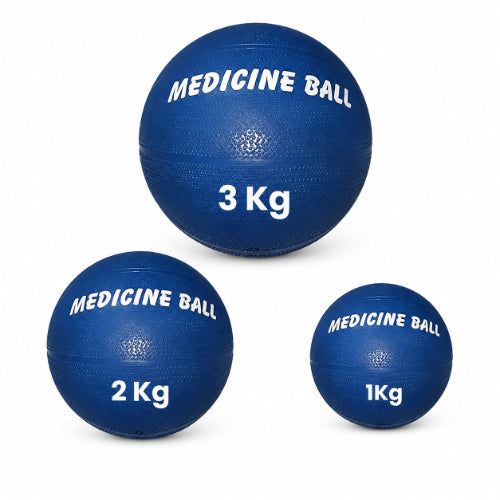
Meddey offers options for users who want simple home exercise as well as progressive resistance training. You can choose a lightweight 1 kg ball or a 1 kg, 2 kg and 3 kg combination set depending on your strength, exercise plan and experience.
Quick Guide to Choosing a Medicine Ball
- New to weighted exercise: Start with a lighter weight that you can control comfortably.
- Simple home workouts: A 1 kg option can suit basic strength, movement and beginner exercises.
- Progressive resistance: A 1 kg, 2 kg and 3 kg set lets you change the load according to the exercise.
- Core training: A weighted ball can add resistance to selected twists, holds and full-body movements.
- Sports practice: Suitable models can support controlled passing and throwing exercises.
- Physiotherapy: Follow the weight and movement recommended by your physiotherapist when recovering from an injury.
What Is a Medicine Ball?
A medicine ball, sometimes called a med ball or weighted exercise ball, is used to add resistance during exercise. Resistance simply means that your muscles need to work against an extra load while you move.
The ball can support several types of exercise. You may hold it during a squat, press it away from the body, rotate with it under control or use a suitable model for partner passing.
Its compact size makes it useful for households where there is not enough space for large exercise machines. The same equipment can also support different upper-body, lower-body and core movements.
Medicine Ball for Home Workouts
A medicine ball can be practical for home exercise because it requires little storage space. Many basic movements can be performed without a large gym setup.
For smaller rooms, controlled movements such as squats, presses and simple rotations are easier to manage than fast throwing drills. If you want to pass or throw the ball, make sure you have enough clear space around you.
Keep furniture, glass and other breakable objects away from the training area. A non-slip floor and suitable footwear can also help you exercise with better control.
How to Choose the Right Weight
Choosing the correct resistance is more important than simply buying the heaviest option. The weight should challenge you without making your movement uncontrolled.
Beginners may find a lighter ball easier when learning technique. As strength and confidence improve, resistance can increase gradually.
| Weight | May Suit | Typical Use |
|---|---|---|
| 1 kg | Beginners, light exercise and guided rehabilitation | Basic holds, controlled movement, light presses and technique practice |
| 2 kg | Users ready for moderate resistance | Core work, squats, presses and regular fitness routines |
| 3 kg | Users with stronger movement control | More challenging strength and conditioning exercises |
These examples are general buying guidance rather than fixed rules. The right resistance depends on your strength, technique and the specific exercise you plan to perform.
Compare Meddey Weighted Exercise Balls
Medicine Ball Exercise Ball – 1 kg
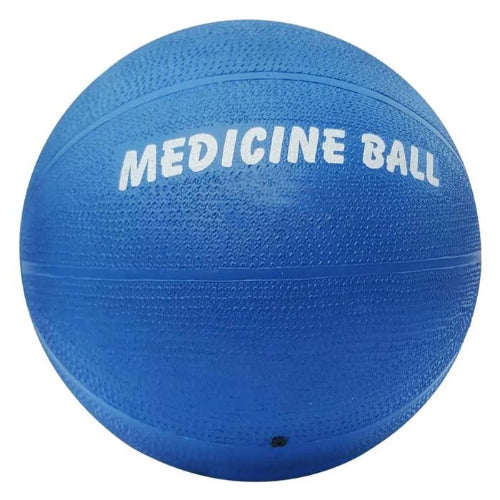
The Meddey 1 kg model is a rubber weighted ball with a textured outer surface designed to provide grip. Its compact design makes it suitable for basic home and gym exercise.
Users can include it in controlled squats, trunk rotations, presses, sit-up variations and selected passing movements. Its lighter resistance can make it a practical choice when a full multi-weight set is not required.
View 1 kg Medicine Ball1 kg, 2 kg & 3 kg Exercise Ball Combo
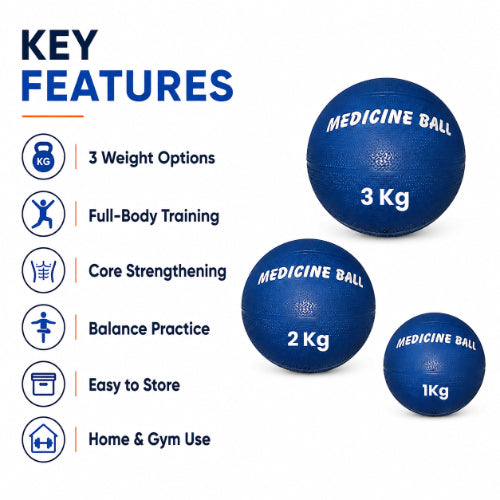
The three-piece set gives users several resistance levels in one package. It includes 1 kg, 2 kg and 3 kg balls, allowing you to select a lighter or heavier load according to the movement.

The set may suit families with more than one user, people who want to progress over time, fitness centres and physiotherapy clinics that need different resistance options.
View 1 kg, 2 kg & 3 kg ComboBeginner Exercises with a Weighted Ball
Adding resistance can make familiar exercises more challenging. Start slowly and learn the movement before attempting fast or powerful drills.
Weighted Squat
Hold the ball close to your chest and perform a controlled squat. The extra load increases resistance while the legs and trunk work together to maintain posture.
Standing Press
Hold the ball near your chest, press it forward smoothly and then bring it back toward your body. Avoid sudden or uncontrolled movement.
Controlled Trunk Rotation
Hold the ball with both hands and rotate gently from side to side within a comfortable range. The movement should remain controlled instead of forcing the lower back.
Seated Exercise
Some people may begin with seated movements when standing balance is limited. During rehabilitation, the exact movement and resistance should follow professional advice.
Using a Medicine Ball for Core Training
Core muscles help control the trunk while you move. A medicine ball can increase the resistance these muscles manage during selected holds, rotations, squats and full-body exercises.
More weight does not automatically mean better core training. Good posture, steady breathing and controlled movement matter more than choosing the heaviest available ball.
For other balance and strengthening options, you can also explore Meddey's Core Strengthening collection.
Strength and Fitness Training
A weighted exercise ball can involve the arms, shoulders, trunk and legs depending on the movement. This makes it useful for more than abdominal exercise alone.
Lighter resistance may suit technique practice and controlled movement. A heavier option can increase the challenge once the user can maintain good form.
If you are comparing this type of training with traditional weights, browse Meddey's Weights collection for dumbbells, weight cuffs and related strengthening equipment.
Medicine Ball for Physiotherapy and Rehabilitation
Physiotherapists may use a medicine ball during selected strength, balance, coordination and functional exercises. Functional exercise simply means practising movements that can relate to everyday tasks such as lifting, reaching, turning or standing.
The correct resistance depends on the person's ability and stage of recovery. Someone recovering from surgery or injury should follow a personalised rehabilitation plan rather than copying a general fitness workout.
For additional therapy equipment, visit Meddey's Rehabilitation collection.
Medicine Ball vs Gym Ball
These two products may sound similar, but their design and purpose are different.
A medicine ball is smaller and weighted. Users normally hold or move it to add resistance during exercise.
A gym ball, also known as a stability or Swiss ball, is much larger and inflatable. People usually sit, lie or support part of the body on it during balance, mobility and core routines.
If you need the larger inflatable type, browse Meddey's Gym Ball collection.
Weighted Ball vs Dumbbells
Both tools add resistance, but they allow different movement patterns. Dumbbells are easy to hold separately in each hand and suit many traditional strengthening exercises.
A weighted ball is often held with both hands and works naturally with rotational movements, partner passes and suitable throwing exercises.
Neither is automatically better. Your exercise goal should guide the choice.
Medicine Ball vs Slam Ball
A medicine ball should not automatically be used like a slam ball. Slam balls are specifically constructed to absorb repeated high-impact throws against the floor with very little bounce.
Weighted exercise balls vary in their materials and construction. Some support passing or throwing, while others work better for controlled resistance exercises.
Check the instructions for the exact model before performing repeated high-impact slams.
Medicine Ball Price in India
The medicine ball price can vary according to weight, material, construction and whether you buy a single ball or a multi-weight set.
A lightweight single option may cost less upfront, while a set with several weights can provide more flexibility for progressive exercise or multiple users.
Prices and offers can change over time. Use the linked Meddey product pages to check current selling prices and availability.
Safety Tips for Weighted Exercise
- Start with resistance that you can control comfortably.
- Warm up before beginning weighted exercise.
- Learn movements slowly before increasing speed.
- Keep enough open space around you for passes or throws.
- Check your grip before moving the ball quickly.
- Do not assume every weighted ball is designed for repeated slamming.
- Stop an exercise if it causes sharp or unusual pain.
- Increase resistance gradually rather than jumping to the heaviest option.
- Follow professional advice when recovering from surgery or injury.
Safety Note: Exercise should feel challenging but controlled. Stop if you develop sharp pain, dizziness or unusual discomfort. People recovering from injury, surgery or a significant health problem should ask a physiotherapist or healthcare professional which movements and resistance levels are suitable.
Medicine Ball Training for Gyms and Clinics
A medicine ball set with multiple weights can be useful in gyms and physiotherapy centres because different users may need different resistance levels.
Professional buyers should consider the available weight range, surface grip, construction and intended exercises. They should also decide whether the balls will mainly support controlled strengthening, partner work or throwing drills.
A 1 kg, 2 kg and 3 kg set creates a simple progression without requiring separate purchases for each weight.
Frequently Asked Questions
What is a medicine ball used for?
A medicine ball is a weighted exercise tool that can add resistance to strength, core, balance, coordination and suitable throwing exercises.
Which weight is suitable for beginners?
Choose a load that allows you to maintain good technique. A 1 kg option may be a practical starting point for many light movements, but the correct resistance depends on the user and the exercise.
Can I use one for home workouts?
Yes. Weighted balls are compact and can support many exercises without requiring a large home gym. Allow enough clear space if your routine includes passing or throwing.
Can it be used for core exercise?
Yes. Holding additional resistance during suitable trunk movements can make the core work harder to control the body. Good technique remains more important than using a very heavy load.
Can physiotherapists use weighted balls?
Yes. A physiotherapist may include lighter weights in selected strength, balance, coordination or movement exercises when appropriate for the patient.
What is the difference between a medicine ball and a gym ball?
A medicine ball is compact and weighted. A gym or stability ball is large, inflatable and mainly used to support balance, mobility and stability exercises.
Can the ball be thrown?
Some models can support controlled throwing and passing exercises. Check the design and product instructions first, and always use enough open space.
Can I slam it onto the floor?
Do not assume every weighted exercise ball can handle repeated hard slams. Dedicated slam balls are designed specifically for this high-impact use.
Is a heavier ball better?
No. The best resistance is one that challenges you while still allowing controlled technique. Excessive weight can make movement quality worse.
Which weights are available at Meddey?
Meddey offers a 1 kg individual option and a combination set containing 1 kg, 2 kg and 3 kg weighted exercise balls.
Choosing the Right Medicine Ball
The right medicine ball should match your exercise goals, current strength and ability to control movement. A single 1 kg option may suit basic household exercise, while a three-weight set provides more room for progression or use by several people.
Focus on suitable resistance, safe technique and the exercises you actually plan to perform. For rehabilitation, professional guidance is more useful than choosing equipment only by weight or price.
Need help choosing exercise equipment?
Contact Meddey Customer Care for current product details, availability or bulk clinic requirements.
Call / WhatsApp: +91 85860 12345
Contact Meddey Customer Care for current product details, availability or bulk clinic requirements.
Call / WhatsApp: +91 85860 12345
Exercise Disclaimer: This guide provides general product-selection and exercise information. It does not replace individual medical or physiotherapy advice. Use suitable resistance and seek professional guidance when recovering from an injury or surgery.
Explore Medical Collections
All Categories
Abdominal & Maternity Support

Accessories

Accu-Chek Instant Strips: Use, Compatibility, Price & Blood Sugar Testing Guide
Accu-Chek Instant Strips: Uses, Features & Complete Guide

Accupressure Products for Pressure Point Therapy, Pain Relief & Wellness

accupuncture

Acupuncture Needles & Supplies

Advanced Physiotherapy Machines & Lumbar Physiotherapy

Airways

Ambulance

Anatomy Models
Anesthesia Machine

Anesthesia Products
Ankle Support, Braces & Walker Boots for Recovery
Ankle Weights & Exercise Weights for Home & Rehab
You may also need
FOR YOURecommended for you
Save 18%
Save 50%