


Featured ChoiceSave 41%

Save 35%

Save 26%


Save 32%

Save 39%


Save 48%
Save 15%

suction catheter guide: types, sizes, uses and safety advice
Suction Catheter Guide: Types, Sizes, Uses and Safety
Suction catheters are clinical tools used to help remove secretions, fluids, or debris from a person’s airway when they cannot clear them effectively on their own. They are common in hospitals, emergency care, long-term care, and some home-care settings, especially for people with tracheostomies or artificial airways. Because suctioning can affect breathing, oxygen levels, comfort, and infection risk, only trained healthcare professionals or trained caregivers should use a suction catheter, following medical guidance.
This guide explains suction catheter types, sizing, general safety principles, suction catheter care, and when to seek help. It is educational only and is not a substitute for hands-on training, facility policy, or advice from a licensed clinician.
What is a suction catheter used for?
Clinicians use a suction catheter to remove secretions, mucus, saliva, blood, vomit, or other material from the mouth, throat, tracheostomy tube, endotracheal tube, or nearby airway structures when those materials may interfere with breathing or airway protection. In clinical practice, clinicians consider airway suctioning when a patient cannot clear secretions effectively and those secretions may compromise ventilation, oxygenation, or safety.
The most important point is that suctioning is not a casual hygiene task. It is a clinical intervention. Even when it happens in a home-care setting, only someone with training should do it: a person who understands the person’s care plan and knows what to do if the person develops breathing distress, bleeding, worsening coughing, color change, or other complications.
Clinicians use suction catheters in several broad situations:
- Oral suctioning: clearing saliva, mucus, or fluids from the mouth or upper throat.
- Tracheostomy suction: removing secretions from a tracheostomy tube or airway when coughing is not enough.
- Endotracheal suctioning: clearing secretions from an endotracheal tube in mechanically ventilated or intubated patients.
- Surgical or emergency suctioning: helping keep the airway or operative field clear of blood, secretions, or fluids.
- Respiratory care support: assisting patients who have weak cough, thick secretions, neuromuscular conditions, impaired consciousness, or artificial airways.
The device may look simple, but patient assessment, not convenience, should drive the decision to suction. Current airway suctioning guidance emphasizes suctioning when there are signs that secretions are present, not simply on a fixed routine.

The main purpose of suctioning is airway protection
The keyword question “What is the main purpose of suctioning?” has a clear answer: clinicians mainly use suctioning to help maintain a clear airway when the body cannot clear secretions or fluids naturally. A clear airway supports breathing, oxygen movement, comfort, and the ability to manage secretions safely.
In healthy breathing, the body uses coughing, swallowing, cilia, and normal mucus movement to keep the airway open. When illness, surgery, neurological impairment, sedation, artificial airways, or tracheostomy tubes interfere with those natural defenses, secretions can build up. That buildup may cause noisy breathing, visible mucus, increased work of breathing, coughing that does not clear the airway, changes in oxygenation, or other signs that a trained clinician or caregiver must evaluate.
Suctioning can help, but it can also irritate airway tissue, trigger coughing, cause discomfort, introduce infection risk, or worsen breathing if done incorrectly. That is why suction for trach care, endotracheal suctioning, and other airway suctioning procedures should follow a prescribed care plan. The goal is not to remove every bit of mucus; the goal is to help the person breathe safely while minimizing trauma.
A helpful way to think about suction catheter use is this: suctioning is a targeted response to a clinical need, not a routine “clean-out.” If a person appears to be in distress, is struggling to breathe, has blue or gray coloring, cannot clear secretions, has new bleeding, or seems unusually drowsy or agitated, seek medical help promptly rather than repeatedly attempting suctioning.
Suction catheter components and how they work together
A suction system usually includes a suction source, tubing, a collection canister, and a catheter or suction tip. The suction source creates negative pressure, tubing connects the components, and the catheter or tip contacts the area where secretions need clearing. The catheter itself may be flexible or rigid, sterile or clean depending on the intended use and care environment, and designed for single use or use within a closed system.
Catheter, cannula, and Yankauer terms explained
A flexible suction catheter is a soft tube used when a clinician or trained caregiver needs to access areas that a rigid tip cannot safely reach, such as a tracheostomy tube or certain airway passages. The term suction cannula is broader and may refer to a tube-shaped suction instrument used to remove fluid or debris, depending on the clinical setting. A suction catheter yankauer, often called a Yankauer suction tip, is rigid and common in oral suctioning; nursing education references describe the Yankauer as typically for mouth secretions, while clinicians may use flexible catheters for deeper airway suctioning when clinically appropriate.
These parts must be compatible. A catheter that is too large for an artificial airway can obstruct airflow or increase trauma risk. A catheter that is too small may not clear secretions effectively. The suction source, container, tubing, and catheter also need to be clean, assembled correctly, and used according to the patient’s care plan and the manufacturer’s instructions.
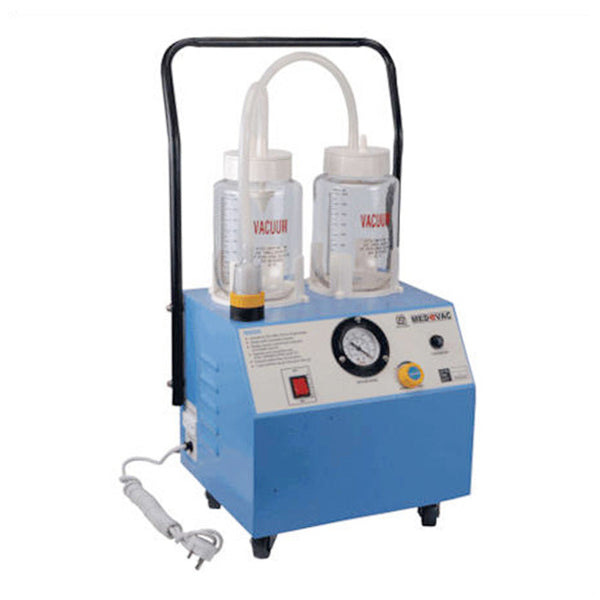
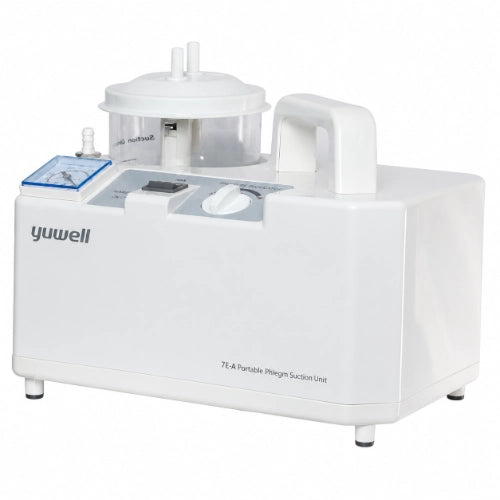
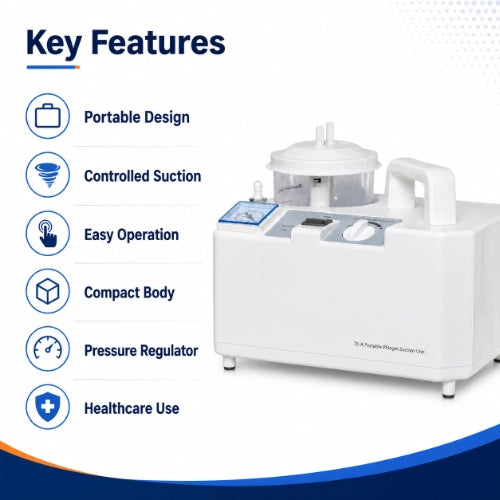
Suction machines available at Meddey
 Yuwell Portable Suction MachineRs. 6,836View product
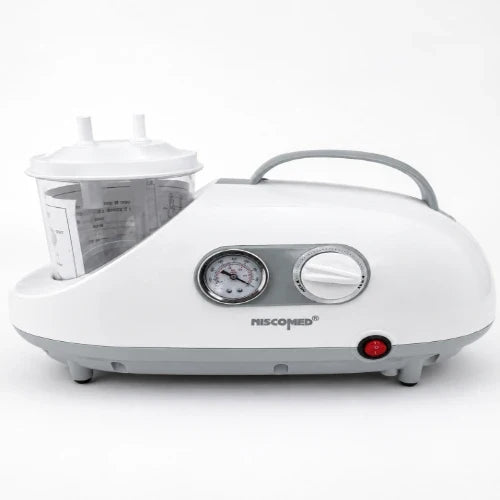
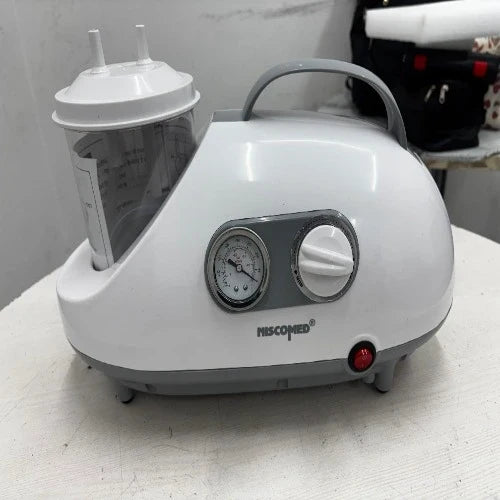
 Niscomed SU-107 Portable Phlegm Suction MachineRs. 3,679View product
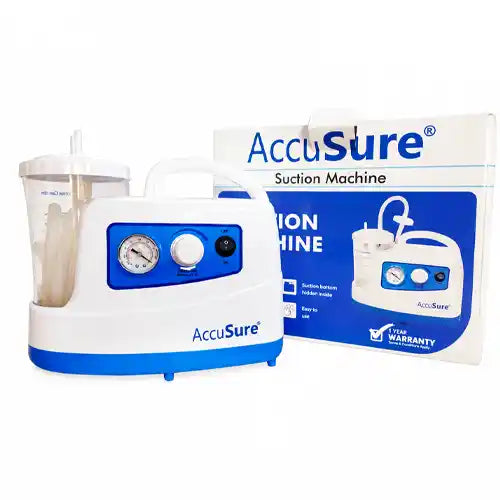
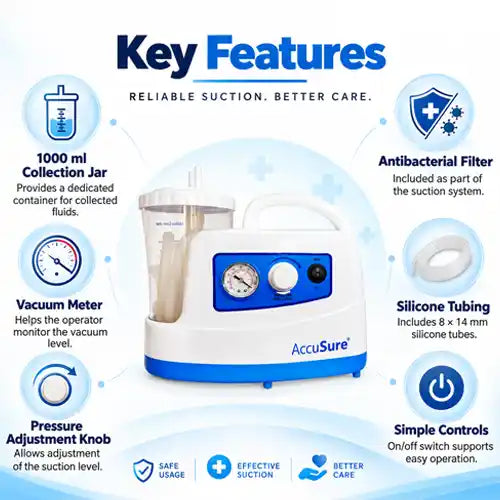
 AccuSure Manual Suction MachineRs. 4,784View product
 Yuwell Hand Operated Suction UnitRs. 2,556View product
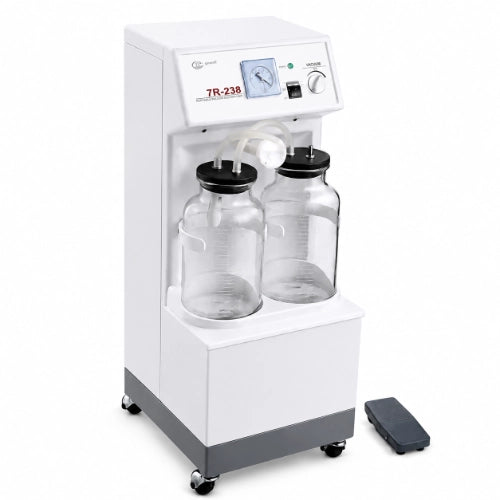
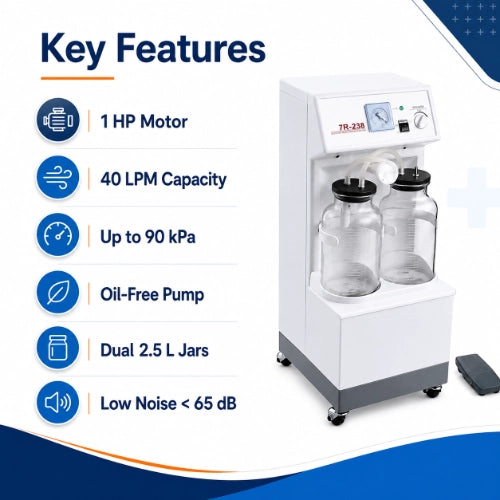
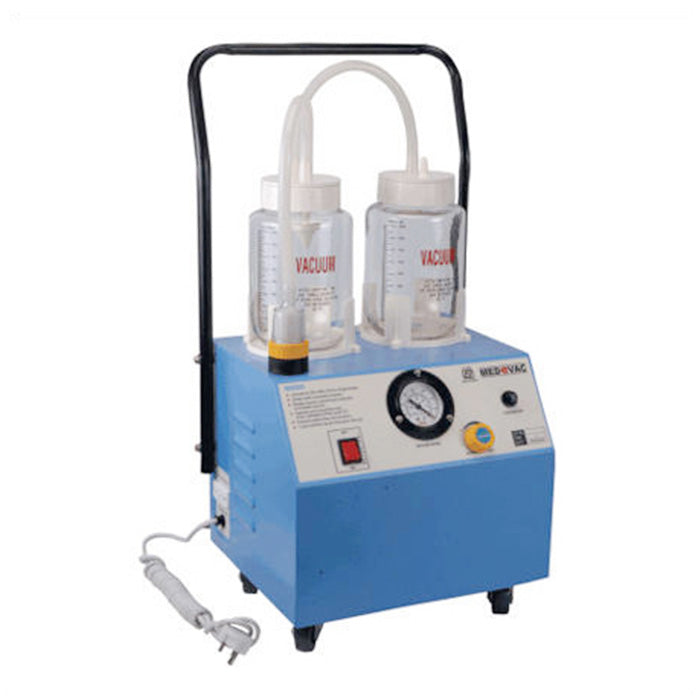
 Half HP Medical Suction Machine with Dual Glass JarsRs. 12,999View product
A suction catheter works with a suction source. For more options, view the Meddey suction machines collection. Choose any suction equipment only with guidance from your clinician.
Common suction catheter types and where they fit
Clinicians select suction catheter types according to the patient, the airway, the care environment, and the type of secretions they manage. The “best” catheter is not the biggest or strongest one. It is the one that fits the clinical purpose while reducing avoidable risk.
Rigid Yankauer suction catheters
A Yankauer suction catheter is a firm, usually curved suction tip used most often for oral suctioning. It helps remove secretions from the mouth and upper throat area. Because it is rigid, it allows controlled positioning in the oral cavity, but clinicians should not advance it into delicate airway structures unless clinical policy and professional training direct them to.
Yankauer devices are familiar in operating rooms, emergency care, bedside care, and some home-care environments. They are useful when secretions are visible or pooling in the mouth. However, they are not a replacement for tracheostomy suction equipment when secretions are inside a tracheostomy tube or lower airway.
Flexible suction catheters
A flexible suction catheter is soft and bendable. Trained personnel may use it for tracheostomy suction, endotracheal suction, or nasopharyngeal suction when ordered. Its flexibility helps it pass through a tube or airway path with less rigidity than a Yankauer, but that does not make it risk-free.
Flexible catheters come in different French sizes, lengths, tip designs, and packaging types. Manufacturers package some as sterile single use suction catheter products. Others are part of a closed suction catheter system that remains connected to a ventilator circuit or artificial airway setup.
Open suction catheters
Open suctioning generally involves using a sterile catheter that staff introduce when needed and then discard according to policy. For artificial airways, current respiratory care guidance notes that staff should use sterile technique during open suctioning.
Open suction catheters are common and versatile, but the process requires training and careful infection-control practice. Because care may expose the airway, untrained attempts can increase the risk of contamination, airway irritation, or breathing complications.
Closed suction catheters
A closed suction catheter sits inside a protective sleeve and connects as part of a respiratory circuit or artificial airway system. Closed systems may reduce the need to disconnect a ventilated patient during suctioning, and clinical guidelines recognize both open and closed suction systems as options for adults with artificial airways, depending on patient needs and care context.
However, closed suction does not mean “no risk” or “anyone can do it.” It still requires training, patient assessment, and adherence to professional guidance. Closed systems also have their own replacement schedules and manufacturer instructions.
What are the two most common types of suction catheters?
The two most commonly discussed suction catheter categories are rigid oral suction tips, such as the Yankauer, and flexible suction catheters used for tracheostomy, endotracheal, or other airway suctioning. The Yankauer typically serves to clear mouth secretions, while clinicians use flexible catheters when the clinical need involves a tube or airway passage that requires a soft, bendable catheter.
There are many variations within those categories, so the distinction is not only “hard versus soft.” Clinicians also consider sterility, catheter size, tip design, length, the presence of an artificial airway, whether the patient needs a ventilator, and whether the patient needs a closed suction catheter.
A simple comparison helps clarify the difference:
| Type | Typical use | Key safety point |
|---|---|---|
| Yankauer suction catheter | Oral suctioning of visible secretions in the mouth or upper throat | Use the rigid design only as trained and never force it into sensitive areas |
| Flexible suction catheter | Tracheostomy, endotracheal, or selected airway suctioning | Size and technique must match the airway and care plan |
| Single use suction catheter | Sterile catheter used once and discarded | Helps reduce contamination risk when used correctly |
| Closed suction catheter | Suctioning within a closed artificial airway or ventilator setup | Requires training and system-specific instructions |
The right catheter depends on the patient’s airway, not on general preference. If the care plan specifies a certain catheter type, caregivers should not substitute a different product without medical guidance.
Suction catheter sizing affects safety and effectiveness
Suction catheter sizing matters because the catheter must be large enough to remove secretions but small enough to avoid excessive airway blockage or tissue irritation. Clinical guidance for artificial airways recommends choosing catheter size in relation to the internal diameter of the airway tube, with the catheter occupying only a limited portion of the tube’s lumen.
Clinicians often express catheter sizes in French units, abbreviated “Fr” or “FR.” A higher French number means a larger outside diameter. For example, a 14 fr suction catheter is larger than a 10 Fr catheter. That does not automatically make it better. Larger catheters may remove thicker secretions more effectively in some situations, but they may also block more of the airway or increase discomfort if not appropriate for the patient.
What is the size of a suction catheter?
Suction catheter size usually appears in French units, and the appropriate size depends on the patient’s age, anatomy, secretion characteristics, and the size of any tracheostomy tube or endotracheal tube. Healthcare professionals select the size so suctioning can be effective without unnecessarily obstructing the airway.
In practice, clinicians individualize suction catheter sizing. A child, a small adult, a patient with a narrow tracheostomy tube, and a ventilated adult may all require different catheter choices. The care plan may list an approved catheter size or range, and caregivers should follow that plan rather than guessing.
What size suction catheter do adults need?
Adult suction catheter size varies by clinical situation, and no single size is correct for every adult. Some adults may use a 14 fr suction catheter, but other sizes may be safer or more appropriate depending on the airway tube, secretion thickness, and the clinician’s assessment.
If an adult has a tracheostomy, clinicians should match catheter size to the tracheostomy tube and medical orders. When an adult needs oral suctioning, a clinician may choose a Yankauer instead of a flexible catheter, depending on where the secretions sit. If an adult is mechanically ventilated, the respiratory care team may choose an open or closed suction catheter based on the ventilator circuit and patient condition.
For home care, the safest answer is the most specific one: use the size prescribed by the care team, keep the ordered backup supplies available, and ask the clinician before changing sizes or brands.
Tracheostomy suction catheter use requires special training
Suction trach care is one of the most important contexts for suction catheter use. A tracheostomy creates an airway opening in the neck, and secretions can collect in or around the tracheostomy tube. Suction for trach care may be needed when the person cannot clear secretions by coughing, when mucus is visible or audible, or when the care plan identifies signs that suctioning is needed.
Only trained healthcare professionals or trained caregivers should perform tracheostomy suction, under medical guidance. This includes knowing the person’s normal breathing pattern, recognizing distress, using the prescribed catheter type and size, and responding appropriately if suctioning does not improve the situation.
People with tracheostomies may have individualized instructions for humidification, hydration, tube care, emergency supplies, and when to call for help. General tracheostomy care education commonly includes cleaning, replacing, and suctioning the tube as directed by the healthcare provider.
Take warning signs seriously. Seek medical help immediately if the person has severe trouble breathing, cannot clear secretions, has blue or gray lips or skin, has significant bleeding, has a blocked or displaced tracheostomy tube, becomes difficult to wake, or does not improve after care directed by the medical plan.

The suction catheter procedure is clinical, not casual
The phrase “suction catheter procedure” often makes people look for a simple how-to list. For safety reasons, this guide does not provide step-by-step procedural instructions for suctioning or tracheostomy suction. The correct process depends on the person’s airway, diagnosis, oxygen needs, equipment, infection-control requirements, and emergency plan.
Instead, it is safer to understand the principles that trained clinicians and caregivers follow:
- Assessment comes first. Base suctioning on signs of retained secretions or airway compromise, not habit alone.
- The correct catheter matters. Type, size, sterility, and compatibility all affect safety.
- Infection control is essential. Airway care can introduce organisms if supplies or technique are inappropriate.
- Gentleness matters. Forcing a catheter can injure tissue and worsen distress.
- The patient’s response guides care. Color, breathing effort, coughing, comfort, and oxygenation trends may all matter.
- Escalation must be clear. Caregivers need to know when to stop and call for medical help.
A trained person also understands what not to do. They do not improvise with nonmedical tubing, reuse single-use items unless a clinician’s policy specifically allows a defined home-care approach, change catheter size without approval, or continue suctioning repeatedly when the person is deteriorating.
Is suctioning painful?
Suctioning can be uncomfortable and may cause coughing, gagging, anxiety, throat irritation, or a pulling sensation, but no one should expect the patient to simply endure it. Pain, distress, bleeding, or a major change in breathing should prompt reassessment and, when needed, medical help.
The level of discomfort depends on the suction location, catheter type, patient condition, secretion thickness, and technique. Oral suctioning with a Yankauer may feel different from suction trach care with a flexible catheter. A person who is awake and anxious may experience the procedure very differently from someone under sedation or critically ill.
Comfort measures should come from the care plan and clinical training. Clear communication, appropriate positioning by trained personnel, correct equipment selection, and avoiding unnecessary suctioning can all reduce distress. If suctioning repeatedly causes pain, bleeding, panic, or breathing difficulty, the care team should review the plan rather than assuming the reaction is normal.
Single use suction catheter products and infection control
Manufacturers design a single use suction catheter for one use, after which you discard it according to facility policy, home-care instructions, and local waste rules. Single-use packaging supports sterility before use and helps reduce cross-contamination when handled properly. It does not remove the need for hand hygiene, clean workspace habits, or correct disposal.
Infection control is especially important because suctioning involves the airway. For patients with artificial airways, respiratory care guidelines emphasize sterile technique for open suctioning. In home care, the clinician’s instructions should clarify which supplies are sterile, which are clean, what is single use, and how to store equipment.
Suction catheter care also includes protecting unused supplies. Store catheters in clean, dry packaging. Keep them away from moisture, dust, pets, food-preparation areas, and damaged containers. Do not use a catheter if the sterile package is open, torn, wet, or contaminated unless a healthcare professional has provided different instructions for a specific nonsterile use.
For reusable parts of a suction system, such as certain canisters or external tubing setups, follow the manufacturer’s instructions and the care team’s cleaning schedule. Do not assume catheters themselves are reusable just because they look intact.
Suction catheter tips for safer conversations with clinicians
Suction catheter tips are most useful when they help patients and caregivers ask better questions. If you are responsible for home suctioning after training, keep written instructions nearby and confirm that you understand what to do during routine care and emergencies.
Use this checklist during appointments, discharge teaching, or supply reviews:
- Confirm the catheter type. Ask whether the plan requires a Yankauer, flexible suction catheter, closed suction catheter, or another device.
- Confirm the size. Ask which French size the clinician prescribes and whether alternatives are acceptable if supplies run late.
- Clarify when suctioning is needed. Ask what signs mean “suction now,” what signs mean “monitor,” and what signs mean “call for help.”
- Review infection-control rules. Ask which items are sterile, single use, reusable, or replaced on a schedule.
- Discuss secretion changes. Thick, bloody, foul-smelling, unusually colored, or rapidly increasing secretions may need clinical review.
- Plan for equipment problems. Ask what to do if the suction machine fails, tubing disconnects, or the catheter supply runs low.
- Know emergency steps. Ask when to call emergency services, the clinic, home health, or the respiratory therapist.
The best safety tool is not just a catheter; it is a clear care plan. If instructions from different sources conflict, follow the prescribing clinician’s plan and ask for clarification.
Understanding suction catheter price without choosing on price alone
Suction Catheter price can vary based on catheter type, size, sterility, packaging, brand, quantity, and whether the device is a simple open catheter, a Yankauer suction catheter, or a closed suction catheter system. Prices may also differ across hospitals, pharmacies, durable medical equipment suppliers, online medical suppliers, insurance plans, and home-care programs.
Cost matters, especially for families managing long-term supplies. However, price should not be the only decision point. A lower-cost catheter that is the wrong size, wrong type, nonsterile when sterility matters, or incompatible with the suction setup can create safety problems.
When comparing products, consider:
- whether the catheter matches the medical order;
- the correct French size;
- whether it is sterile, clean, single use, or part of a closed system;
- a connector that fits the tubing;
- an intact, clearly labeled package;
- a reputable supplier;
- whether insurance or home-care coverage requires specific products.
If cost or availability makes it hard to obtain the ordered supplies, contact the care team before substituting. Clinicians may be able to recommend approved alternatives or connect you with a supply coordinator.
Suction catheter complications: recognize them early
Complications can occur even when trained people perform suctioning carefully. Possible concerns include airway irritation, bleeding, coughing that does not settle, oxygen desaturation, infection risk, changes in heart rhythm, anxiety, vomiting, or worsening breathing distress. Saline instillation into the airway, once used more commonly in some settings, is now generally discouraged in modern guidance because it may add risk without clear benefit.
Readers should seek medical help if breathing distress or suctioning-related complications occur. Do not keep repeating suction attempts when the person is getting worse. Urgent help is especially important if there is severe shortness of breath, blue or gray coloring, chest retractions, inability to move air, a blocked tracheostomy tube, significant bleeding, sudden swelling, loss of consciousness, or equipment failure that affects breathing.
For caregivers, the safest mindset is “respond, reassess, and escalate.” Suctioning may clear secretions, but it is not a cure for every noisy breath or respiratory change. A patient who still looks distressed after suctioning needs clinical evaluation.
Choosing the right suction catheter starts with the care plan
The right suction catheter is the one that matches the clinical need. For one person, that may be a Yankauer for oral secretions. For another, it may be a prescribed flexible suction catheter for tracheostomy care. A ventilated patient may need a closed suction catheter chosen by the respiratory team.
Before buying or using supplies, check the care plan for:
- Catheter type: Yankauer, flexible, open, closed, or other.
- Catheter size: French size and any approved substitutions.
- Use setting: oral, tracheostomy, endotracheal, surgical, or emergency support.
- Sterility requirements: sterile single-use product or another specified approach.
- Compatible equipment: tubing, canister, suction source, and connectors.
- Replacement rules: when to discard, replace, or reorder supplies.
- Escalation instructions: when to call the clinician or emergency services.
This is also where product labels matter. A package may say “suction catheter,” but that does not mean it is appropriate for every airway. Always match the label to the medical order and training.
Key takeaways for patients, caregivers, and care teams
Suction catheters play an important role in airway care, but safety depends on trained use, appropriate sizing, and clear medical guidance. The topic can feel technical, especially when terms like suction cannula, closed suction catheter, suction catheter yankauer, and 14 fr suction catheter appear on supply lists. The practical takeaway is simple: match the tool to the patient, the airway, and the care plan.
Remember these essentials:
- A suction catheter helps remove secretions or fluids when a person cannot clear them effectively.
- Suctioning and tracheostomy suction are clinical tasks for trained healthcare professionals or trained caregivers under medical guidance.
- Clinicians commonly use a Yankauer for oral suctioning, while they use flexible catheters for selected airway or tube-related suctioning.
- Clinicians must individualize suction catheter sizing; adult size choices vary, and a 14 Fr catheter is not automatically right for every adult.
- Handle and discard single use suction catheter products according to instructions.
- Base suctioning on patient need, not routine habit alone.
- Breathing distress, bleeding, blocked airway concerns, or worsening symptoms require prompt medical help.
Used correctly, suction equipment can support safer breathing and more effective airway management. Used incorrectly, it can cause harm. When in doubt, pause, follow the written care plan, and contact the healthcare team for guidance.
Frequently Asked Questions
1. What is a suction catheter used for?
A suction catheter helps remove secretions, mucus, saliva, blood, or other fluids from the mouth, throat, or an artificial airway when a person cannot clear them effectively. Only trained professionals or trained caregivers should use it, following a care plan.
2. What are the two most common types of suction catheters?
The two most discussed types are rigid oral suction tips, such as the Yankauer, and flexible suction catheters. Clinicians typically use the Yankauer for mouth secretions and flexible catheters for tracheostomy, endotracheal, or other selected airway suctioning.
3. What is the size of a suction catheter?
Suction catheter size usually appears in French units, shown as Fr. The right size depends on the patient's age, anatomy, secretions, and the size of any tracheostomy or endotracheal tube, so the care team should choose it.
4. What size suction catheter do adults need?
There is no single size for every adult. Some adults may use a 14 Fr catheter, but other sizes can be safer depending on the airway tube and the clinician's assessment. Use the size prescribed by the care team.
5. What is the difference between open and closed suction catheters?
An open suction catheter is a sterile catheter that staff introduce when needed and then discard. A closed suction catheter sits inside a protective sleeve and connects to a ventilator circuit or artificial airway. Both need training and clinical guidance.
6. What is a Yankauer suction catheter?
A Yankauer is a firm, usually curved suction tip used mostly for oral suctioning. It helps clear secretions pooling in the mouth and upper throat, but it is not a replacement for tracheostomy suction equipment.
7. Is suctioning painful?
Suctioning can be uncomfortable and may cause coughing, gagging, or throat irritation. Pain, bleeding, or a major change in breathing should prompt reassessment and medical help, and no one should treat them as normal.
8. Can you reuse a single use suction catheter?
Manufacturers design a single use suction catheter for one use, after which you discard it. Do not reuse it unless a clinician has given a specific home-care instruction, and never use a catheter from open, torn, or wet packaging.
9. When should I seek medical help during suctioning?
Seek help promptly for severe trouble breathing, blue or gray lips or skin, significant bleeding, a blocked tracheostomy tube, difficulty waking the person, or worsening symptoms. Do not keep repeating suction attempts when the person is getting worse.
10. What affects suction catheter price?
Price varies with catheter type, size, sterility, packaging, brand, and quantity. Do not choose by price alone, because the wrong size or type can create safety problems. Match the product to the medical order.
Explore Medical Collections
All Categories
Abdominal & Maternity Support

Accessories

Accu-Chek Instant Strips: Use, Compatibility, Price & Blood Sugar Testing Guide
Accu-Chek Instant Strips: Uses, Features & Complete Guide

accupuncture

Acupuncture Needles & Supplies

Advanced Physiotherapy Machines & Lumbar Physiotherapy

Airways
Alcohol Swab: Uses, Safe Use and Disposal Guide
Ambu Bag Full Form: Is There an Official Meaning?
Ambu Bag: Parts, Uses and Safety Guide
Ambu Full Form: What the Name Means and BVM Basics

Ambulance

Anatomy Models
Anesthesia Machine
You may also need
FOR YOURecommended for you
Save 41%
Save 35%
Save 26%
Save 32%
Save 39%
Save 48%
Save 15%