


Featured ChoiceSave 55%


Save 47%

Save 33%
Save 47%
Save 48%

Save 50%


Save 36%


Sold out


Sold out

Save 36%

What customers say
★★★★★ 5.0 · 9 reviews
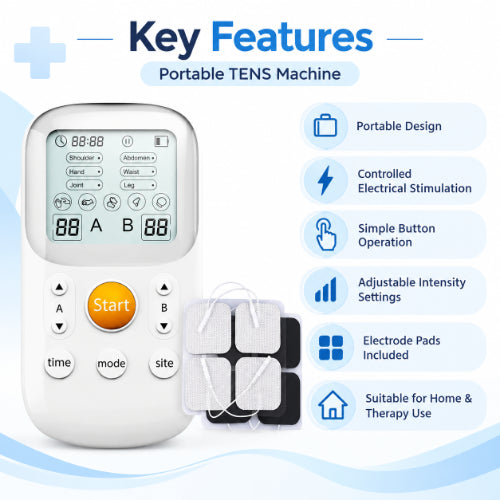
 TENS Machine for Home Use | 2-Channel Pain Relief
“Provides instant relief from muscle stiffness and soreness”
“Excellent product for arthritis, sciatica, and nerve issues”
 Portable TENS Machine – Convenient Electrical Muscle Stimulation
“Portable, easy to use, highly effective!”
“The Portable TENS Machine is amazing for pain relief! It’s small, easy to use,”
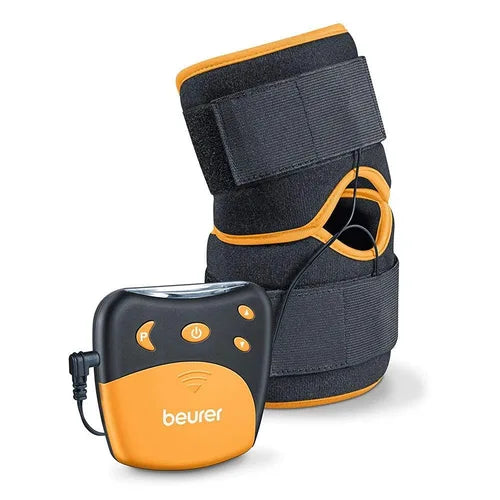
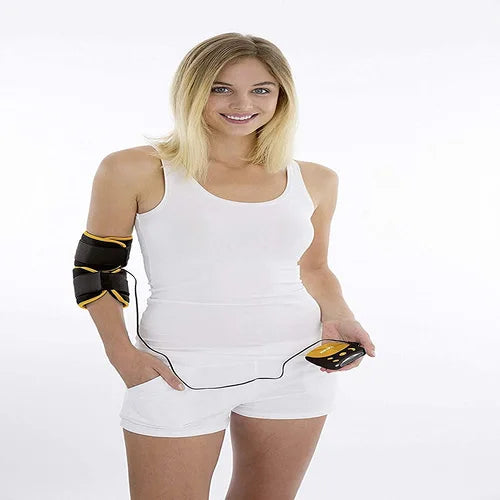
 Beurer TENS Machine for Knee and Elbow Pain Therapy
“This is perfect for relieving knee and elbow pain. It’s simple to use, offers multiple intensity levels, an...”
tens machine: uses, settings, safety, price and buying guide
TENS Machine: Uses, Settings, Safety and Price Guide for Healthcare Professionals
This guide explains what a TENS machine is used for and how it works. It also covers session time, daily use, safety, side effects and how to choose the right TENS machine.
Key Takeaways
- First, a TENS machine sends mild electrical pulses through skin pads to reduce pain signals, and it is not a cure.
- In practice, many sessions last about 20 to 30 minutes, but the exact time depends on the device, the mode and the clinician's advice.
- According to the 2024 Cochrane review, high-frequency TENS may reduce period pain, although the evidence quality is low.
- Before use, check for a pacemaker, pregnancy, epilepsy and broken skin, since these need extra care or rule out TENS.
- Finally, choose a TENS machine by channels, modes, timer, pads, warranty and service, and not by price alone.
Contents
- What is a TENS machine?
- What is a TENS machine used for?
- How does a TENS machine work?
- Types and modes of TENS
- TENS vs other stimulation machines
- TENS for period cramps
- Steps to use a TENS machine
- How many minutes, and can you use it daily?
- How do you know if TENS is working?
- Which home TENS machine is the best?
- TENS machine price and TENS machine price
- Side effects and safety
- Using TENS in clinics and hospitals
- Buying checklist
- Frequently asked questions
Search terminology: People sometimes search for "tense machine", but the correct medical term is TENS machine (transcutaneous electrical nerve stimulation machine).
Pain is the most common reason people visit a clinic. Therefore, a TENS machine is one of the most familiar tools in physiotherapy, and it is now common in homes too. However, many users and students are unsure how to set it, how long to use it and when to avoid it.
This guide is for doctors, physiotherapists, nurses, medical students and buyers of clinic equipment. In addition, it answers the most common questions in simple words. People also search for this device as a TENS machine, a stimulation machine or by brand names such as a TensCare machine, and the same safety rules apply to all of them. To see products, you can visit the TENS machines collection at Meddey .
Latest evidence note: A Cochrane review published in 2024 looked at TENS for period pain. It included 20 trials with 585 people. High-frequency TENS reduced pain compared with placebo or no treatment, but the evidence was of low or very low quality. Therefore, TENS is a useful option for some patients, but not a proven cure.
What Is a TENS Machine?
TENS stands for transcutaneous electrical nerve stimulation. A TENS machine is a small, battery-powered device that sends low-voltage electrical pulses through electrode pads placed on the skin. As a result, the patient feels a tingling or buzzing feeling in the treated area.
A TENS machine usually has one to four channels, an intensity control, a timer and several modes. Meanwhile, more advanced units also let the user change the frequency and the pulse width. The device does not heal tissue directly. Instead, it changes how pain signals travel, so the patient feels less pain for a period of time.
For students, one line is enough. A TENS machine uses skin electrodes to deliver small electrical pulses that reduce the feeling of pain.
What Is a TENS Machine Used For?
Clinicians use TENS as one part of a pain plan. Below are the main uses.
Back and neck pain TENS may ease muscle and joint pain while the patient starts exercise and movement work.
Joint pain For example, some patients with knee, shoulder or elbow pain use TENS for short-term relief.
After surgery or injury Also, TENS may reduce acute pain and the need for extra pain medicine in some cases.
Nerve-related pain In addition, some clinicians try TENS for selected nerve pain, with careful review of the result.
Period and pelvic pain Moreover, high-frequency TENS is used by some women for period cramps.
Sports and muscle pain Finally, athletes use TENS to manage soreness during rehab.
However, results differ from patient to patient. Therefore, TENS works best as a support tool alongside exercise, education and other care.
How Does a TENS Machine Work?
Two main ideas explain how TENS may relieve pain. First, the gate control theory says that touch-type nerve fibres, when stimulated, can block pain signals at the spinal cord. As a result, the brain receives fewer pain messages. Second, low-frequency stimulation may prompt the body to release its own natural pain-relieving chemicals, such as endorphins.
What the patient feels
The patient usually feels a comfortable tingling under the pads. At a high frequency, this feels like a steady buzz. At a low frequency, it feels like a slow tapping. In both cases, the intensity should be strong but comfortable, and it should not be painful.
Main settings
- Intensity: This controls how strong the pulses feel.
- Frequency (Hz): This tells how many pulses come each second.
- Pulse width: This is the length of each pulse.
- Mode: Common modes are continuous, burst and modulated.
- Timer: It ends the session at a set time.
Types and Modes of TENS
Therapists usually describe TENS by its frequency and pulse width. However, the exact numbers differ slightly between books and devices, so treat them as a guide.
| Type | Typical frequency | Feel | Main idea |
|---|---|---|---|
| Conventional (high frequency) | About 80 to 150 Hz | Steady tingling | Quick relief while the pads are on |
| Acupuncture-like (low frequency) | About 2 to 10 Hz | Slow tapping, stronger | Slower onset, relief may last longer |
| Burst mode | Bursts of high-frequency pulses | Rhythmic pulsing | Mixes both effects |
| Modulated mode | Changing settings | Varied | Helps stop the body from getting used to it |
Channels
Channels decide how many areas the device can treat at once. A two-channel unit can treat two areas, for example both sides of the lower back. Meanwhile, a four-channel unit suits wider areas or clinic use. In addition, many devices come as combos that add muscle stimulation, interferential current or ultrasound.
TENS vs Other Stimulation Machines
People often call every electrotherapy device a "stimulation machine". However, the goals differ, so it helps to know the main types.
| Device | Main goal | Feel |
|---|---|---|
| TENS | Reduce pain | Tingling, without muscle contraction |
| EMS (muscle stimulator) | Activate or strengthen muscles | Visible muscle contraction |
| IFT (interferential) | Pain relief and swelling control in deeper tissue | Deeper, gentle tingling |
| Therapeutic ultrasound | Warm and support soft tissue healing | Mild warmth or no feeling |
Therefore, choose TENS when pain relief is the aim, and choose EMS when muscle activation is the aim. Some units combine both, which can save space in a small clinic.
TENS for Period Cramps
Many women search for a period cramp machine, and TENS is one option. The pads go on the lower abdomen or lower back, and the device gives gentle pulses. TENS does not change uterine contractions directly. Instead, it changes how the body senses pain.
What the evidence says
The 2024 Cochrane review found that high-frequency TENS reduced period pain compared with placebo or no treatment. However, the trials were small, and the evidence was of low or very low quality. Mild side effects, such as skin irritation, can occur.
Important cautions
- First, a doctor should check the cause of severe or new pelvic pain.
- Second, do not use TENS on the abdomen if you are or may be pregnant.
- Also, avoid TENS over broken skin, and remove the pads if the skin becomes sore.
Some brands, including TensCare, sell compact TENS units made for period pain. Whatever the brand, always read the manual, and ask a doctor if pain is severe.

How to Use a TENS Machine
The steps below give a general idea. However, always follow the device manual and your clinician's advice.
1. Check safety first
Before use, check for a pacemaker, pregnancy, epilepsy, heart disease, undiagnosed pain and broken skin. If any of these apply, ask a doctor first.
2. Prepare the skin
Next, wash and dry the skin. Do not use lotion, and remove hair if it stops the pads from sticking.
3. Place the pads
Then, place the pads around the painful area, not directly on the sore spot, and keep them a few centimetres apart. Never place pads on the front of the neck, over the eyes, on the mouth or on broken skin.
4. Set the device
After that, turn the intensity to zero before you connect the leads. Then, choose the mode and the timer.
5. Raise the intensity slowly
Slowly increase the intensity until you feel a strong but comfortable tingling. It should not hurt or cause a muscle jump.
6. Finish
Finally, turn the intensity down before you remove the pads. Then, check the skin and store the pads on their liner.
How Many Minutes Should You Use a TENS Machine, and Can You Use It Daily?
How many minutes?
Many protocols suggest about 20 to 30 minutes per session. In some conventional TENS plans, the user may repeat sessions during the day or use the unit for longer, with breaks. On the other hand, low-frequency TENS is usually kept to about 30 minutes. Because devices differ, follow the manual and the clinician's advice.
Can we use a TENS machine daily?
In many cases, yes. Patients with ongoing pain often use TENS every day, as advised by a clinician. However, they should check the skin after each session, change pad position, take breaks and stop if the skin becomes red or sore.
Note: Do not use TENS while driving, while sleeping or in water. Also, do not leave it on for hours unless the maker and the clinician say the device is made for that.
How Do You Know If TENS Is Working?
TENS usually gives quick, short-term relief, so you can check the effect during and after a session. Look for these signs.
- First, you feel a steady tingling under the pads at a comfortable level.
- Second, your pain score drops during or after the session. For example, use a 0 to 10 scale before and after.
- Also, you can move more easily or do your exercises with less pain.
- In addition, you need less pain medicine over time, if your doctor agrees.
If you feel nothing
If there is no effect, check the basics first. For example, check the battery, the lead wires, the pad stickiness and the pad position. Then, try a slightly higher comfortable intensity or another mode. If there is still no benefit after several sessions, stop and ask your clinician, because TENS does not work for everyone.
Which Home TENS machine Is the Best?
No single TENS machine is best for everyone. Instead, the best unit matches the patient's need, skill and budget. For a first-time home user, a simple two-channel unit with a timer is often enough. On the other hand, a clinic may prefer a four-channel or combo machine.
The table below lists TENS products available at Meddey, with prices as listed on 29 September 2026. However, prices and stock can change, so please check the live product page before you order.
| Product Image | Product | Best for | Key detail | Meddey price |
|---|---|---|---|---|
 |
TENS Machine for Home Use, 2 Channel | First-time home user | 3 modes, 5 to 60 minute timer, 2 AA batteries | ₹1,333 |
 |
Mini TENS 2 Channel and Muscle Stimulator | Pain relief plus muscle work | 2-in-1, 4 electrode pads, pocket size | ₹1,655 |
 |
Medansh Portable TENS 2 Channel with Muscle Stimulator | Clinic and rehab use | Separate intensity control, 2 to 250 Hz TENS range | ₹2,979 |
 |
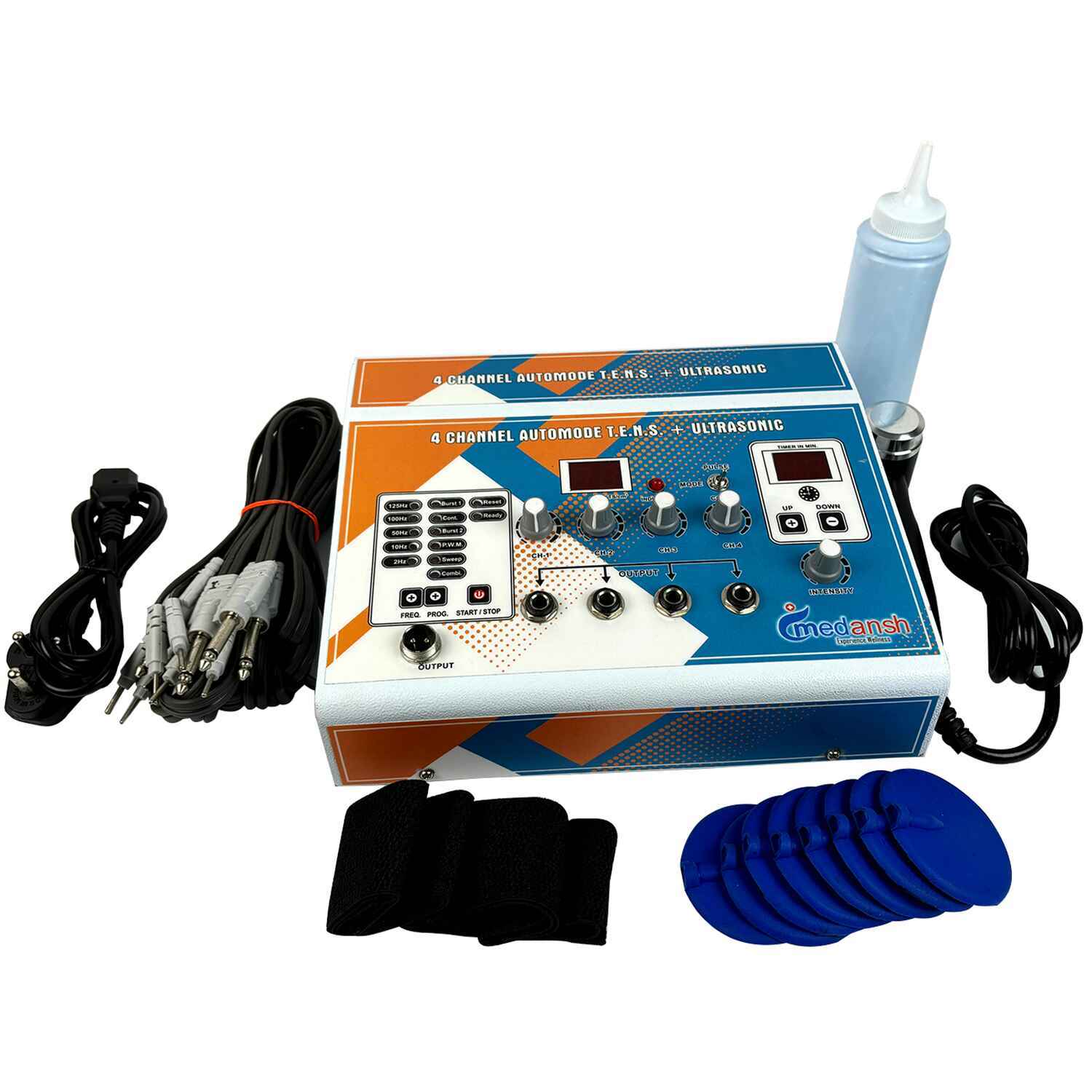
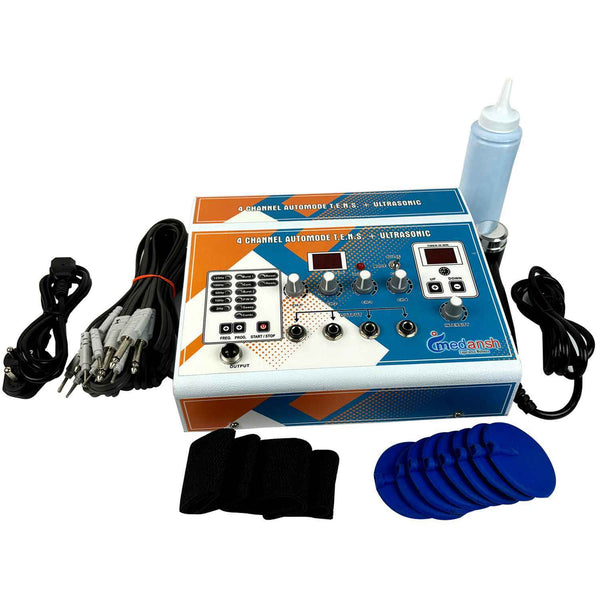
Medansh Ultrasonic with 2 Channel TENS Combo | Dual therapy | 1 MHz ultrasound plus 2-channel TENS | ₹5,153 |
 |
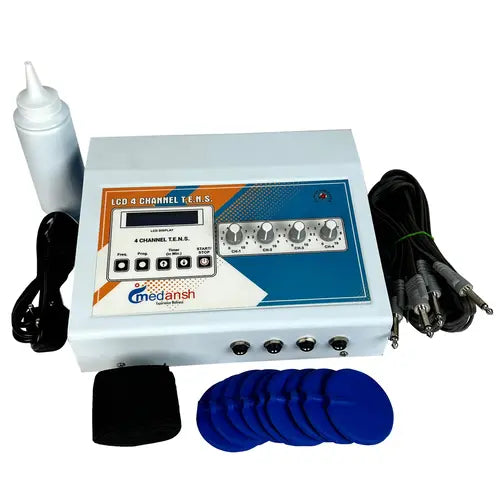
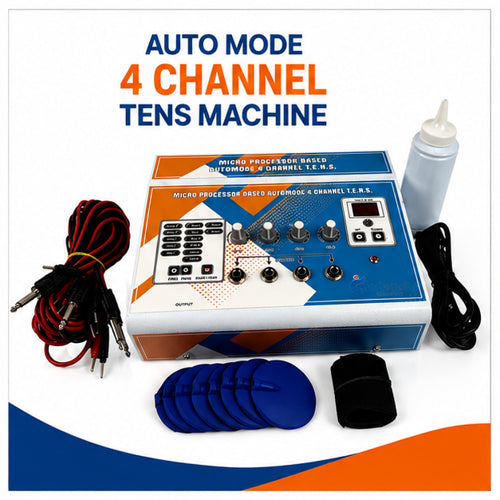
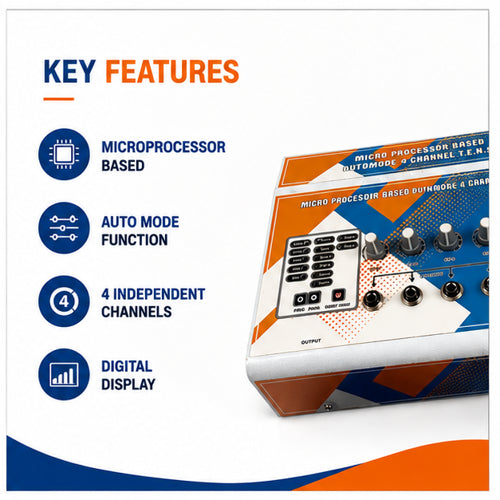
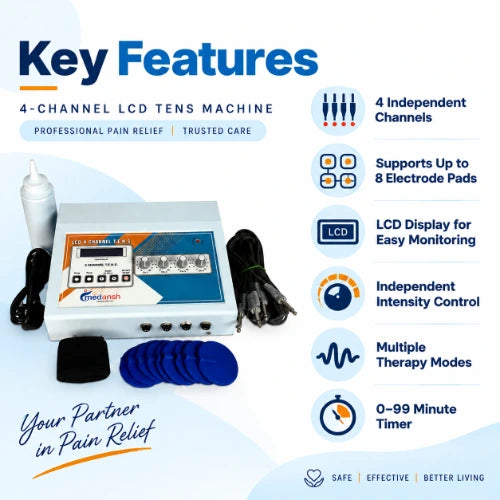
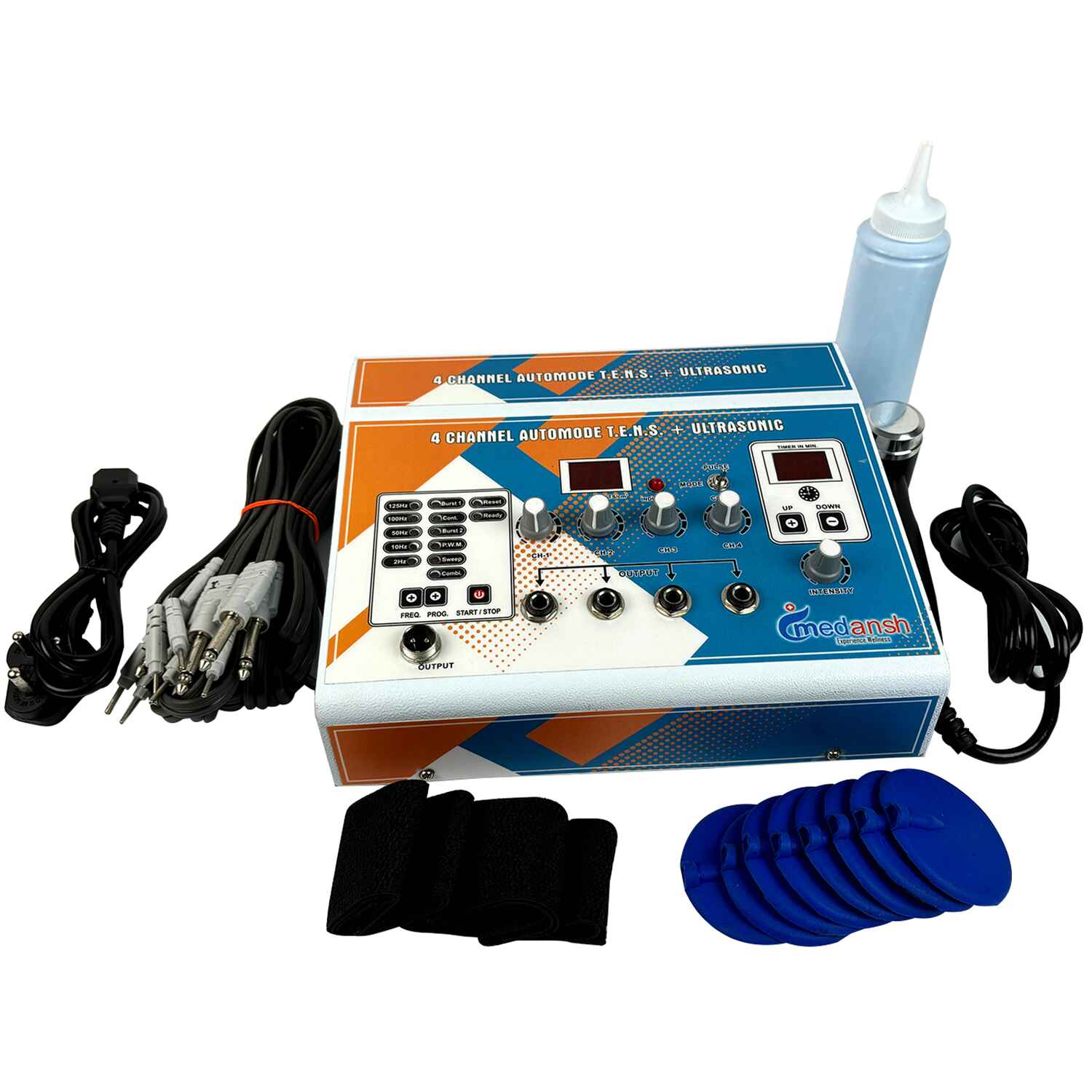
Medansh Auto Mode 4 Channel TENS Machine | Larger areas, easy daily use | 4 channels, up to 8 pads, auto mode | ₹5,489 |
 |
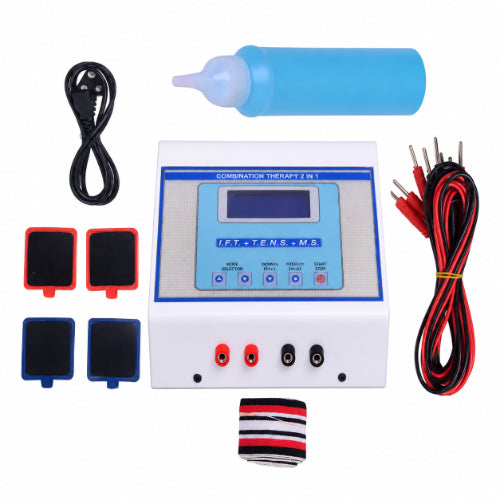
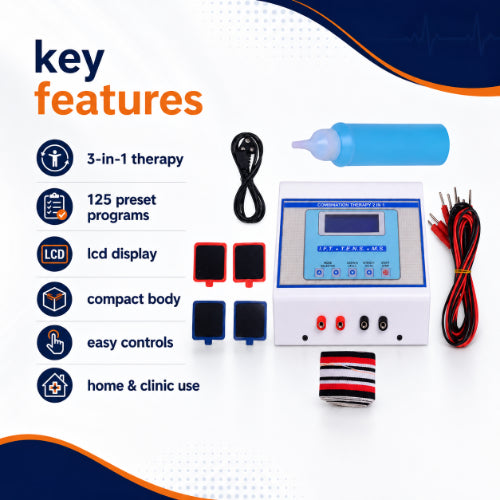
Medansh IFT MS TENS 125 Program Combo, 3-in-1 | Busy clinics | IFT, muscle stimulation and TENS, 125 preset programs, LCD | ₹7,359 |
Therefore, start with the need, and then pick the simplest unit that meets it.
TENS Machine Price and TENS machine Price: What Decides the Cost?
The TENS machine price and the TENS machine price depend on several things. Because these differ between models, a basic unit costs far less than a combo machine. At Meddey, the TENS products above start at ₹1,333 for a simple two-channel unit and rise to ₹7,359 for a 3-in-1 clinic machine, as listed on 29 September 2026.
What pushes the price up?
- First, more channels and more electrode pads raise the cost.
- Second, extra functions, such as muscle stimulation, IFT or ultrasound, add value.
- Third, preset programs and a clear LCD screen make the unit easier to use.
- In addition, a longer warranty, such as two years, raises the price.
- Finally, brand, build quality and service support also affect the final cost.
Do not forget running costs
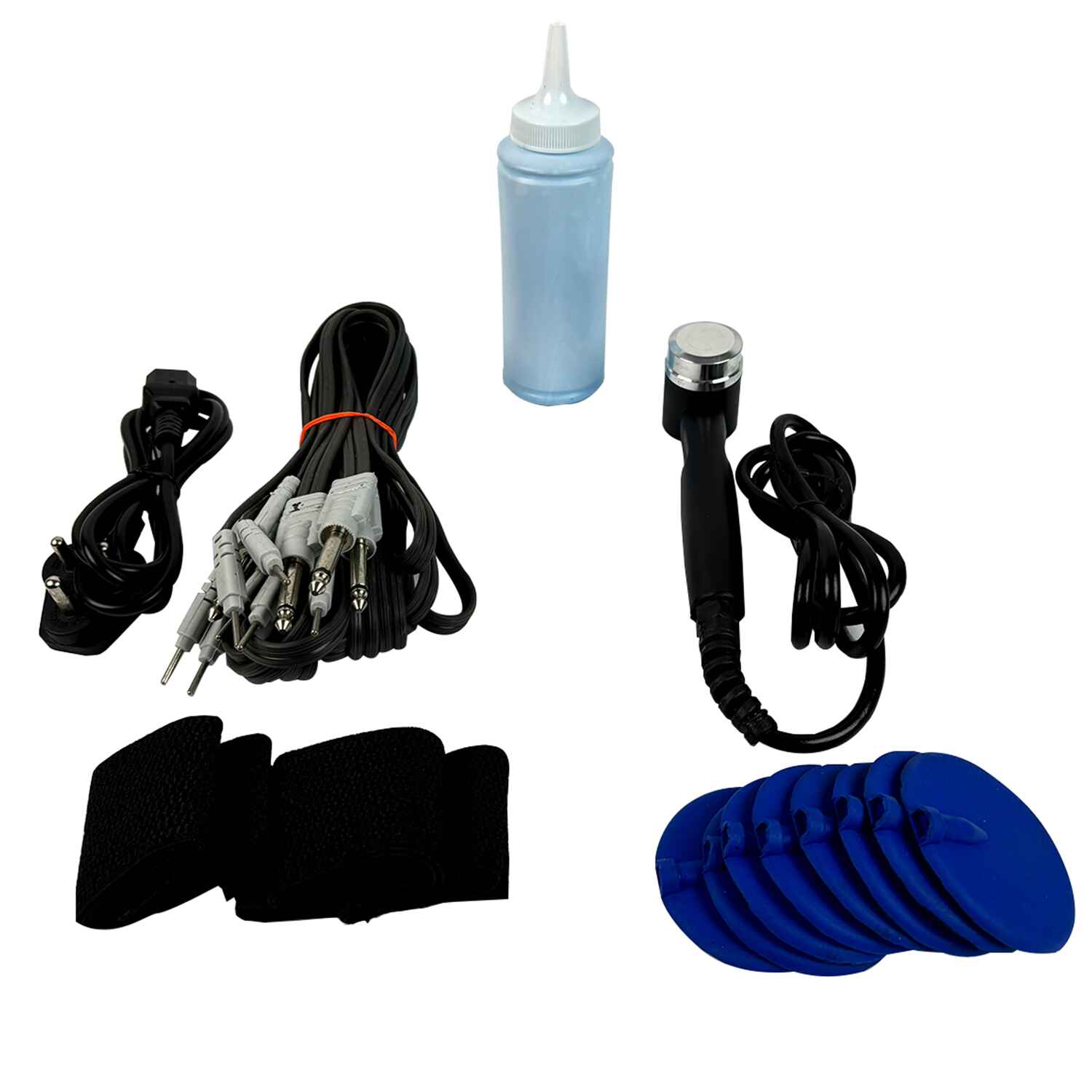
Besides the machine, you will need spare pads, lead wires, batteries and gel. For example, Meddey lists TENS electrode pads with lead wires at ₹643 and electrode gel at ₹249. Therefore, check the cost of pads before you buy, since you will replace them often.
Price note: Prices and offers change often. Therefore, please check the live listing, or contact Meddey for help.
Are There Any Negative Side Effects of TENS?
TENS is generally considered low risk when used correctly. However, side effects can occur, and some people should not use it.
Possible side effects
- Skin redness, itching or irritation under the pads.
- Allergy to the pad adhesive or gel.
- Skin burns, if the pads have poor contact or the intensity is too high.
- Muscle twitching or discomfort at a high intensity.
- A feeling of pain that increases instead of decreasing.
Who should not use TENS without medical advice
- People with a cardiac pacemaker, defibrillator or other implanted device.
- People with epilepsy or a serious heart condition.
- Women who are pregnant, especially in the first trimester, and over the abdomen.
- People with blood clots or thrombophlebitis.
- People with undiagnosed pain, until a doctor has checked the cause.
Safety point: Never place pads on the front of the neck, over the eyes, on the mouth or on broken skin. Also, stop use and ask a doctor if pain gets worse or the skin becomes sore.
Using TENS in Clinics and Hospitals
In a clinic, TENS works best when it follows a clear process. First, the clinician should assess the patient, find the likely cause of pain and screen for risks. Next, the team should choose the mode, pad position and session time, and explain the plan to the patient. Then, the clinician should record the pain score before and after each session, so the effect is easy to see.
Hygiene matters too. For example, staff should clean the device and the lead wires between patients, and they should use a fresh set of pads for each person or issue pads that stay with one patient. Moreover, patients who will use a unit at home need a short lesson on pad placement, intensity and skin checks. As a result, they use the device with more confidence and fewer mistakes.
Buying Checklist for a TENS Machine
Define the use First, decide if the unit is for home, clinic or travel.
Channels and pads Next, choose one, two or four channels, and check the number of pads.
Modes and settings Also, look for adjustable frequency, pulse width and several modes.
Timer and controls In addition, a clear timer and simple buttons help new users.
Power and size Since portability matters, check the battery type, weight and carry case.
Warranty and service Finally, confirm warranty, spare pads and after-sales help.
As a simple rule, buy a spare set of pads with the machine. Then, keep the manual with the unit.
Frequently Asked Questions About TENS Machines
What is a TENS machine used for?
A TENS machine is used to reduce pain, for example in the back, neck, joints, muscles and period cramps. However, it works best as part of a wider plan with exercise and medical advice.
Can we use a TENS machine daily?
In many cases, yes, as advised by a clinician. However, check the skin after each session, take breaks and stop if the skin becomes red or sore.
How many minutes should you use a TENS machine?
Many sessions last about 20 to 30 minutes. Some plans allow longer use with breaks, so follow the device manual and your clinician's advice.
How do you know if TENS is working?
You should feel a comfortable tingling, and your pain should drop during or after the session. Also, you may move more easily. If there is no effect after several sessions, ask your clinician.
Which home TENS machine is the best?
There is no single best unit. However, a simple two-channel unit with a timer and adjustable settings suits most first-time home users. Your clinician should approve the choice.
Are there any negative side effects of TENS?
The main side effects are skin redness, itching, allergy to pads and, rarely, burns. In addition, people with pacemakers, epilepsy or pregnancy need medical advice before use.
What is a TensCare machine?
TensCare is a UK brand of TENS units, including compact devices for period pain. A TensCare machine follows the same TENS principles, so the same safety rules apply. For other options, see the TENS machines collection at Meddey.
What is a TENS machine price in India?
At Meddey, TENS products range from ₹1,333 for a simple two-channel unit to ₹7,359 for a 3-in-1 clinic machine, as listed on 29 September 2026. Please check the live listing for the latest price.
Is a period cramp machine the same as a TENS machine?
Often, yes. Many period pain devices use TENS technology with pads on the lower abdomen. However, a doctor should check severe or new pain first.
Where to Buy a TENS Machine Online in India?
Clinics and families can buy TENS machines from medical equipment stores. Before you buy, compare the channels, modes, timer, pads, warranty and service. Meddey lists two-channel, four-channel and combo TENS machines, and its support team can help you choose.
View TENS Machines Pain Management Visit MeddeyDisclaimer
This article is for general education. Therefore, it does not replace maker instructions, medical advice or clinical judgement. A trained healthcare professional should decide if TENS is suitable and which settings are safe. Also, prices and product details may change over time.
Explore Medical Collections
All Categories
Abdominal & Maternity Support

Accessories

Accu-Chek Instant Strips: Use, Compatibility, Price & Blood Sugar Testing Guide
Accu-Chek Instant Strips: Uses, Features & Complete Guide

accupuncture

Acupuncture Needles & Supplies

Advanced Physiotherapy Machines & Lumbar Physiotherapy

Airways

Ambulance

Anatomy Models
Anesthesia Machine

Anesthesia Products
Ankle Support for Home Use: Braces, Sleeves & Walker Boots
Ankle Weights & Exercise Weights for Home & Rehab

Anti-Bedsore Air Mattresses
You may also need
FOR YOURecommended for you
Save 55%
Save 47%
Save 33%
Save 47%
Save 48%
Save 50%
Save 36%
Save 36%