


Featured ChoiceSave 30%

Save 25%

Save 42%

Save 50%

Save 13%

Sold out

Save 50%

What customers say
★★★★★ 5.0 · 23 reviews
 Portable Fetal Doppler 2.0 MHz – Fetal Heart Rate Monitor
“This Portable Fetal Doppler (2.0 MHz) is easy to use and provides clear heartbeat sounds. The sound quality...”
“This Portable Fetal Doppler (2.0 MHz) is lightweight, easy to use, and provides clear heartbeat sounds. The...”
 Vcomin Fetal Doppler 300C
“Found my baby’s heartbeat easily at 12 weeks. The sound clarity is amazing”
“Accurate readings and simple use!”
 Pocket Digital Fetal Doppler Monitor
“Accurate, picks up heartbeat quickly, and fits right in your pocket. Worth every penny”
“Lightweight design, excellent sound quality, and very easy to operate. A great buy for expecting parents”
 Vcomin Fetal Doppler 300D
“I’m very impressed with the Vcomin Fetal Doppler 300D! It delivers accurate and clear heartbeat sounds, mak...”
“The Vcomin Fetal Doppler 300D is an excellent device for tracking your baby’s heartbeat at home. It has a c...”
 Vcomin Fetal Doppler 200D
“Clear sound, easy to use, and very portable. Great for peace of mind”
“Easy to use, clear heartbeat sound, and lightweight design. Perfect for home use—highly recommend”
Fetal Monitors
Fetal monitors are specialised medical monitoring devices used to observe fetal heart rate and other important pregnancy-related parameters during antenatal assessment and labour. These devices help healthcare professionals obtain real-time information that can support the clinical evaluation of fetal well-being. Modern fetal monitoring systems may combine fetal heart rate monitoring with uterine contraction measurement, fetal movement detection, waveform display, alarms, data recording and printing functions.
At Meddey, the Fetal Monitors range includes monitoring solutions designed for hospitals, maternity clinics, obstetric departments and other professional healthcare environments. Depending on the model, fetal monitors can provide continuous fetal heart rate monitoring, TOCO monitoring for uterine contractions and fetal movement information. Some systems also provide a built-in thermal printer and network connectivity for documentation and central monitoring. Explore the medical devices and healthcare equipment collection to compare related professional monitoring equipment.
A fetal monitor should be selected according to the clinical purpose, required monitoring parameters, probe configuration, display requirements, recording options and healthcare facility needs. Models available through Meddey include solutions such as the Contec Fetal Monitor CMS800G1, Fetal Monitor with CTG Flight 800 and Bistos BT350 Fetal Monitor CTG Machine. Specifications and available configurations can vary between individual models.

Because fetal monitoring is a specialised clinical activity, these devices should be operated by appropriately trained healthcare professionals and used according to the manufacturer's instructions and applicable clinical protocols.
Fetal Monitor Product Overview
A fetal monitor is designed to provide healthcare professionals with information about fetal heart activity and, depending on the model, uterine contractions and fetal movement. These systems are commonly associated with cardiotocography (CTG), a method of monitoring fetal heart rate together with uterine activity.
During pregnancy and labour, continuous or intermittent fetal monitoring may be required depending on the patient's clinical situation. A suitable fetal monitoring system allows healthcare staff to observe measurements on a display and, where supported, create printed records for documentation and review.
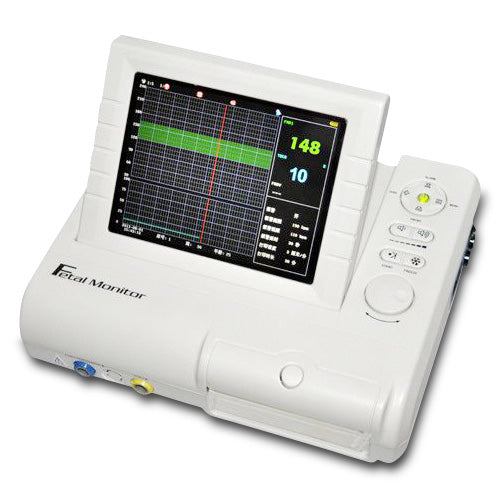
For example, the Contec CMS800G1 fetal monitor listed by Meddey is designed for real-time acquisition of FHR, TOCO and FMOV. The product information also lists an 8.0-inch colour LCD display, thermal printing and an RJ45 network interface.
The CTG Flight 800 fetal monitor is also listed by Meddey with features including an LCD display, simultaneous waveform and digital display, data and waveform storage, fetal heart rate alarms, twin monitoring functionality, a Doppler transducer, thermal printing and PC network connectivity.
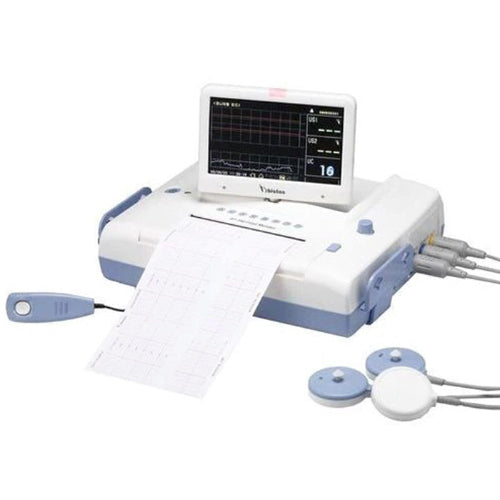
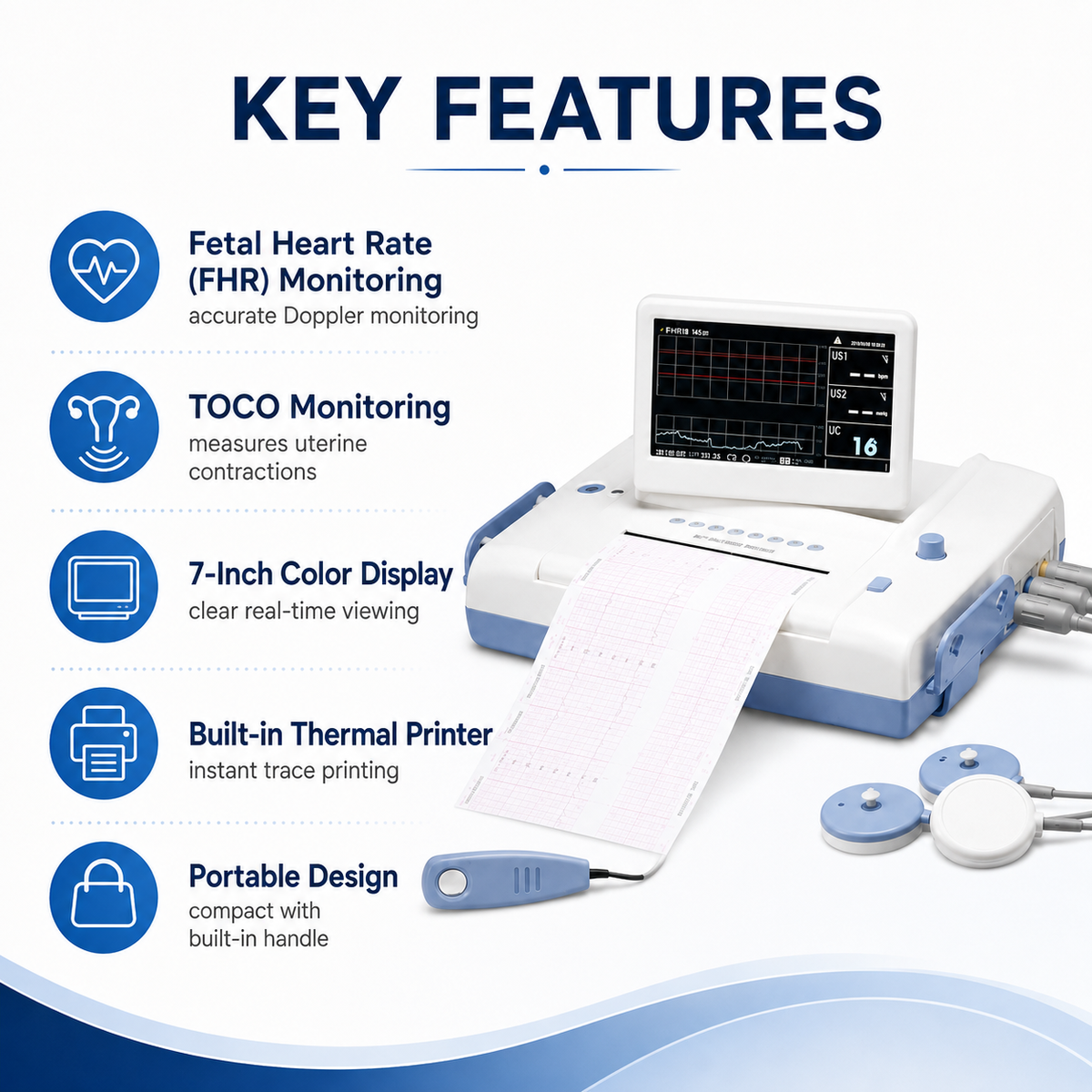
Another option is the Bistos BT350 Fetal Monitor CTG Machine, which Meddey describes as a compact fetal monitoring system with a handle for portability, optional rechargeable battery operation, waterproof probes and connectivity options for central monitoring.
These examples show why fetal monitors can differ considerably in features and configuration. Buyers should therefore review the exact model specifications rather than assuming that every fetal monitor provides the same functions.
What Is a Fetal Monitor?
A fetal monitor is a medical device used to monitor fetal heart rate and, in many CTG systems, uterine contractions. The device generally uses an ultrasound Doppler transducer to detect fetal cardiac activity and a separate sensor to monitor uterine activity. Depending on the system, fetal movement may also be recorded.
The collected information can appear as numerical values, waveforms, trend information or printed traces. This gives qualified healthcare professionals a way to observe changes over the monitoring period and incorporate the recorded information into the patient's clinical assessment.
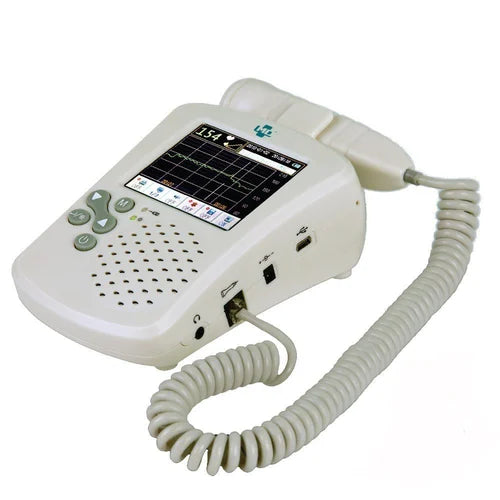
The term fetal monitor can cover several types of equipment. Some devices focus primarily on fetal heart rate detection, while more advanced CTG systems combine FHR, TOCO and fetal movement monitoring. Portable fetal Doppler devices are another category and should not be considered equivalent to full CTG fetal monitoring systems.
For professional maternity care, the choice between a basic fetal Doppler, a CTG machine or a more advanced fetal monitor depends on the intended application, clinical protocol and monitoring requirements. Buyers can also review the medical devices collection at Meddey when comparing professional medical equipment categories.
Key Features of Fetal Monitors
Modern fetal monitoring equipment can offer a combination of monitoring, display, recording and connectivity features. The exact functions depend on the selected model.
- Fetal Heart Rate Monitoring: Measures and displays fetal heart rate through an appropriate fetal Doppler transducer.
- TOCO Monitoring: Compatible systems can monitor uterine contraction activity.
- Fetal Movement Monitoring: Selected models can record or display fetal movement information.
- Digital Display: Colour LCD screens allow healthcare professionals to view monitoring information clearly.
- Waveform Display: Certain CTG systems can display fetal heart rate and contraction waveforms.
- FHR Alarms: Supported systems can provide upper and lower fetal heart rate limit alarms.
- Thermal Printing: Integrated printers can create physical monitoring records on compatible thermal paper.
- Data Storage: Some fetal monitors provide internal storage for monitoring data and waveform information.
- Network Connectivity: Selected systems provide interfaces for connection to central monitoring systems.
- Twin Monitoring: Certain models offer functionality for monitoring two fetal heart rates.
- Portable Design: Some systems feature compact construction and handles for easier movement within clinical environments.
- Battery Operation: Models with battery support can provide greater flexibility where mains power is not immediately available.
- User-Friendly Controls: Clear controls and display layouts can help trained staff operate the system efficiently.
For example, the Contec CMS800G1 fetal monitoring system includes real-time FHR, TOCO and FMOV monitoring, an 8-inch colour LCD, thermal printing and an RJ45 network interface according to the product information published by Meddey.
Fetal Monitor and CTG Monitoring
CTG, or cardiotocography, is commonly associated with fetal monitoring because it allows fetal heart rate and uterine activity to be monitored together. A CTG fetal monitor can present the information as numerical readings and graphical traces, depending on the device.
CTG equipment is particularly useful in clinical environments where healthcare professionals need to observe fetal heart rate patterns alongside uterine contractions. The recorded information can then be reviewed as part of a broader clinical assessment.
A CTG system may use an ultrasound Doppler transducer for fetal heart rate monitoring and a TOCO sensor for uterine activity. Some systems also provide fetal movement recording. The specific sensor arrangement, operating procedure and supported functions vary by manufacturer and model.
The Fetal Monitor with CTG Flight 800 listed by Meddey, for instance, includes simultaneous waveform and digital display, data and waveform storage, FHR upper and lower limit alarms, twin monitoring functionality and a built-in thermal printer.
When purchasing a CTG machine, healthcare facilities should check whether the system supports the required monitoring parameters, number of probes, printing format, storage capacity, alarm functions and connectivity requirements.
Applications of Fetal Monitors
Fetal monitors are primarily used in professional maternity and obstetric care settings. Their applications can include:
- Antepartum fetal monitoring
- Intrapartum fetal monitoring
- Labour and delivery monitoring
- Obstetric assessment
- Fetal heart rate observation
- Uterine contraction monitoring
- Fetal movement monitoring where supported
- Non-stress testing with compatible equipment and clinical protocols
- High-risk pregnancy monitoring under professional supervision
- Monitoring in maternity wards and obstetric departments
- Monitoring in hospitals and specialised clinics
The exact clinical use of a fetal monitor depends on the device configuration and the healthcare professional's assessment. A fetal monitor provides measurement and recording information; it does not replace professional diagnosis or clinical decision-making.
For this reason, healthcare facilities should select equipment according to their patient population, clinical workflow, monitoring requirements and applicable standards.
Types of Fetal Monitoring Equipment
1. CTG Fetal Monitors
CTG fetal monitors combine fetal heart rate monitoring with uterine activity monitoring. They are commonly used in maternity and obstetric settings where continuous or structured fetal monitoring is required.
2. Fetal Doppler Monitors
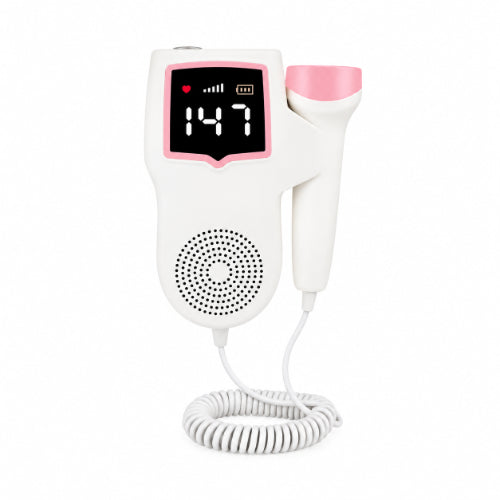
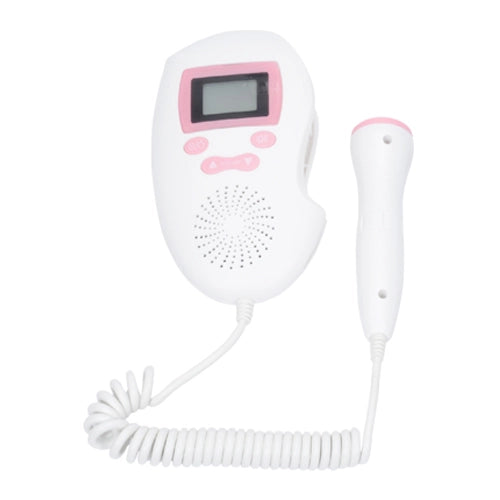
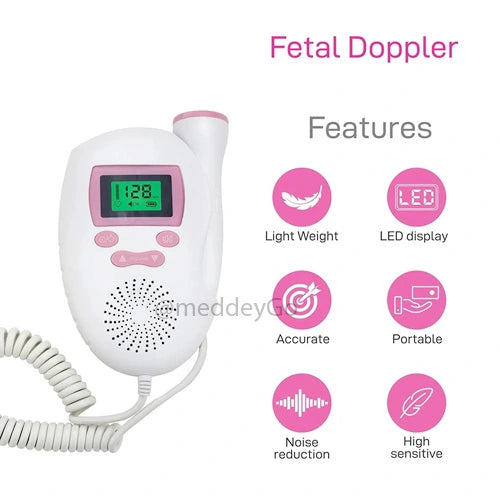
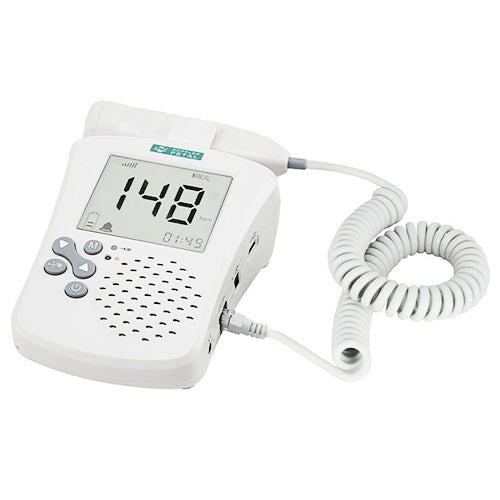
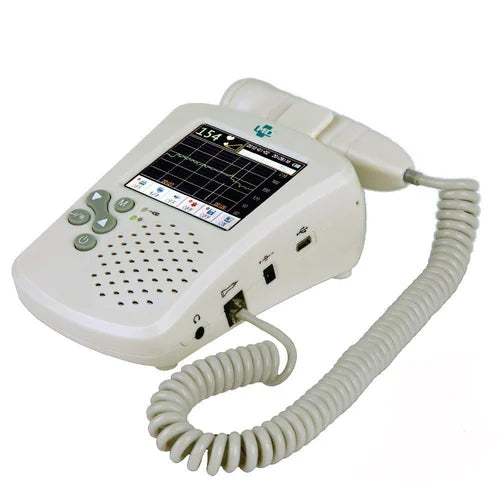
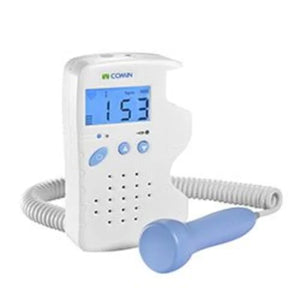
Fetal Doppler devices use ultrasound Doppler technology to detect fetal heart activity. They can be portable and compact. However, a handheld fetal Doppler is different from a full CTG fetal monitor because it may not provide uterine contraction monitoring, graphical CTG recording or the same data management functions. Meddey's Pocket Digital Fetal Doppler Monitor is an example of a compact Doppler device.
3. Twin Fetal Monitors
Some advanced fetal monitors support twin monitoring. This functionality allows the system to track two fetal heart rates when the required configuration and clinical application are appropriate. The CTG Flight 800 product information published by Meddey specifically lists twin monitoring functionality.
4. Portable Fetal Monitoring Systems
Portable fetal monitors are designed with mobility in mind. A compact body, carrying handle or battery support can make a system easier to move between suitable clinical locations. The Bistos BT350 fetal monitor information published by Meddey highlights its compact design and built-in handle, while an optional rechargeable battery is also described.
Benefits of Using Fetal Monitors
A suitable fetal monitoring system can support organised and consistent monitoring in maternity care. Key benefits include:
- Continuous Observation: Supported systems can monitor fetal heart rate over an extended period.
- Real-Time Information: Healthcare professionals can view current monitoring information on the display.
- Trend Review: Some systems store data or display waveforms that can assist with review over the monitoring period.
- Clinical Documentation: Thermal printers can create physical monitoring traces where printing is supported.
- Alarm Support: Configurable alarms can notify users when monitored fetal heart rate values cross specified limits.
- Workflow Support: Digital displays and integrated monitoring functions can help organise clinical observations.
- Connectivity: Network-enabled models can support integration with compatible central monitoring systems.
- Flexible Use: Portable and battery-supported systems can provide additional flexibility in appropriate clinical environments.
The benefits of a specific model depend on its design and available functions. Buyers should compare the actual specifications before selecting equipment for a hospital, maternity clinic or obstetric department.
Technical Specifications to Consider
When choosing a fetal monitor, healthcare buyers should review the following technical areas:
| Specification | What to Check |
|---|---|
| FHR Monitoring | Fetal heart rate range, accuracy and monitoring method |
| TOCO | Availability and range of uterine contraction monitoring |
| FMOV | Whether fetal movement detection or recording is supported |
| Display | Screen size, visibility and waveform presentation |
| Printer | Printer type, paper width and available printing speeds |
| Connectivity | Network ports and compatibility with central monitoring systems |
| Battery | Battery availability and operating time where applicable |
| Probe Configuration | Single, twin or other supported probe configurations |
The Contec CMS800G1 product page, for example, lists an 8.0-inch colour LCD, thermal printer, 112 mm record paper width, 104 mm effective printing width, 1/2/3 cm per minute printing speeds and an RJ45 network port.
How to Use a Fetal Monitor
Fetal monitoring equipment should be used by trained healthcare professionals according to the manufacturer's instructions and the clinical protocol applicable to the patient.
- Place the fetal monitor on a stable surface and connect the required power supply.
- Check the device, probes, cables and accessories before use.
- Prepare the patient according to the applicable clinical procedure.
- Position the appropriate fetal Doppler transducer according to professional guidance.
- Attach the TOCO sensor when uterine contraction monitoring is required and supported.
- Confirm that the monitor is receiving appropriate signals.
- Observe the fetal heart rate and other available parameters on the display.
- Adjust alarm limits and monitoring settings according to the clinical protocol and device instructions.
- Use the recording or printing function when documentation is required.
- After monitoring, remove sensors carefully and clean the equipment according to the manufacturer's instructions.
Correct probe positioning is important for obtaining an appropriate signal. If the monitor displays an unstable or unclear signal, the operator should follow the troubleshooting and positioning instructions provided by the manufacturer.
How to Choose the Right Fetal Monitor
Choosing the right fetal monitor requires more than comparing prices. Healthcare facilities should first identify the intended clinical application and then compare the technical features of suitable models.
Monitoring Requirements
Determine whether you need fetal heart rate monitoring only or a complete CTG solution with FHR, TOCO and fetal movement monitoring.
Single or Twin Monitoring
If the facility needs equipment for twin pregnancies, verify that the selected model supports twin fetal heart rate monitoring and has the required probe configuration.
Display Requirements
Consider screen size, readability, waveform presentation and the amount of information visible at one time.
Printing and Documentation
If physical CTG records are part of the facility's workflow, check whether the monitor includes an integrated thermal printer and confirm paper size and printing speed.
Connectivity
For hospitals using central monitoring, check network interfaces and compatibility with the existing monitoring infrastructure.
Portability
For departments that move equipment between rooms, consider the monitor's dimensions, handle design and battery support.
Service and Warranty
Review warranty coverage, accessories, technical support and availability of replacement components before purchase. You can compare the available specifications on the individual CTG Flight 800 product page and other relevant product listings.
Safety and Care Guidelines
Fetal monitors are specialised medical devices and require proper handling. Always follow the manufacturer's instructions and the healthcare facility's procedures.
- Use the device only for its intended clinical purpose.
- Allow trained personnel to operate the fetal monitoring system.
- Inspect cables, probes and connectors before use.
- Do not use damaged accessories.
- Keep the monitor clean and dry according to the manufacturer's cleaning instructions.
- Use only compatible accessories and consumables.
- Follow the recommended maintenance schedule.
- Do not open or modify the device unless authorised service personnel are performing the work.
- Follow appropriate electrical safety procedures.
- Store the monitor in a clean, dry environment when it is not in use.
Fetal monitoring results should always be interpreted by a qualified healthcare professional in the context of the patient's clinical condition. A monitor is a diagnostic support and monitoring tool; it should not be used as a substitute for professional assessment.
Care and Maintenance of Fetal Monitors
Regular care can help maintain the equipment in suitable working condition. Before cleaning, disconnect the device according to the manufacturer's instructions and use only approved cleaning methods.
Probes should receive particular attention because they come into contact with the patient and play an important role in signal acquisition. Follow the manufacturer's instructions for cleaning, disinfection and storage of each probe.

Thermal printers should also be maintained correctly. Use the recommended paper type and ensure that paper is installed correctly. Keep the printing mechanism free from dust and residue as recommended by the manufacturer.
For network-connected systems, healthcare facilities should also maintain appropriate connectivity and software configurations. If the equipment develops a technical problem, contact authorised service personnel instead of attempting unauthorised repairs.
Fetal Monitors Available at Meddey
Meddey's medical-device collection currently includes fetal monitoring products such as the Fetal Monitor with CTG Flight 800 and Contec Fetal Monitor CMS800G1. The wider monitor collection also lists the Bistos BT350 Fetal Monitor CTG Machine with 7-inch screen.
The Contec CMS800G1 is presented as a fetal monitoring system for FHR, TOCO and FMOV, with an 8-inch colour LCD, thermal printing and network connectivity.
The CTG Flight 800 listing describes features such as an 8.4-inch LCD screen, waveform and digital display, data storage, FHR alarms, twin monitoring, Doppler technology, thermal printing and PC network connectivity.
The Bistos BT350 is described as a compact CTG monitor with portability features, optional rechargeable battery support, waterproof probes and central monitoring connectivity options.
Because different models have different specifications, healthcare professionals should review the individual product page before placing an order. This helps ensure that the selected fetal monitor matches the required monitoring parameters, accessories and workflow. Browse the monitors collection to explore additional monitoring equipment available through Meddey.
Fetal Monitor vs Fetal Doppler
Although the terms are sometimes used interchangeably in online searches, a full fetal monitor and a fetal Doppler are not necessarily the same type of equipment.
A fetal Doppler generally focuses on detecting fetal heart sounds or fetal heart rate using Doppler ultrasound. A full CTG fetal monitor can provide a broader monitoring workflow, including fetal heart rate, uterine contractions and, on selected models, fetal movement. It may also provide waveform recording, alarms, data storage and thermal printing.
For example, Meddey's Pocket Digital Fetal Doppler Monitor is described with a 1.3-inch LCD, Doppler ultrasound technology and an FHR range of 50 to 210 beats per minute. This type of device serves a different purpose from a larger CTG system.
Therefore, healthcare facilities should select the device based on the required clinical application rather than choosing a product only because it contains the words “fetal monitor” in its name.
Fetal Monitors for Hospitals and Maternity Clinics
Hospitals and maternity clinics require dependable medical equipment for structured patient monitoring. Fetal monitors can support obstetric teams by providing fetal heart rate information and, depending on the selected model, uterine contraction and fetal movement data.
A professional fetal monitor can become an important part of the monitoring workflow in labour rooms, maternity departments and obstetric units. Models with large displays allow staff to observe readings and waveforms, while integrated printers can create physical records for documentation. Network-enabled systems can also support central monitoring where compatible infrastructure is available.
When searching for a fetal monitor price, buyers should consider the complete equipment configuration rather than focusing only on the initial purchase cost. Probe configuration, printer availability, display size, battery support, connectivity, warranty and after-sales service can all affect the suitability of the equipment for a particular facility. Review the listed specifications and current availability on the Contec fetal monitor product page.
Similarly, buyers looking for a CTG machine should verify whether the selected model supports the required FHR, TOCO and fetal movement functions. A CTG machine with the right monitoring parameters can provide a more comprehensive monitoring workflow than a basic fetal Doppler.
Meddey's range provides access to different fetal monitoring options, allowing healthcare buyers to compare models according to their intended use. The current medical devices collection lists fetal monitors alongside other professional monitoring equipment.
Frequently Asked Questions About Fetal Monitors
What is a fetal monitor used for?
A fetal monitor is used to monitor fetal heart rate and, depending on the model, uterine contractions and fetal movement. These measurements can support professional obstetric assessment.
What is a CTG fetal monitor?
A CTG fetal monitor is a system designed to monitor fetal heart rate together with uterine activity. Some systems also support fetal movement monitoring, alarms, waveform recording and printing.
Can fetal monitors monitor twins?
Some fetal monitors provide twin monitoring functionality. Buyers should check the exact model and probe configuration before purchase. The CTG Flight 800 listed by Meddey includes twin monitoring functionality.
Do fetal monitors have a printer?
Selected fetal monitors include integrated thermal printers. For example, the Contec CMS800G1 includes a thermal printer with Z-fold thermal paper support.
What is FHR in fetal monitoring?
FHR stands for fetal heart rate. It represents the rate of the fetal heartbeat and is one of the main parameters monitored by fetal monitoring systems.
What is TOCO in a fetal monitor?
TOCO refers to monitoring of uterine activity or contractions. CTG systems can display TOCO information alongside fetal heart rate information.
Are fetal monitors suitable for home use?
Suitability depends on the specific device and intended use. Professional CTG fetal monitors are specialised medical equipment and should be operated according to professional guidance. A handheld fetal Doppler is a different type of device and should not be treated as a replacement for professional obstetric assessment. Read the specifications for the Pocket Digital Fetal Doppler Monitor for details about that specific product.
How do I choose a fetal monitor?
Consider the required monitoring parameters, FHR range, TOCO and fetal movement functions, single or twin monitoring, display, printing, data storage, connectivity, portability, battery support, warranty and service requirements.
Conclusion
Fetal Monitors provide healthcare professionals with important monitoring information during pregnancy and labour. Depending on the model, these systems can monitor fetal heart rate, uterine contractions and fetal movement while also offering features such as waveform display, alarms, data storage, thermal printing and network connectivity.
Choosing the correct fetal monitoring equipment requires careful consideration of the clinical application and technical requirements. Hospitals, maternity clinics and obstetric departments should compare the monitoring parameters, probe configuration, display, printer, connectivity, battery support, warranty and service options before purchase.
Meddey's fetal monitoring range includes options such as the Contec CMS800G1, CTG Flight 800 and Bistos BT350, with individual models offering different combinations of monitoring and documentation features.
Explore the available fetal monitors and medical devices and compare the individual product specifications to select equipment that matches your professional healthcare requirements.
Explore Medical Collections
All Categories
Abdominal & Maternity Support

Accessories

Accu-Chek Instant Strips: Use, Compatibility, Price & Blood Sugar Testing Guide
Accu-Chek Instant Strips: Uses, Features & Complete Guide

accupuncture

Acupuncture Needles & Supplies

Advanced Physiotherapy Machines & Lumbar Physiotherapy

Airways

Ambulance

Anatomy Models
Anesthesia Machine

Anesthesia Products

Ankle Support for Home Use: Braces, Sleeves & Walker Boots

Ankle Weights & Exercise Weights for Home & Rehab

Anti-Bedsore Air Mattresses
You may also need
FOR YOURecommended for you
Save 30%
Save 25%
Save 42%
Save 50%
Save 50%
Save 13%