



Featured ChoiceSave 47%


Save 26%

Save 22%


Save 14%

Save 13%

Save 14%

Sold out

Sold out


Sold out
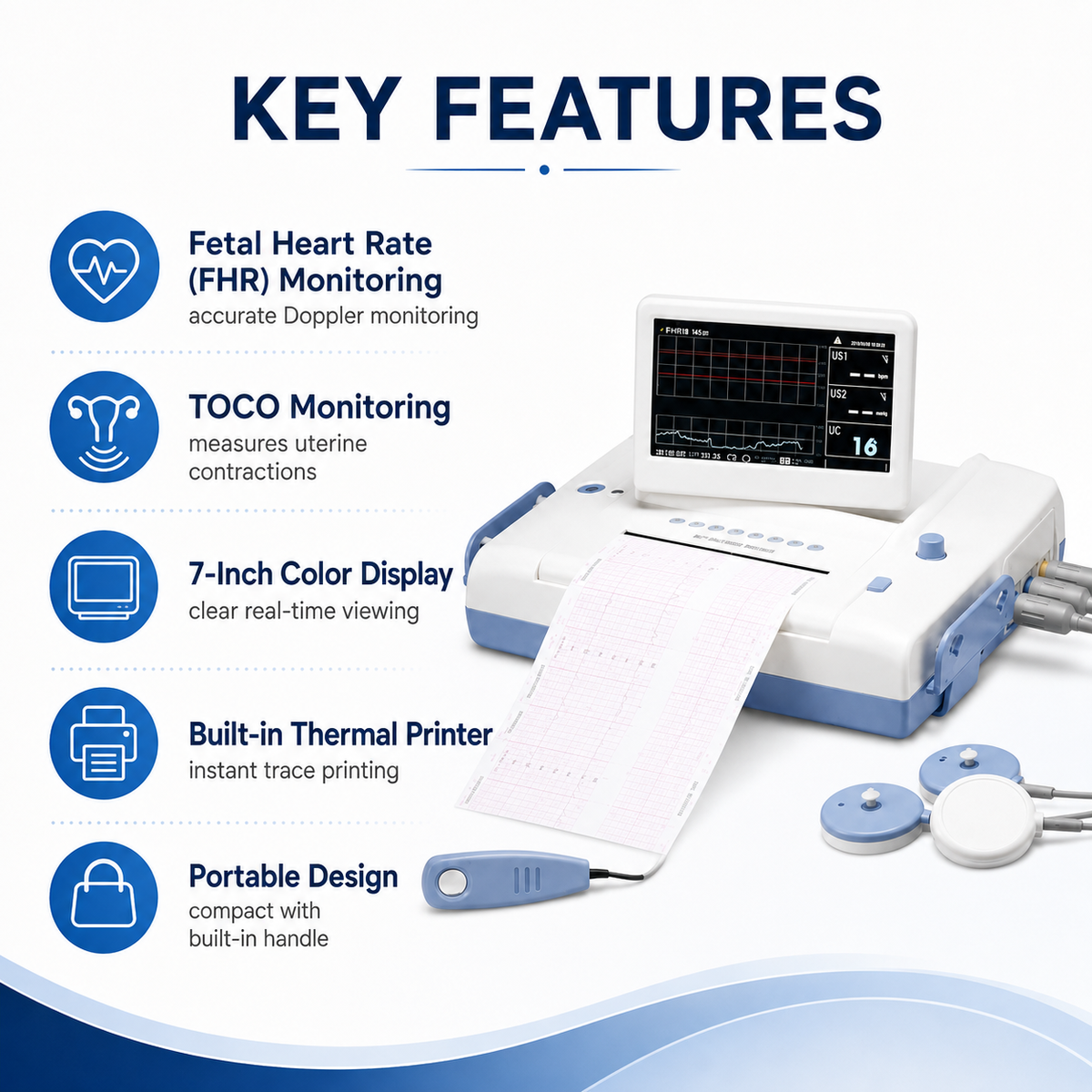

About this collection
A patient monitor brings important vital-sign readings together on one screen. Depending on the model, healthcare professionals may monitor blood pressure, oxygen saturation, pulse rate, ECG, respiration, temperature and other parameters.
Meddey's range includes compact bedside units, 3-para models, 5-para systems and advanced multiparameter monitors for hospitals, ICUs, clinics and suitable professionally guided home-care settings.
Because monitoring requirements differ between patients and departments, buyers should compare the supported parameters, display, alarms, accessories and intended clinical setting before selecting a model.
Patient Monitor for Hospitals, ICU & Clinics
A patient monitor can help trained healthcare staff observe several body readings without using a separate device for every parameter.
For example, a 3-para bedside unit may focus on a smaller group of vital signs. Meanwhile, a 5-para or multiparameter model may display ECG, blood pressure, oxygen saturation, respiration and temperature together.
Therefore, the best model depends on the monitoring plan rather than simply choosing the machine with the largest screen or most features.
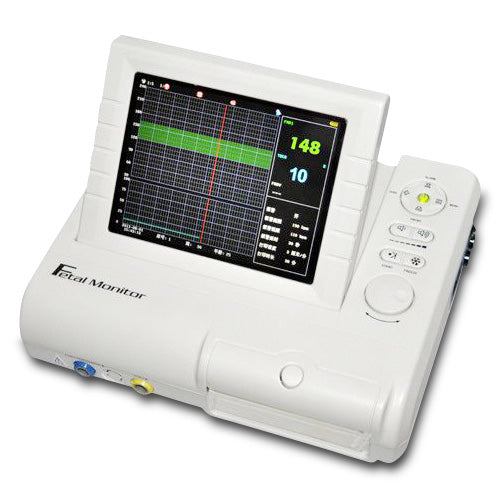
3 Para Bedside Patient Monitor
This bedside unit brings key vital-sign monitoring into a compact system. It can suit hospitals, clinics and selected professionally guided home-care setups.
3 Para Bedside Patient Monitor3 Para Monitor with Wall Stand
This configuration combines bedside monitoring with a wall-mounted setup. As a result, it may help keep equipment organised beside a patient bed where wall placement suits the room.
3 Para Patient Monitor with Wall StandCMS6000 5-Parameter Monitor
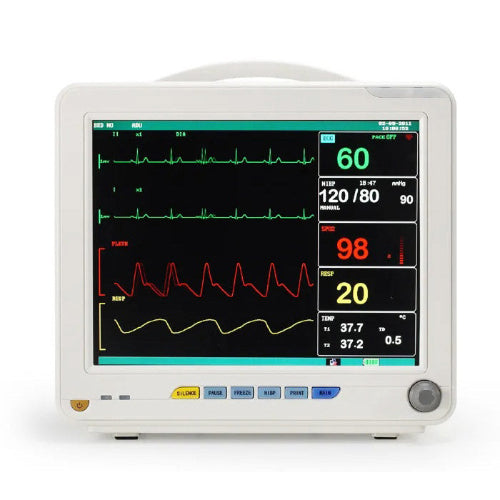
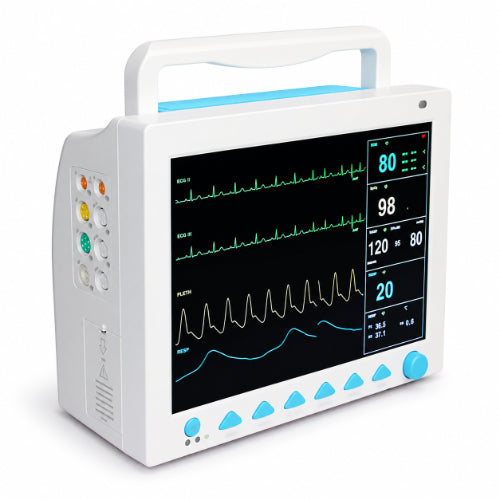
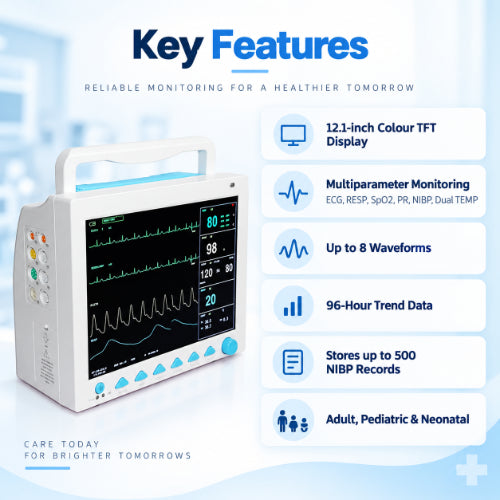
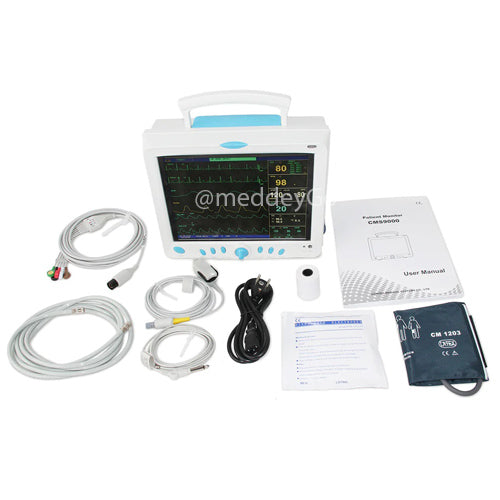
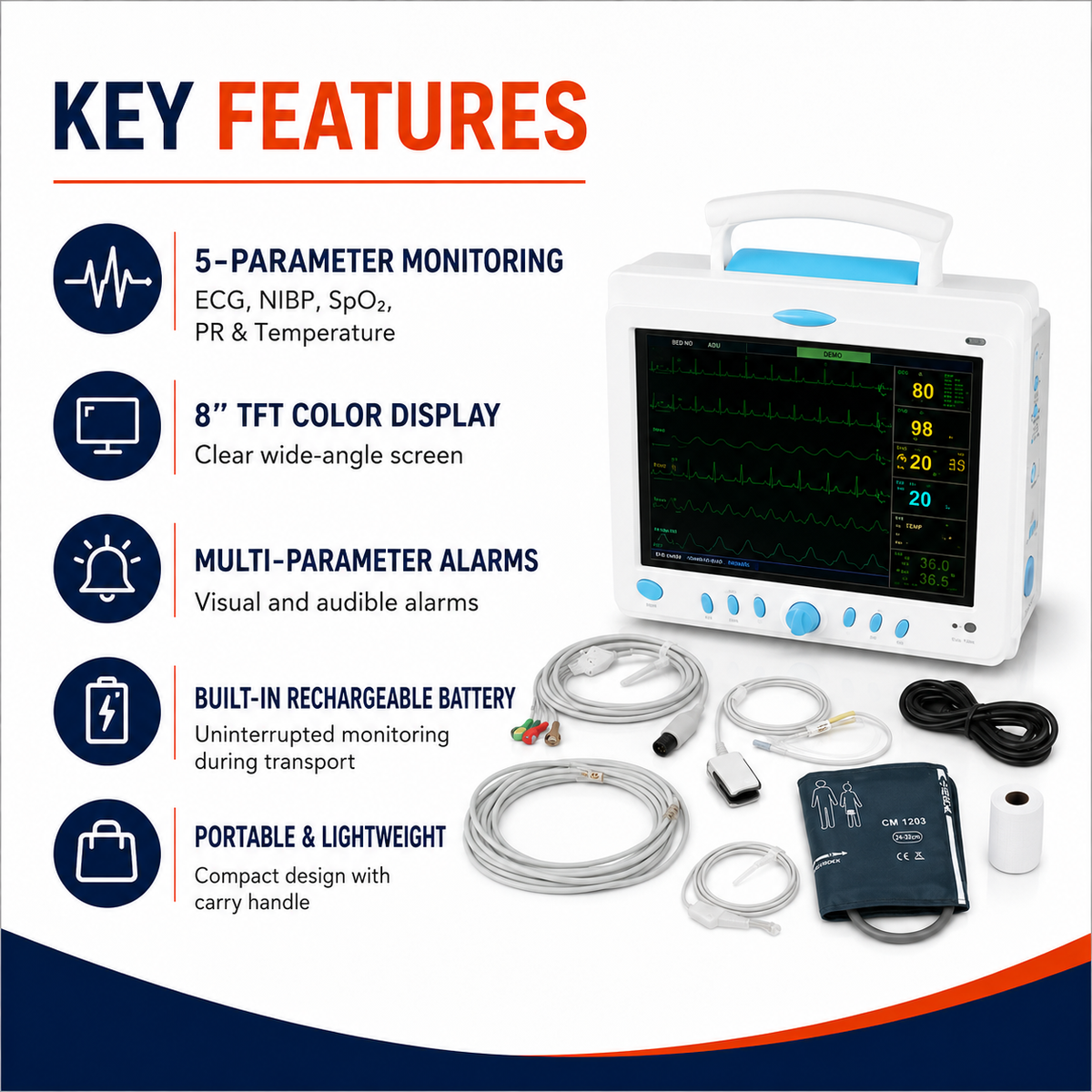
The CONTEC CMS6000 is designed for multi-parameter monitoring in suitable ICU, CCU and other professional care settings. Its current configuration uses an 8-inch colour display.
CONTEC CMS6000 5-Parameter MonitorFlight 9000 with EtCO2
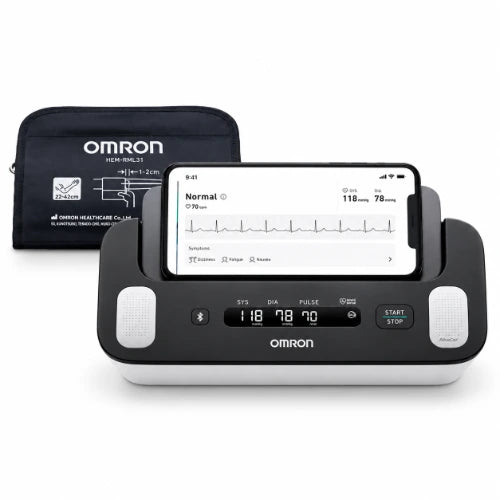
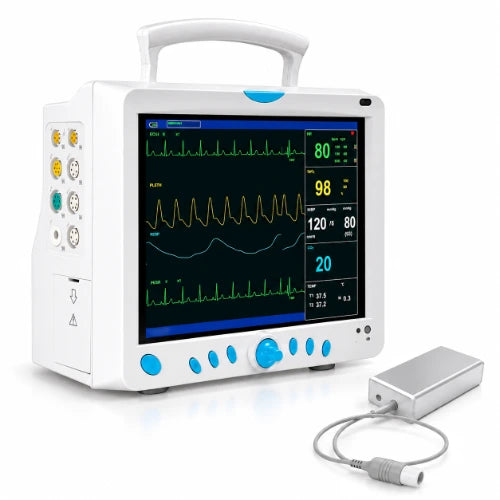
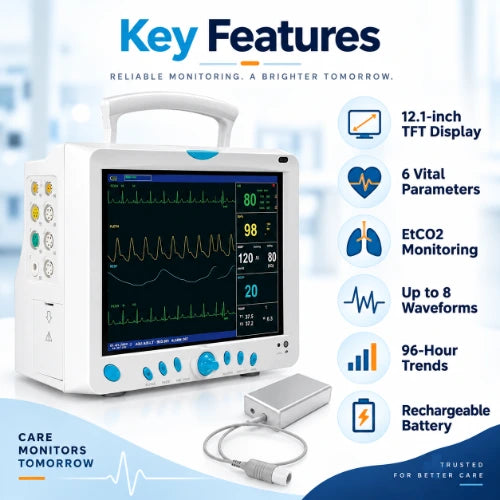
This multiparameter system adds EtCO2 monitoring alongside other vital-sign measurements. Therefore, it can suit professional settings where respiratory monitoring forms part of the clinical plan.
Flight 9000 Multiparameter Monitor with EtCO2How to Choose a Patient Monitor
First, list the parameters that the clinical team actually needs to observe. This step prevents buyers from paying for functions that the department may not use.
- Parameters: compare NIBP, SpO2, ECG, respiration, temperature and other required measurements.
- Patient group: confirm whether the system supports adult, paediatric or neonatal use.
- Display: choose a screen size that staff can read clearly.
- Alarms: review available visual and audible alarm controls.
- Battery: check backup power when mobility or power interruptions matter.
- Accessories: confirm the supplied cuff, probes, leads and sensors.
- Mounting: compare tabletop, trolley and wall-mounted setups.
- Clinical environment: match the system to ward, ICU, OT, recovery or other intended use.
Next, confirm which accessories come with the exact configuration. Adult cuffs or probes may not automatically suit paediatric or neonatal patients.
Finally, compare warranty, service support and replacement accessories before placing a larger institutional order.
3 Para Bedside Monitor
A 3-para system focuses on a smaller set of measurements than a larger multiparameter unit. This can make it practical for suitable routine bedside observation.
One current Meddey bedside model monitors NIBP, SpO2 and pulse rate, while its listed configuration also supports temperature measurement. :chatgpt-content-reference{index="3"}
NIBP means non-invasive blood pressure, while SpO2 estimates blood oxygen saturation. Therefore, caregivers should understand what each reading represents rather than interpreting every number in the same way.
View 3 Para Bedside Monitor5 Para Patient Monitor
A 5-para system can bring more measurements together for professional observation. Depending on the exact model, common parameters can include ECG, NIBP, SpO2, respiration and temperature.
For example, the current CMS6000 supports ECG, NIBP, SpO2, pulse rate and temperature, with an 8-inch TFT colour display. :chatgpt-content-reference{index="4"}
This type of configuration can suit hospitals and higher-monitoring environments where trained staff need several readings available on one screen.
View CMS6000 5 Para MonitorWhat Do the Main Parameters Mean?
| Parameter | Simple Meaning |
|---|---|
| NIBP | Non-invasive blood pressure measured using a cuff. |
| SpO2 | Estimated oxygen saturation measured using a suitable sensor. |
| PR / HR | Pulse or heart rate measured in beats per minute. |
| ECG | Electrical activity of the heart displayed through suitable leads. |
| RESP | Respiration or breathing-rate information. |
| TEMP | Temperature measurement through a compatible probe. |
| EtCO2 | Carbon dioxide measured near the end of an exhaled breath. |
Multiparameter Monitor with EtCO2
Some clinical environments need respiratory information in addition to standard vital signs. In these cases, an EtCO2-enabled monitor may provide useful additional data.
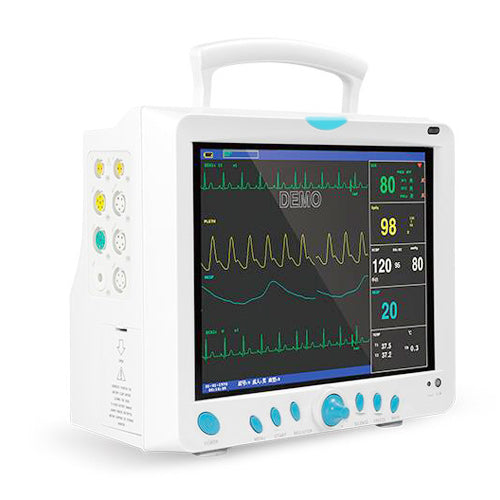
The Flight 9000 monitors ECG, NIBP, SpO2, respiration, temperature and EtCO2. Its current listing also includes a 12.1-inch display and trend-data capabilities. :chatgpt-content-reference{index="5"}
View Flight 9000 with EtCO2Because EtCO2 interpretation relates to respiratory status, trained professionals should guide its clinical use.
Bedside Monitor for Wards & Recovery Areas
Bedside monitoring can help healthcare teams observe important readings during supervised care. Depending on the model, staff may also set alarms to draw attention when a monitored value moves outside selected limits.
However, an alarm does not explain why a reading changed. Therefore, healthcare professionals still need to assess the patient and interpret the reading within the wider clinical situation.
Wall-mounted or trolley-based setups can also help organise bedside equipment according to the available room space.
Patient Monitoring in ICU & CCU
Critical-care areas often require several parameters to remain visible at the same time. For this reason, larger multi-parameter systems may fit ICU or CCU workflows better than basic compact monitors.
The current CMS6000 listing specifically identifies the system for ICU/CCU monitoring and supports adult, paediatric and neonatal patients. :chatgpt-content-reference{index="6"}
Still, departments should choose accessories and settings according to each patient group rather than assuming one cuff or sensor fits everyone.
Patient Monitors for Clinics
Clinics may not require the same setup as a large ICU. Therefore, a compact bedside model can make sense where staff need routine blood pressure, oxygen and pulse information without a large monitoring station.
Before choosing a compact unit, check the screen, battery, alarms and supplied accessories. In addition, confirm whether the clinic needs ECG or other parameters beyond basic vital signs.
Professionally Guided Home Monitoring
Some families may need more structured monitoring at home after medical advice. A compact bedside system can bring several readings together when a doctor, nurse or trained caregiver has established a monitoring plan.
However, this equipment is different from a simple household health gadget. Users need to understand sensor placement, cuff selection, alarms and when a concerning reading requires medical attention.
Therefore, home use should follow appropriate professional guidance when readings may influence care decisions.
Adult, Paediatric & Neonatal Monitoring
Some systems support different patient groups, but the required accessories can change. For example, a cuff designed for an adult may not fit a child or newborn correctly.
Before ordering, confirm whether the package contains the required cuff, SpO2 probe, ECG accessories or temperature probe for the intended patient group.
This check becomes especially important for hospitals purchasing multiple machines across different departments.
Alarm Settings & Patient Safety
Many bedside systems provide audible and visual alarms. These alerts can help draw attention when readings move outside the selected limits.
Nevertheless, staff should not copy alarm limits from another patient or select values by guesswork. Instead, trained healthcare professionals should choose suitable limits according to the patient's care plan.
A monitor supports observation; it does not diagnose the cause of an abnormal reading by itself.
Cleaning & Routine Equipment Care
First, clean the main unit and suitable accessories according to the manufacturer's instructions. Avoid allowing liquid to enter ports or electrical parts.
Next, inspect cuffs, cables, sensors and leads for visible wear. Replace damaged accessories when needed rather than continuing to use unreliable connections.
Finally, follow the manufacturer's service or calibration recommendations where applicable.
Frequently Asked Questions
What is a patient monitor?
It is medical equipment that displays one or more physiological measurements to support patient observation.
What does 3 para mean?
“Para” means parameter. A 3-para system focuses on a smaller group of vital-sign measurements.
What is a 5 para monitor?
It combines several measurements in one system, commonly including ECG, blood pressure, oxygen saturation, respiration and temperature depending on the model.
What does NIBP mean?
NIBP means non-invasive blood pressure, usually measured automatically using an arm cuff.
What does SpO2 mean?
SpO2 is an estimate of blood oxygen saturation measured through a compatible sensor.
What is EtCO2 monitoring?
EtCO2 measures carbon dioxide near the end of an exhaled breath and supports respiratory monitoring in suitable clinical settings.
Can one monitor work for adults and children?
Some models support multiple patient groups. However, buyers should confirm compatible cuffs and sensors for the intended age group.
Can a bedside monitor be used at home?
Selected systems may support professionally guided home monitoring when caregivers understand the equipment and monitoring plan.
Does an alarm always mean an emergency?
No. It means a reading or system condition needs attention. Clinical assessment determines what the alert means for that patient.
How do I choose between 3 para and 5 para?
Start with the parameters the care setting needs. Then compare accessories, display, alarms, patient groups and available support.
Need Help Choosing a Patient Monitor?
For specifications, accessories, current availability or institutional requirements, contact Meddey Customer Care on WhatsApp at +91 85860 12345 .
Clinical note: Monitoring devices provide measurements that support patient observation. They do not diagnose medical conditions or replace assessment by a qualified healthcare professional.
Explore Medical Collections
All Categories
Abdominal & Maternity Support

Accessories

Accu-Chek Instant Strips: Use, Compatibility, Price & Blood Sugar Testing Guide
Accu-Chek Instant Strips: Uses, Features & Complete Guide

Accupressure Products for Pressure Point Therapy, Pain Relief & Wellness

accupuncture

Acupuncture Needles & Supplies

Advanced Physiotherapy Machines & Lumbar Physiotherapy

Airways

Ambulance

Anatomy Models
Anesthesia Machine

Anesthesia Products
Ankle Support, Braces & Walker Boots for Recovery

Ankle Weights & Exercise Weights for Home & Rehab
You may also need
FOR YOURecommended for you
Save 47%
Save 26%
Save 22%
Save 14%
Save 13%
Save 14%