


Featured ChoiceSave 67%

Save 50%

Save 35%

Save 50%
Save 22%

Save 13%
Save 50%

Save 50%

Save 50%

Save 50%

Save 50%
Save 41%
Save 50%

Save 47%
Save 50%

Save 50%

Save 24%

Save 41%


Save 27%

Save 20%
Save 25%

Save 46%

Save 50%
Save 25%

Save 44%

Save 50%
Save 23%


Save 24%


Save 56%

Save 48%

Sold out
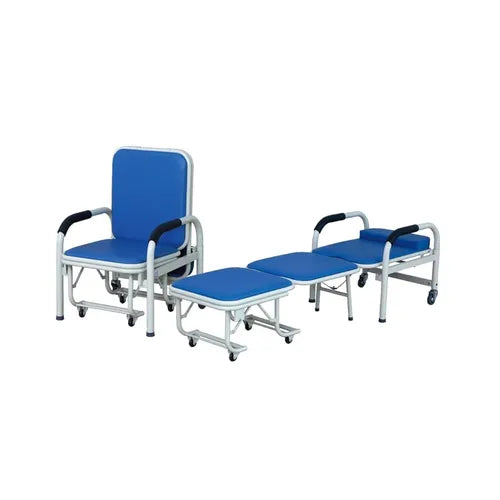
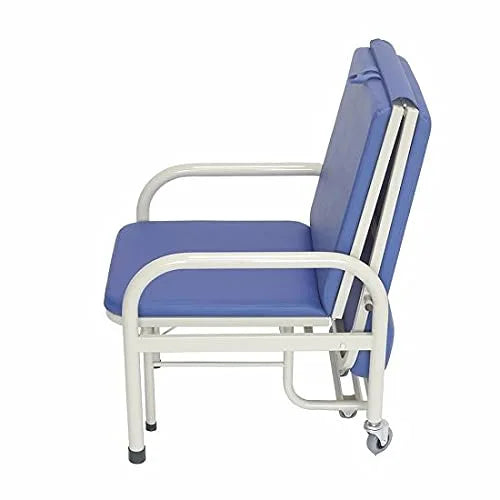
Hospital Bed: Types, Prices, ICU Beds & Professional Buying Guide
A hospital bed is specially designed to support patient positioning, nursing care, mobility and comfort in hospitals, nursing homes, rehabilitation centres and home-care settings. Unlike a standard household bed, a medical bed may include an adjustable backrest, knee section, height control, side railings, castor wheels and other features that make patient care easier.
However, not every patient requires an advanced ICU bed. For example, a person recovering at home may need only a Semi-Fowler bed with an adjustable backrest. In contrast, a critically ill or highly dependent patient may require a multi-function electric ICU bed with height adjustment, Trendelenburg positioning and safety railings.
Therefore, choosing the correct bed depends on the patient's mobility, medical condition, expected duration of use, caregiver needs and available space. In addition, buyers should compare mattress compatibility, side railings, wheel locks, frame quality and after-sales support rather than looking only at the hospital bed price.
This professional guide explains the main types of hospital beds, differences between Semi-Fowler, Full-Fowler and ICU beds, current price considerations in India, home-care suitability, important safety features and how hospitals, clinics and families can choose the right bed.
Doctors, hospitals, nursing homes and home-care buyers can also browse hospital beds available on Meddey.
What Is a Hospital Bed?
A hospital bed is a medical furniture unit designed specifically for patient care. Although the basic purpose is to provide a safe sleeping and resting surface, many hospital beds also allow caregivers to adjust patient position without manually lifting the entire body.
Depending on the model, a hospital bed may include:
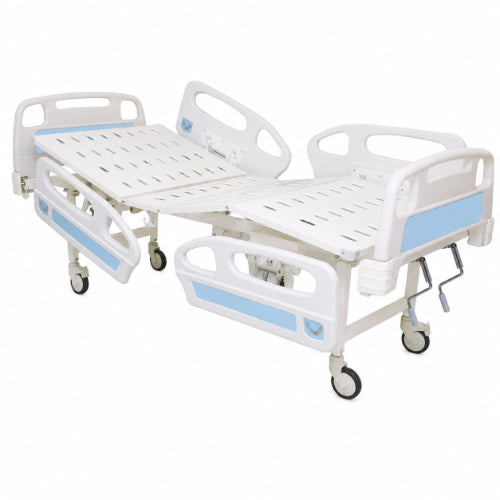
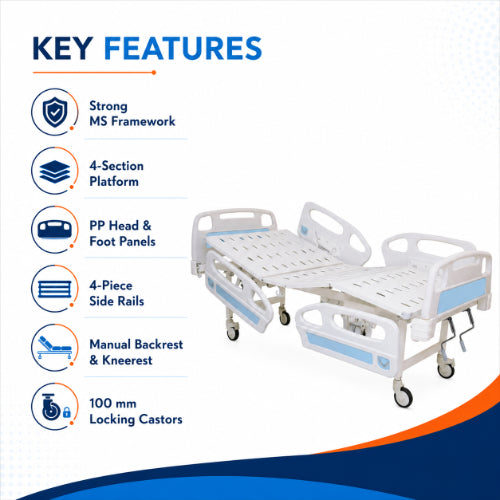
- Adjustable backrest
- Adjustable knee or leg section
- Height adjustment
- Trendelenburg position
- Reverse Trendelenburg position
- Manual crank operation
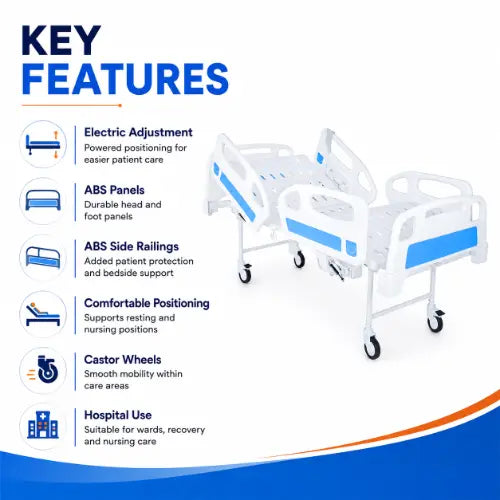
- Electric motor operation
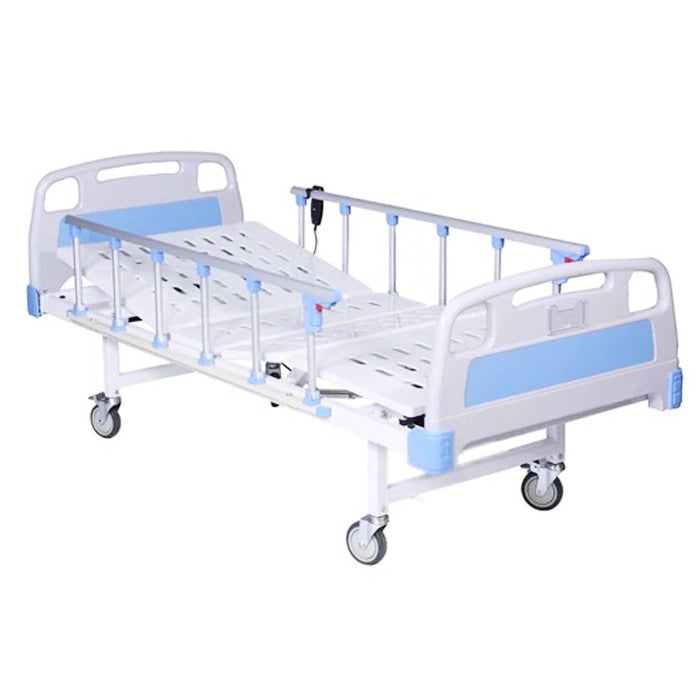
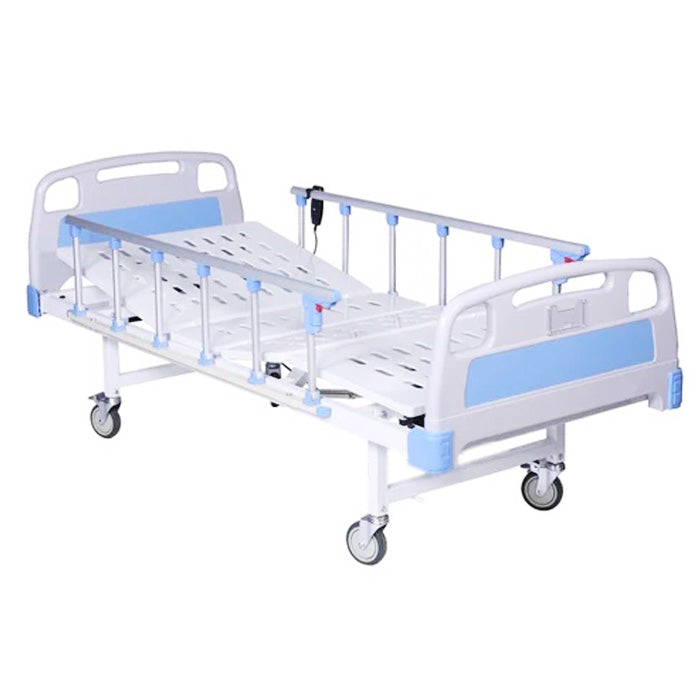
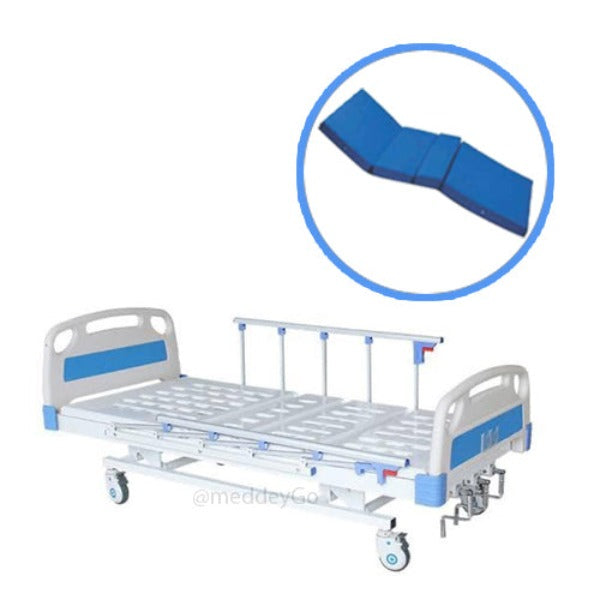
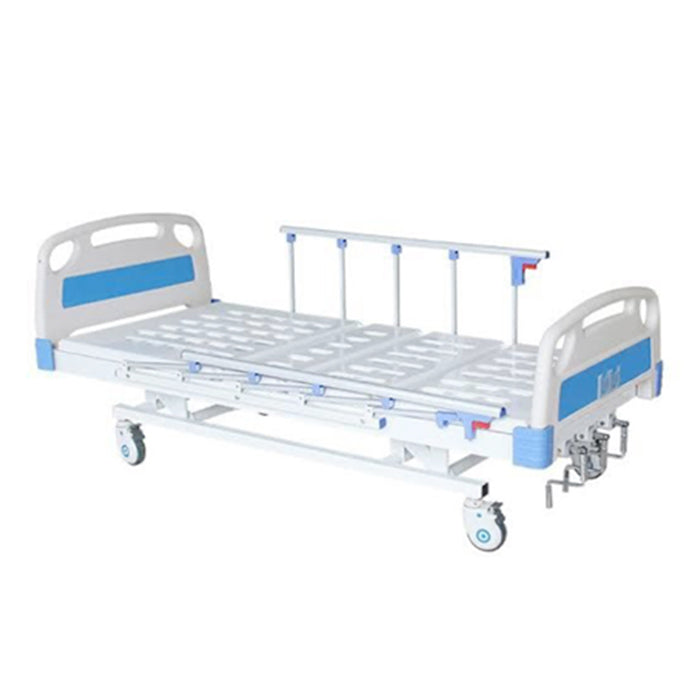
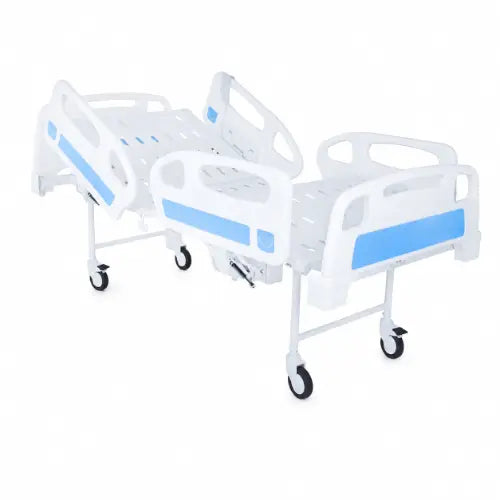
- Collapsible or ABS side railings
- Lockable castor wheels
- Removable head and foot panels
- Mattress platform
- IV pole provision
- Urine bag hooks
As a result, a medical bed can make everyday activities such as eating, repositioning, dressing, examination and nursing care more manageable.
What Are the Main Types of Hospital Beds?
Hospital beds are available in several designs. Therefore, understanding the differences is important before comparing bed hospital price or purchasing a bed for home care.
| Bed Type | Main Adjustment | Typical Use |
|---|---|---|
| Plain Hospital Bed | Fixed platform | General wards and basic patient care |
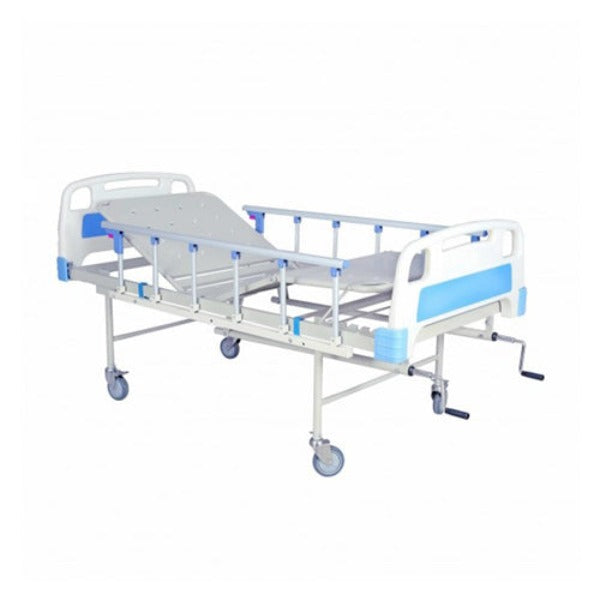
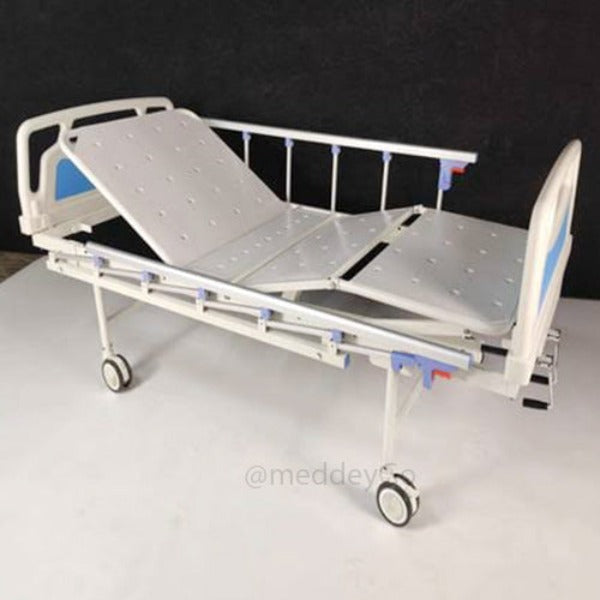
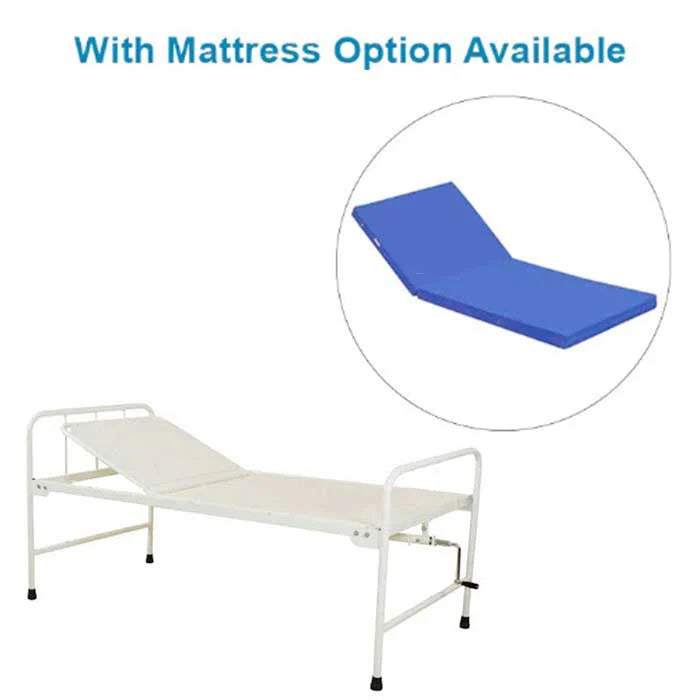
| Semi-Fowler Bed | Adjustable backrest | Home care, recovery and general wards |
| Full-Fowler Bed | Backrest and knee section | Long-term care and greater positioning needs |
| ICU Bed | Multiple positions and height controls | Critical care and highly dependent patients |
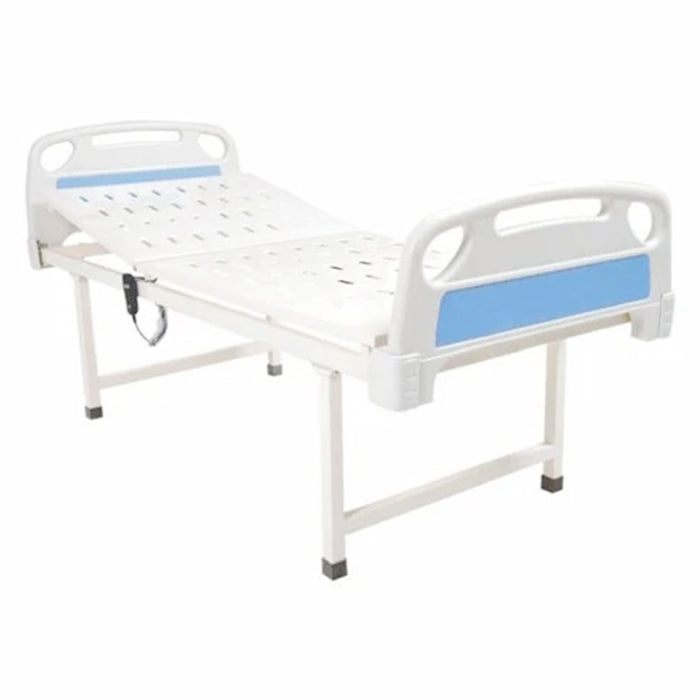
| Electric Hospital Bed | Motorized position adjustment | Hospitals and home care requiring easy adjustment |
Plain Hospital Bed
A plain patient bed has a fixed sleeping platform without backrest or knee-rest adjustment. Because its design is simple, it is usually one of the most affordable hospital-bed options.
In general, a plain bed may be suitable when:
- The patient can change position independently
- Advanced positioning is not required
- The bed is intended for a general ward
- Budget is a major consideration
- Short-term basic care is required
However, a fixed bed may not be ideal for a patient who needs frequent upright positioning, feeding support or help getting in and out of bed.
What Is a Semi-Fowler Hospital Bed?
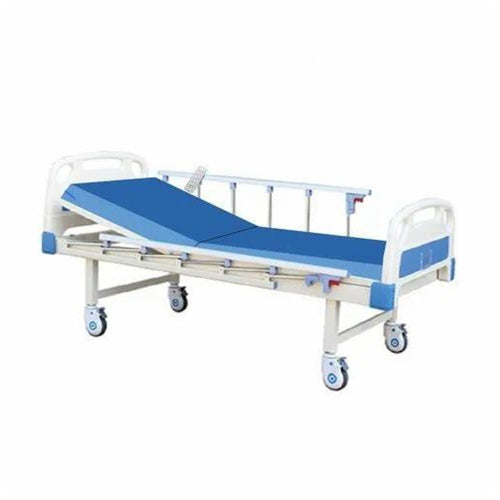
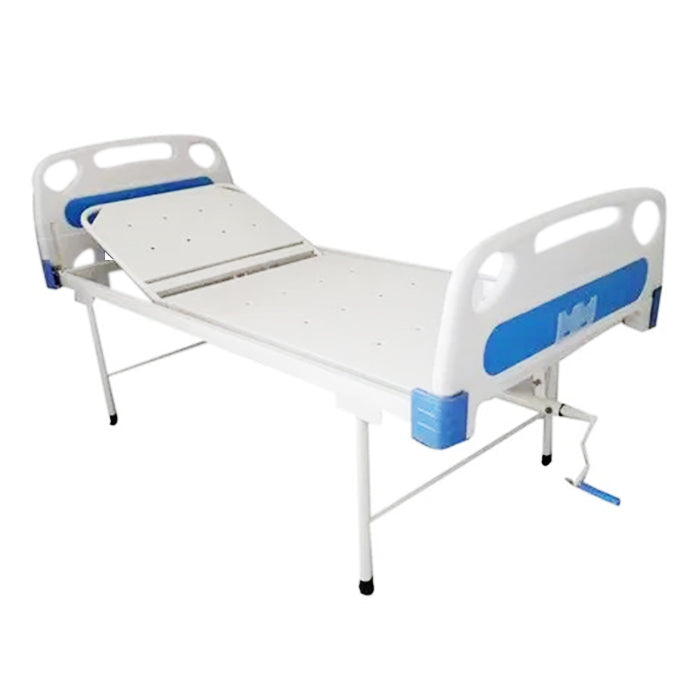
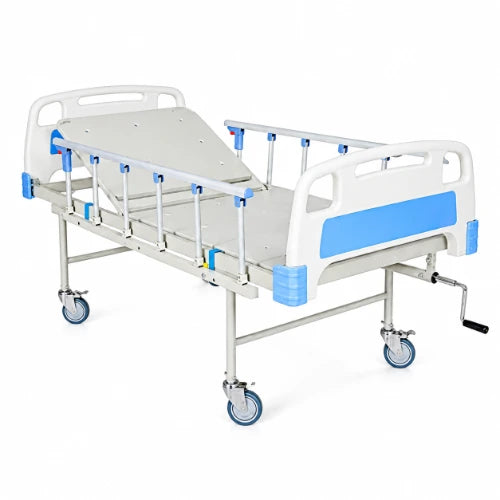
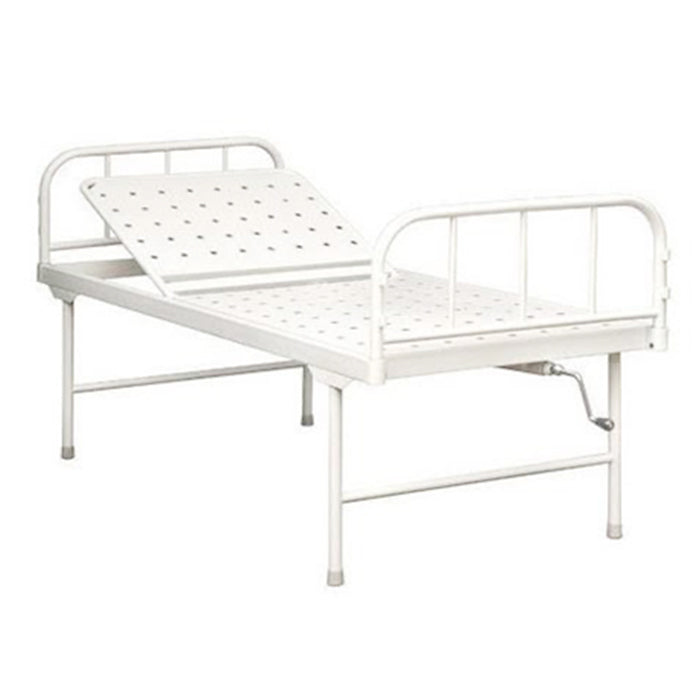
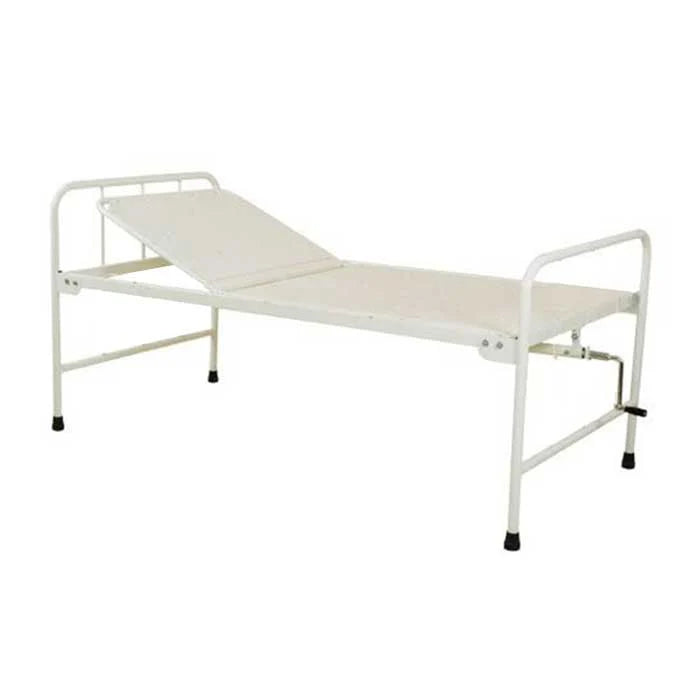
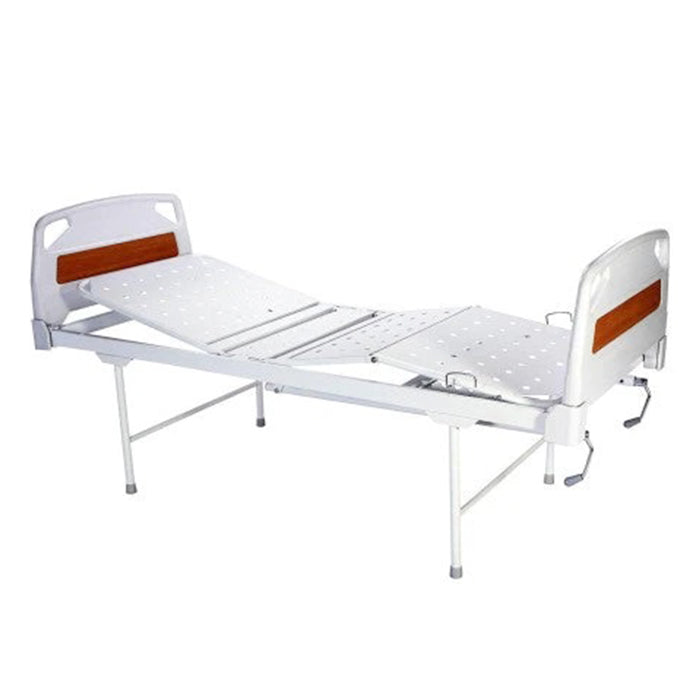
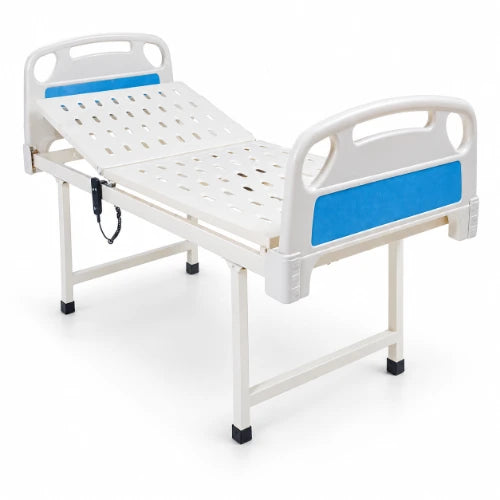
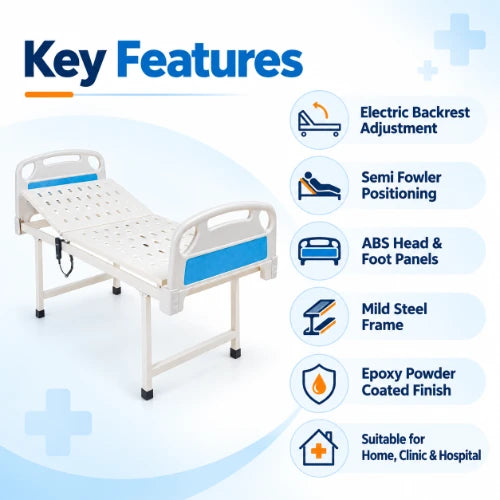
A Semi-Fowler hospital bed allows the backrest section to be raised. Consequently, the patient can move from a flat lying position toward a supported sitting position without needing multiple pillows or manual lifting.
This design is commonly used for:
- Post-surgery recovery
- Home healthcare
- General hospital wards
- Long-term patient care
- Patients who need support while eating
- Patients who spend extended periods in bed
Moreover, Semi-Fowler beds are available with manual crank systems or electric motors. Therefore, buyers can choose between a lower-cost manual option and a more convenient powered version.
Meddey currently offers several Semi-Fowler hospital bed options for hospital and home-care use.
What Is a Full-Fowler Hospital Bed?
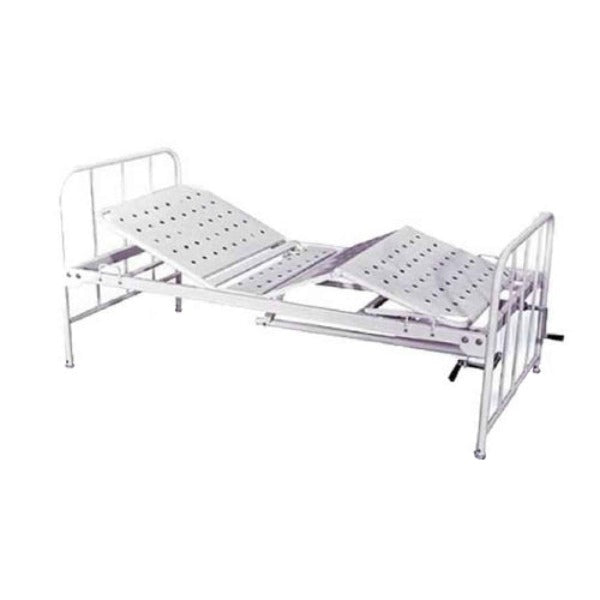
A Full-Fowler bed provides more positioning control than a Semi-Fowler bed. In addition to raising the backrest, it allows adjustment of the knee or leg section.
As a result, caregivers can create several comfortable patient positions without relying only on pillows or wedges.
Full-Fowler beds may be useful for:
- Patients spending long periods in bed
- Post-operative recovery
- Long-term nursing care
- Patients who need regular position changes
- Home-care environments with greater positioning needs
Furthermore, Full-Fowler models may include ABS panels, railings, castor wheels and electric adjustment depending on configuration.
What Is an ICU Bed?
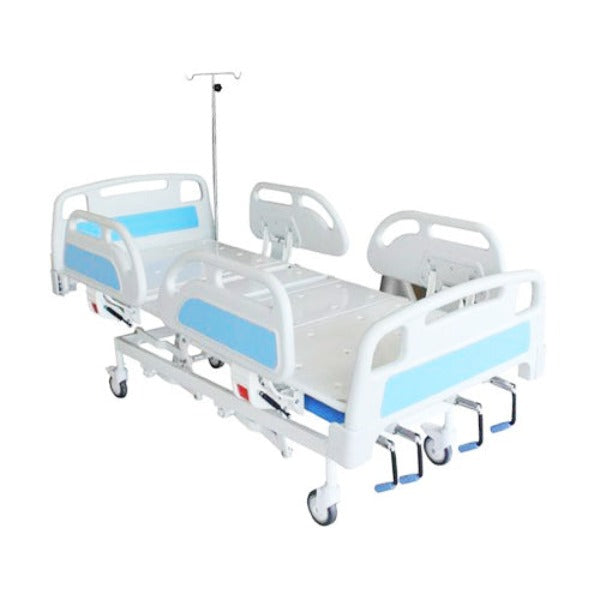
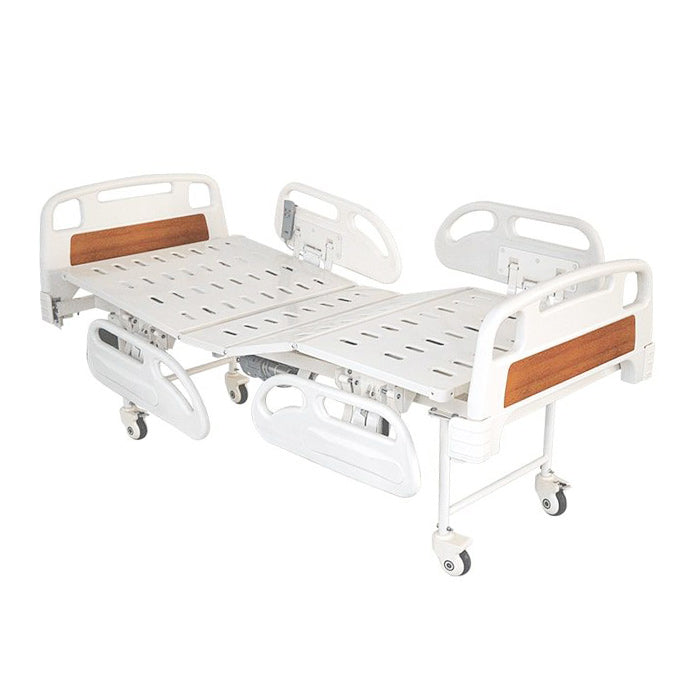
An ICU bed is designed for patients who require greater positioning control and intensive nursing access. Compared with basic hospital beds, ICU beds may provide multiple functions controlled manually or electrically.
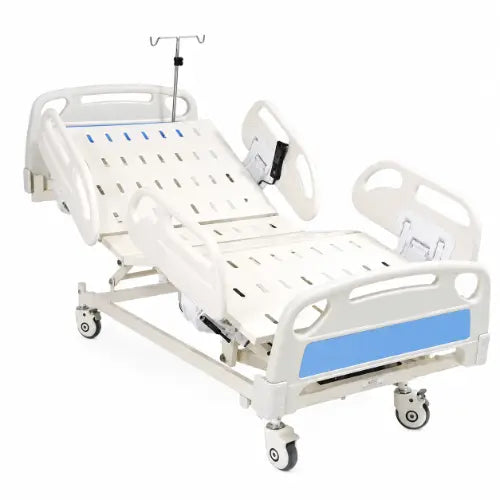
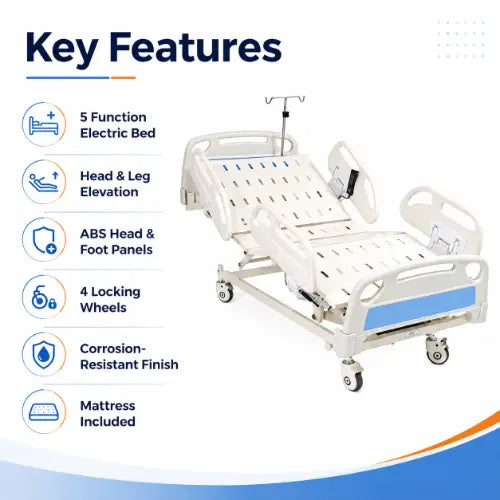
A 5-function ICU bed commonly provides:
- Backrest adjustment
- Knee-rest adjustment
- Height adjustment
- Trendelenburg positioning
- Reverse Trendelenburg positioning
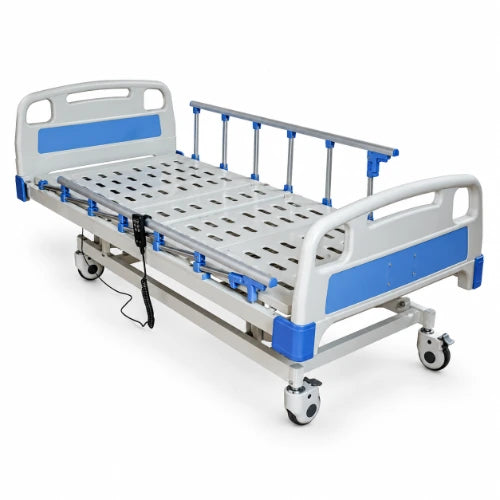
In addition, an ICU bed may include collapsible safety railings, lockable wheels, ABS head and foot panels and mattress compatibility.
Because critically ill patients may need frequent repositioning, these controls can make nursing care more efficient. However, the exact functions vary by model.
Hospitals and buyers can compare ICU beds available on Meddey.
Mechanical vs Electric Hospital Bed
Another important buying decision is whether to select a manual or electric adjustment system.
| Feature | Mechanical Hospital Bed | Electric Hospital Bed |
|---|---|---|
| Adjustment | Manual crank | Electric motor and controls |
| Power required | No | Yes |
| Ease of adjustment | Requires caregiver effort | Easier adjustment |
| Maintenance | Relatively simple | Includes electrical components |
| Price | Generally lower | Generally higher |
| Best suited for | Budget-conscious wards and home care | Frequent positioning and greater caregiver convenience |
Therefore, an electric bed may be preferable when positions need to be changed frequently. On the other hand, a mechanical bed can provide good value where power-based adjustment is not essential.
What Is the Price of a Normal Hospital Bed?
The hospital bed price in India varies according to bed type, frame material, adjustment system, railings, wheels, mattress and included accessories.
Based on current Meddey listings reviewed for this guide, basic Semi-Fowler models are available from approximately ₹9,299–₹12,999, while more advanced Semi-Fowler configurations with ABS panels, railings or electric controls cost more.
Meanwhile, Full-Fowler beds generally cost more because they offer additional positioning. Multi-function mechanical and electric ICU beds are significantly more expensive because they provide greater adjustment and more complex construction.
| Bed Category | Current Example Price Range |
|---|---|
| Semi-Fowler Manual Bed | Around ₹9,299–₹24,499 depending on configuration |
| Semi-Fowler Electric Bed | Around ₹21,499–₹29,999 |
| Full-Fowler Bed | Around ₹15,999 upward |
| 5-Function Mechanical ICU Bed | Around ₹33,499–₹46,499 |
| 5-Function Electric ICU Bed | Around ₹68,200 upward |
These are example online prices at the time of review. Product prices, offers and availability can change. Therefore, always check the latest live listing before purchase.
What Is the Cost of a Single Hospital Bed?
The cost of a single hospital bed depends mainly on the level of adjustment required.
For example, a simple fixed or Semi-Fowler model generally costs much less than an electric ICU bed. Furthermore, the final cost may change depending on whether the bed includes:
- Mattress
- ABS head and foot panels
- Side railings
- Castor wheels
- IV pole
- Electric motors
- Additional accessories
Therefore, buyers should compare the complete supplied configuration rather than comparing only the headline bed hospital price.
Which Is the Best Hospital Bed?
There is no single hospital bed that is best for every patient. Instead, the best choice depends on the patient's medical and functional requirements.
For example:
- Basic care: A plain hospital bed may be sufficient.
- Home recovery: A Semi-Fowler bed often provides useful backrest adjustment.
- Long-term care: A Full-Fowler bed may offer better positioning flexibility.
- Critical care: A multi-function ICU bed is generally more suitable.
- Frequent adjustment: An electric bed can reduce caregiver effort.
As a result, “best” should be defined by patient need rather than price or number of functions alone.
Which Bed Is Best for Patients?
The most suitable patient bed should provide enough support and adjustment without adding unnecessary complexity.
Important questions include:
- Can the patient sit up independently?
- Does the backrest need frequent adjustment?
- Is knee positioning required?
- Will the patient remain in bed for long periods?
- Is height adjustment important for caregiving?
- Are safety railings required?
- Does the bed need to move between rooms?
- Will the patient use the bed at home or in hospital?
Once these questions are answered, choosing between Semi-Fowler, Full-Fowler and ICU models becomes easier.
Can I Buy a Hospital Bed for Home?
Yes. Hospital beds are commonly purchased for home care, especially for patients recovering from surgery, living with reduced mobility or requiring long-term assistance.
In fact, a medical bed can make home caregiving easier because the adjustable backrest may help the patient sit up for meals, medication, reading or conversation.
Moreover, railings and lockable wheels may add practical support when properly used.
For many home-care situations, a Semi-Fowler bed provides a useful balance between function and cost. However, a Full-Fowler or ICU bed may be better when the patient has greater positioning or nursing needs.
Meddey also provides a dedicated hospital and ICU bed collection suitable for home and institutional care.
How to Choose a Hospital Bed for Home Care
1. Assess the Patient's Mobility
First, determine whether the patient can turn, sit and transfer independently. If mobility is limited, greater bed adjustment may reduce caregiver effort.
2. Consider Backrest Adjustment
A Semi-Fowler backrest can be useful when the patient needs to sit up regularly. Therefore, it is often a practical minimum feature for home recovery.
3. Decide Whether Knee Adjustment Is Needed
If more positioning options are required, a Full-Fowler bed may provide additional flexibility.
4. Check Bed Height
Fixed-height beds are simpler. In contrast, height-adjustable ICU beds can make some nursing tasks easier and may support transfers when used appropriately.
5. Review Side Railings
Side railings can provide protection and support, but they should be used appropriately. Moreover, the railing mechanism should lock securely and operate smoothly.
6. Check Castor Wheels
If the bed needs to move, choose good-quality wheels with effective locks. Once positioned, the brakes should remain engaged unless movement is required.
7. Measure the Available Room Space
Hospital beds can be larger and heavier than domestic beds. Therefore, measure doorways, room dimensions and turning space before ordering.
8. Review Mattress Requirements
Finally, check whether a mattress is included. In addition, long-term or high-risk patients may need a pressure-management mattress based on clinical assessment.
What Is a Hospital Bedside Setup?
The term hospital bedside may refer to the immediate area around the patient's bed. A well-planned bedside setup can improve patient access and caregiver workflow.
Useful bedside items may include:
- Over-bed table
- Bedside locker
- IV stand
- Patient chair
- Call system where required
- Urine bag support
- Mobility aids
Furthermore, frequently used items should be positioned within safe reach when appropriate.
Meddey offers hospital beds and bedside furniture including over-bed tables and related products.
Hospital Bed Mattress: What Should You Consider?
The mattress is an important part of a hospital bed. However, one mattress type does not suit every patient.
Important considerations include:
- Bed dimensions
- Patient weight
- Expected duration of bed rest
- Comfort requirements
- Risk of pressure injury
- Ease of cleaning
- Compatibility with bed movement
For patients at increased risk of pressure injury, a clinician may recommend a pressure redistribution surface or suitable air mattress. Nevertheless, repositioning and skin care remain important parts of pressure-injury prevention.
Why Are Side Railings Important?
Side railings can help provide physical support and may reduce the chance of accidental rolling from the bed in selected patients.
However, railings should not automatically be used for every patient. Their use should consider mobility, cognition, entrapment risk and clinical need.
When purchasing a bed, check:
- Railing height
- Locking mechanism
- Ease of lowering
- Strength
- Potential gaps around the mattress
In addition, caregivers should follow safe-use instructions supplied with the bed.
Why Are Wheels and Brakes Important?
Castor wheels allow a hospital bed to be moved for cleaning, patient transport or room arrangement.
However, uncontrolled movement can create a safety risk. Therefore, effective wheel brakes are essential.
Before purchase, check whether:
- Wheels move smoothly
- Brakes engage securely
- Castors suit the floor surface
- The bed remains stable when locked
What Features Should an ICU Bed Have?
An ICU bed should provide adequate positioning flexibility and nursing access for critically ill or highly dependent patients.
Depending on the model, useful features may include:
- Backrest adjustment
- Knee-rest adjustment
- Height adjustment
- Trendelenburg position
- Reverse Trendelenburg position
- Collapsible side railings
- ABS head and foot panels
- Central or individual wheel brakes
- IV pole provision
- Easy-to-clean surfaces
Electric models may allow faster position changes. Meanwhile, mechanical ICU beds may offer lower acquisition cost and less dependence on electrical power.
How to Choose a Hospital Bed for a Hospital or Clinic
Institutional buyers need to consider more than patient comfort. Because beds may be used continuously, durability and service support become important.
Patient Population
First, determine whether the bed will be used in a general ward, ICU, recovery area or long-term care unit.
Expected Workload
Next, consider how frequently the bed will be adjusted and moved. High-volume hospitals generally need robust frames and reliable mechanisms.
Cleaning Requirements
Bed surfaces should allow routine cleaning according to facility infection-control procedures.
Replacement Parts
Moreover, check availability of wheels, railings, motors, cranks and other replacement components.
Service Support
Electric and multi-function beds may require technical support. Therefore, service availability should form part of procurement planning.
Total Cost
Finally, compare the initial hospital bed price with maintenance, accessories, mattresses and expected working life.
Which Brand Is Best for Hospital Beds in India?
There is no single brand that is best for every hospital bed requirement. Instead, buyers should compare the exact model and supplier support.
Important factors include:
- Frame quality
- Bed functions
- Motor or crank quality
- Railings
- Wheel construction
- Weight capacity
- Mattress inclusion
- Warranty
- Replacement parts
- Installation support
- After-sales service
Therefore, brand reputation is useful, but specification and service support should carry greater weight in professional procurement.
How to Compare Hospital Bed Prices
Comparing only the headline hospital bed price can be misleading because two beds may look similar but include different equipment.
Before comparing prices, check whether each option includes:
- Mattress
- Side railings
- ABS panels
- Castor wheels
- IV pole
- Electric motors
- Manual cranks
- Installation
- Warranty
Consequently, the lowest listed price may not always provide the lowest total cost after required accessories are added.
Common Mistakes When Buying a Hospital Bed
- Choosing a bed only by price
- Buying an ICU bed when a Semi-Fowler bed is sufficient
- Buying a fixed bed when regular backrest adjustment is required
- Ignoring patient weight and bed capacity
- Not measuring room and doorway dimensions
- Ignoring railing requirements
- Forgetting to check wheel brakes
- Assuming a mattress is included
- Ignoring service and replacement parts
- Purchasing an electric bed without considering power availability
Therefore, defining the patient's care requirements before purchase can prevent unnecessary expense.
Frequently Asked Questions About Hospital Beds
1. What is the price of a normal hospital bed?
Prices vary according to design and included features. Current Meddey listings show basic Semi-Fowler hospital beds starting at around ₹9,299–₹12,999, while models with additional panels, railings, wheels or electric operation cost more.
2. Which is the best hospital bed?
The best hospital bed depends on the patient's needs. A Semi-Fowler bed can suit basic home recovery, a Full-Fowler bed offers additional positioning, while an ICU bed is more appropriate for complex or critical care.
3. Which brand is best for hospital beds in India?
No single brand is best for every requirement. Compare frame quality, functions, railings, wheels, warranty, parts availability and after-sales service for the exact model.
4. Which is the best bed for patients?
The best patient bed provides the positioning and safety features required for the individual's mobility and medical condition without unnecessary complexity.
5. What is the cost of a single hospital bed?
A single hospital bed can range from a relatively affordable basic model to a much more expensive multi-function ICU bed. Current prices vary from under ₹10,000 for selected basic configurations to ₹60,000–₹80,000 or more for advanced electric ICU beds.
6. Can I buy a hospital bed for home?
Yes. Semi-Fowler, Full-Fowler and selected ICU beds are commonly used for home care. The correct type depends on patient mobility, positioning requirements, available room space and caregiver needs.
7. Which bed should I choose?
Choose according to the patient's ability to sit, turn and transfer, the amount of adjustment needed, expected duration of care, safety requirements and budget.
8. Is an electric hospital bed better than a manual bed?
Electric beds make position changes easier, especially when adjustment is frequent. However, manual beds generally cost less and may be entirely suitable when powered adjustment is not essential.
9. What is the difference between Semi-Fowler and Full-Fowler beds?
A Semi-Fowler bed mainly adjusts the backrest. In comparison, a Full-Fowler bed adjusts both the backrest and knee section.
10. What is a 5-function ICU bed?
A typical 5-function ICU bed provides backrest, knee-rest, height, Trendelenburg and reverse Trendelenburg adjustments. Exact functions should always be checked on the individual product.
11. Does a hospital bed come with a mattress?
Some beds include a mattress while others do not. Therefore, always check the product inclusions before ordering.
12. Can a hospital bed help with home caregiving?
Yes. Adjustable positioning can make activities such as feeding, resting, examination and some nursing tasks easier. Nevertheless, caregivers should still follow appropriate transfer and patient-handling techniques.
Professional Checklist Before Buying a Hospital Bed
- Identify whether the bed is for hospital or home use.
- Assess the patient's mobility.
- Determine required bed functions.
- Choose manual or electric adjustment.
- Check patient weight capacity.
- Measure available room space.
- Review side railing design.
- Check wheel and brake quality.
- Confirm mattress dimensions.
- Check whether the mattress is included.
- Review ABS panel or frame construction.
- Check warranty coverage.
- Confirm replacement part availability.
- Review after-sales service.
- Compare total cost, not only purchase price.
Where to Buy Hospital Beds Online in India?
When buying a hospital bed online, hospitals, clinics, nursing homes and families should review the complete specification rather than choosing only by discount percentage.
In addition, confirm the bed type, functions, mattress inclusion, railings, wheels, warranty and delivery conditions before placing an order.
Meddey offers multiple patient-bed options for general wards, home care and ICU requirements.
Browse Hospital Beds:
https://meddey.com/collections/hospital-beds
Compare Hospital & ICU Beds:
https://meddey.com/collections/hospital-icu-beds
View ICU Beds:
https://meddey.com/collections/icu-beds
See Hospital Beds & Furniture:
https://meddey.com/collections/hospital-beds-furniture
Visit Meddey:
https://meddey.com/
A hospital bed is an important part of safe and practical patient care in hospitals, nursing homes and home settings. However, the right model depends on the level of positioning and nursing support required.
For basic care, a plain bed may be sufficient. Meanwhile, a Semi-Fowler bed provides useful backrest adjustment and is often practical for home recovery. A Full-Fowler bed adds knee positioning, while a multi-function ICU bed provides greater control for patients with complex care needs.
In addition, buyers must decide between mechanical and electric adjustment. Manual beds generally cost less, whereas electric beds can reduce caregiver effort when positions need to change frequently.
The hospital bed price can vary substantially according to functions, frame design, railings, wheels, mattress and electrical controls. Therefore, comparing only the lowest price may lead to an unsuitable purchase.
For home care, room size, patient mobility and caregiver ability should guide the decision. Similarly, hospitals should evaluate durability, cleaning, service support, spare parts and long-term operating cost.
Ultimately, the best hospital bed is not necessarily the most expensive model. Instead, it is the bed that safely provides the positioning, support and practical features required by the patient and caregiver.
Hospitals, clinics, nursing homes and home-care buyers can compare available hospital beds on Meddey according to their clinical and patient-care requirements.
Explore Medical Collections
All Categories
Abdominal & Maternity Support

Accessories

Accu-Chek Instant Strips: Use, Compatibility, Price & Blood Sugar Testing Guide
Accu-Chek Instant Strips: Uses, Features & Complete Guide

accupuncture

Acupuncture Needles & Supplies

Advanced Physiotherapy Machines & Lumbar Physiotherapy

Airways

Ambulance

Anatomy Models
Anesthesia Machine

Anesthesia Products

Ankle Support for Home Use: Braces, Sleeves & Walker Boots

Ankle Weights & Exercise Weights for Home & Rehab

Anti-Bedsore Air Mattresses
You may also need
FOR YOURecommended for you
Save 67%
Save 50%
Save 35%
Save 50%
Save 22%
Save 13%
Save 50%
Save 50%
Save 50%
Save 50%
Save 50%
Save 41%
Save 50%
Save 47%
Save 50%
Save 50%
Save 24%
Save 50%
Save 41%
Save 27%