



Featured ChoiceSave 33%

Save 31%

Save 35%


Save 19%

Save 36%

Save 38%
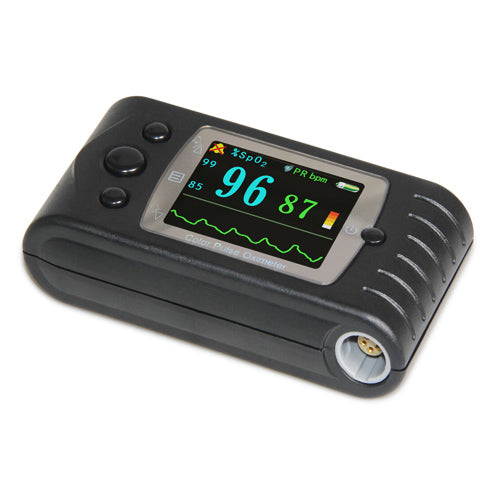

Sold out
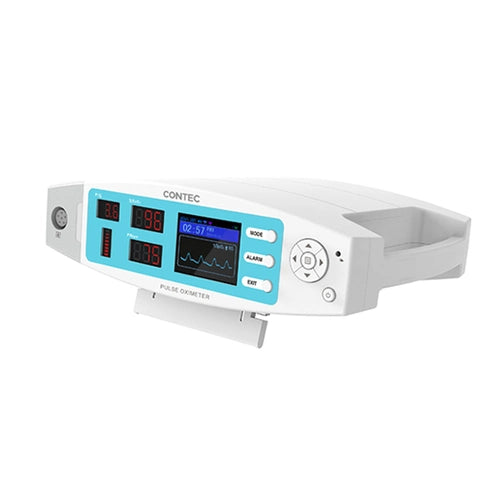
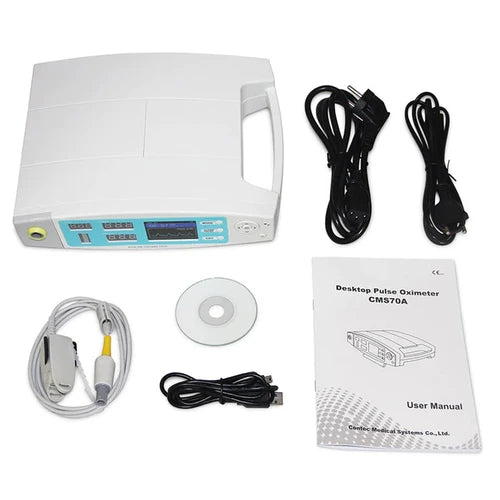

About this collection
Benefits of Using a Pulse Oximeter
A pulse oximeter is a compact, non-invasive device that estimates blood oxygen saturation and pulse rate within seconds. For Indian homes, clinics, hospitals, ambulances, and medical equipment distributors, it has become a practical tool for early observation, routine monitoring, and better decision-making. Its value is strongest when users understand what the numbers mean, how to use the device correctly, and when a reading should lead to medical consultation rather than self-treatment.
What is a pulse oximeter used for?
A pulse oximeter is used to estimate how much oxygen is being carried in the blood and to show the pulse rate at the same time. Most common models are finger pulse oximeter devices that clip onto the fingertip and use light to estimate oxygen saturation, displayed as SpO2, along with pulse rate, often shown as PR or PRbpm. The FDA describes a pulse oximeter as a device usually placed on a fingertip that uses light beams to estimate oxygen saturation and pulse rate. In daily healthcare practice, pulse oximeter use supports fast screening and observation. It does not replace a doctor, an arterial blood gas test, clinical examination, or hospital monitoring, but it helps clinicians and caregivers notice changes earlier. This is especially useful in busy Indian settings where outpatient departments, emergency rooms, nursing stations, and home-care services need simple, portable tools. A pulse meter or pulse oximeter may be used in many situations:
- Hospitals and nursing homes: for spot checks during routine rounds, triage, recovery, and respiratory observation.
- Home care: for patients advised by a doctor to monitor oxygen saturation during respiratory illness or chronic disease care.
- Ambulances and emergency response: for quick assessment while transporting a patient.
- Clinics and diagnostic camps: for first-level screening in urban, semi-urban, and rural health programmes.
- Pharmacies and medical stores: as an accessible device for customers who have been advised to track oxygen levels.
- Sports, aviation, and wellness contexts: for general awareness, though non-medical consumer devices should not be used as the only basis for medical decisions.

Key pulse oximeter benefits for Indian healthcare settings
The main pulse oximeter benefits are speed, portability, non-invasive use, and practical support for timely decisions. In India, where healthcare delivery ranges from tertiary hospitals to small clinics and home visits, these advantages matter because the same basic device can serve many environments. A fingertip pulse oximeter can be carried in a nurse’s pocket, included in a home monitoring kit, placed in an ambulance, or stocked by a distributor for retail and institutional buyers.
Faster visibility into oxygen saturation
A major benefit is that the device gives an immediate estimate of oxygen saturation. Instead of waiting for a lab test for every observation, staff can take a quick reading and decide whether the patient needs closer review. This is useful in emergency departments, fever clinics, respiratory wards, post-operative care areas, and home isolation monitoring. The practical value is not just the number on the screen. It is the trend. If a patient’s SpO2 is stable over repeated readings, that can reassure the care team. If the reading is falling or remains low after correct measurement, it becomes a reason to escalate care.
Non-invasive and easy to repeat
Pulse oximetry is painless and does not require a needle. That makes it suitable for repeated checks, especially for children, older adults, and patients who are already anxious or weak. In high-volume Indian hospitals, a non-invasive tool also helps reduce workflow burden because trained staff can perform a check quickly at the bedside. This ease of use is one reason pulse oximeters are widely accepted in home care. A family member can learn fingertip pulse oximeter instructions, record readings in a notebook, and share them with a doctor during a teleconsultation. The device becomes most useful when readings are taken consistently, at advised times, and along with symptoms such as breathlessness, fever, chest discomfort, or unusual fatigue.
Useful across many departments
A pulse oximeter is not limited to one specialty. It may be used in general medicine, pulmonology, emergency care, anaesthesia support, post-operative recovery, paediatrics, geriatrics, and home health. For procurement leaders, this cross-department value improves utilisation and makes the purchase easier to justify. Distributors can also position the device for different buyer groups. A hospital may need durable units with alarms, better sensors, and service support. A small clinic may prefer simple battery-operated models. A home user may want a clear display, one-button operation, and a reasonable pulse oximeter price.
Better support for home monitoring
India’s experience with respiratory illness awareness has increased public familiarity with home monitoring tools. Government guidance for home isolation during COVID-19 included self-monitoring of SpO2 with a pulse oximeter and recording heart rate and oxygen saturation in a monitoring chart. This does not mean every household should self-diagnose. It means a device can support doctor-guided observation. In practical terms, if a physician asks a patient to monitor oxygen saturation at home, the oximeter reader gives a simple data point that can be shared over phone or video consultation.
Better procurement planning
For hospitals, pulse oximeters are often bought in volume. The decision is not only about the lowest oximeter price. It includes accuracy claims, build quality, battery life, display readability, warranty, after-sales support, calibration policy where applicable, and suitability for Indian usage conditions such as frequent handling, power interruptions, and use across different patient groups. A distributor who understands these needs can differentiate beyond price. The strongest product positioning usually combines reliable device performance, clear user instructions, stock availability, and credible documentation.
Shop pulse oximeters at Meddey
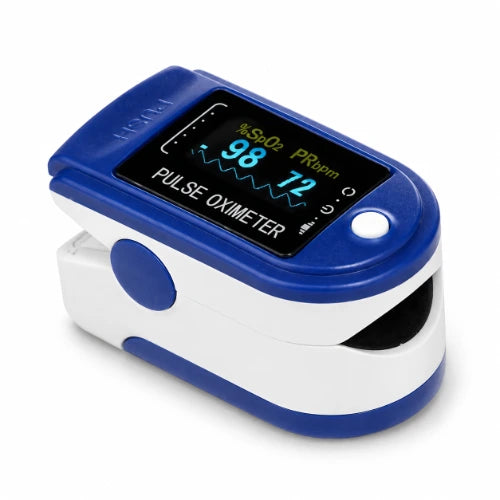
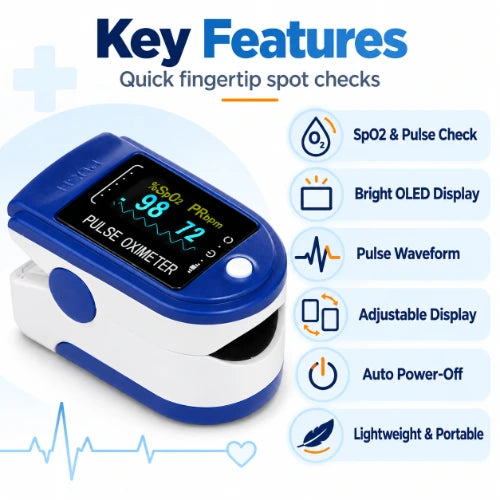
 Fingertip pulse oximeterContec CMS50D OLED Fingertip Pulse Oximeter for Home UseView product
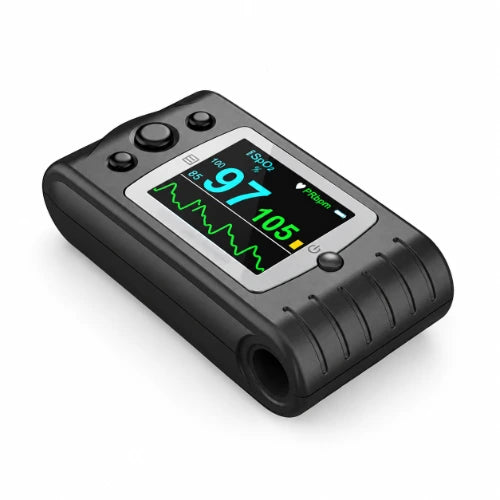
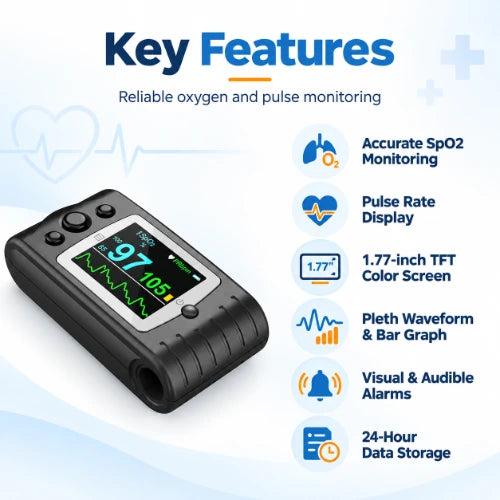
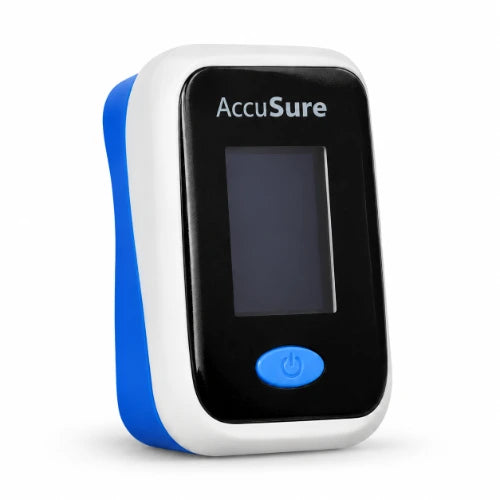
 Home oxygen monitoringAccuSure Fingertip Pulse Oximeter for Home Use with 1 Year WarrantyView product
Choose a model according to the intended use and healthcare guidance. Browse the full Pulse Oximeter collection.
What is SpO2 on a pulse oximeter?
SpO2 on a pulse oximeter means peripheral oxygen saturation, an estimate of the percentage of haemoglobin in the blood carrying oxygen. In simple terms, it shows how well oxygen is being carried through the bloodstream at the point of measurement. The number is an estimate, not a complete diagnosis, and it must be interpreted with the person’s symptoms, medical history, altitude, and clinician advice. Most oximeter reader displays show two main values: SpO2 and pulse rate. Some also show a waveform, perfusion index, battery level, and signal quality indicator. Understanding these values helps users avoid panic over a single poor reading and also prevents false reassurance when symptoms are serious.
SpO2 percentage
For many healthy individuals, oxygen saturation values are often in the 95% to 100% range, while some people with lung disease may have lower usual values. The FDA notes that typical oxygen saturation values are between 95% and 100% for most individuals, but may be lower in people with lung problems. The important point is baseline. A person with known chronic lung disease may have a doctor-advised target range that differs from a healthy young adult. That is why hospitals and home-care providers should record baseline values and avoid interpreting every reading in isolation.
PRbpm and pulse rate
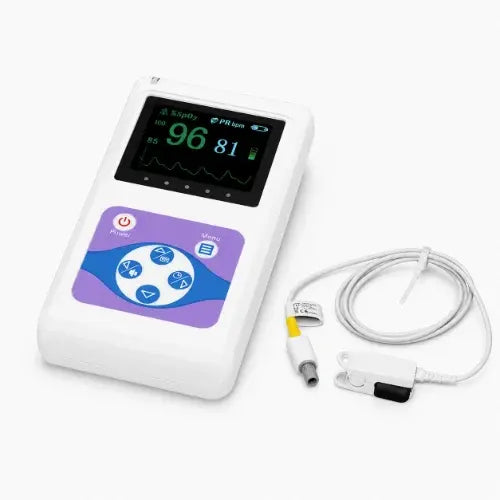
The term PRbpm means pulse rate in beats per minute. If you are wondering what is PRbpm in pulse oximeter displays, it is the device’s estimate of how many times the heart is beating each minute. Some users call this the pulse meter reading. A good pulse ox rate by age depends on whether the question refers to oxygen saturation or pulse rate. SpO2 targets are usually guided more by medical condition than by age alone. Pulse rate, however, can vary with age, fever, anxiety, activity, medicines, dehydration, pain, and heart conditions. Children usually have higher resting pulse rates than adults, and athletes may have lower resting pulse rates. For institutional use, it is better to train staff to compare PRbpm with the patient’s condition rather than treat one number as universal. If the pulse rate appears very high, very low, irregular, or does not match the patient’s clinical condition, the reading should be checked again and escalated if needed.
Perfusion index and PI value
Some models display PI, or perfusion index. Users often ask about the normal PI value in pulse oximeter readings. There is no single normal PI value that applies to every person and every device because PI depends on blood flow at the sensor site, temperature, circulation, sensor fit, and device design. A low PI may mean the finger has poor blood flow or the signal is weak. Cold hands, shock, low blood pressure, movement, or a loose sensor can affect the reading. In procurement terms, devices that provide a signal strength indicator or waveform may help trained users identify poor-quality readings faster.
Is a 92% oxygen level good?
For many people at sea level, a persistent 92% oxygen saturation should not be treated as good or ignored. It should be rechecked using correct technique, and medical advice should be sought, especially if the person has breathlessness, chest pain, confusion, blue lips, severe weakness, or a worsening illness. NHS guidance for home oximetry has used 92% or below as a level requiring urgent action in COVID-related monitoring pathways, while Indian guidance for mild or asymptomatic home isolation referred to oxygen saturation at room air of more than 93%. This does not mean one reading of 92% always has the same meaning for every patient. A person with chronic lung disease, a high-altitude resident, or a patient under a specialist’s care may have personalised instructions. Still, for general home users in India, repeated low readings should lead to medical consultation rather than home remedies or delayed care.
What is a bad pulse oxygen level?
A bad pulse oxygen level is one that is lower than the person’s expected range, falling over time, or associated with concerning symptoms. In general public education, readings below the mid-90s deserve attention, and readings around 92% or lower should be treated seriously unless a clinician has given a different target for that patient. Symptoms matter as much as the number. Hospitals should include escalation rules in their standard operating procedures. Home-care agencies and distributors supplying devices should avoid presenting the oximeter as a stand-alone diagnostic tool. The safe message is simple: measure correctly, repeat if the reading seems wrong, record the value, and contact a healthcare professional when readings are low or symptoms are worsening.
When should I use a pulse oximeter?
You should use a pulse oximeter when a healthcare professional recommends oxygen monitoring, when a patient with a respiratory condition needs observation, during clinical assessment, or when tracking recovery under medical guidance. It is also useful for spot checks in hospitals, ambulances, clinics, and home-care settings. It should not be used to delay treatment if the person looks unwell, is struggling to breathe, or has danger signs. The most responsible pulse oximeter uses are planned, documented, and connected to an action pathway. For example, a hospital nurse may record SpO2 during rounds and escalate if it crosses a defined threshold. A home-care patient may check readings at times advised by a doctor. A clinic may use the device during initial assessment and then decide whether further examination is needed.
Common use cases
A pulse oximeter is especially useful in these situations:
- Respiratory illness monitoring Patients with cough, fever, wheezing, pneumonia, asthma flare-ups, COPD, or viral respiratory infections may be advised to monitor oxygen saturation.
- Post-operative observation After surgery or sedation, oxygen saturation monitoring can support recovery-room observation under trained supervision.
- Chronic disease care Patients with long-term lung or heart conditions may use the device as part of a broader care plan.
- Home health visits Nurses and caregivers can use a portable oximeter reader to document vital signs during visits.
- Emergency triage In clinics, ambulances, and emergency rooms, SpO2 helps prioritise patients who may need immediate oxygen support or further evaluation.
- Community health programmes In Indian rural and semi-urban outreach settings, portable devices can support screening camps, elderly care, and first-level assessment.
When not to rely on it alone
A pulse oximeter is useful, but it can be misleading if treated as the only measure of health. The FDA has warned that pulse oximeters have limitations and that patients should pay attention to symptoms, especially signs such as shortness of breath or bluish colouring of the face, lips, or nails. Do not rely only on the device if the person is visibly breathless, confused, fainting, drowsy, having chest pain, or showing blue lips or fingers. In such cases, seek medical help even if the displayed SpO2 looks acceptable. For hospitals, this point should be part of staff training: the patient comes before the screen.
Fingertip pulse oximeter instructions for reliable readings
Correct technique improves pulse oximeter accuracy and reduces unnecessary fear. Many complaints about a device “not working” are actually caused by movement, cold fingers, poor sensor placement, nail polish, weak batteries, or a low perfusion signal. Good instructions should be included with every unit sold to home users, clinics, and institutional buyers.
Step-by-step use
Use these fingertip pulse oximeter instructions for a basic spot check:
- Wash or sanitise hands and dry them well. Moisture, dirt, or poor contact can interfere with the sensor.
- Remove nail polish or artificial nails if possible. Government of India guidance for self-monitoring advised cleaning hands and removing nail polish before placing the index finger in the pulse oximeter.
- Warm the hand if fingers are cold. Cold fingers can reduce blood flow and delay or distort the reading.
- Sit still and rest the hand. Movement is one of the most common reasons for unstable values.
- Place the finger fully inside the device. The fingertip should be aligned with the sensor, and the clip should not be too loose.
- Wait for the reading to stabilise. Do not record the first flashing number. Wait until SpO2 and PRbpm stop jumping rapidly.
- Record the highest steady reading if advised. Indian home-monitoring guidance has advised taking the highest steady reading after a few seconds.
- Write down the reading with time and symptoms. A useful record includes date, time, SpO2, PRbpm, temperature if available, and how the patient feels.
How long does it take for a pulse oximeter to read?
Most finger pulse oximeter devices show a reading within a few seconds, but the stable reading may take longer. If the person has cold hands, poor circulation, movement, nail polish, or a weak signal, it may take additional time. In routine use, users should wait until the values settle rather than recording the first number that appears.
How long should I leave my oximeter on my finger?
For a spot check, leave the oximeter on the finger until the reading stabilises and remains steady long enough to record. This often means waiting several seconds, not several minutes. Leaving it on for too long is usually unnecessary for a simple home reading unless a clinician has advised continuous monitoring or the device is designed for that purpose.
Why is my oximeter taking so long to read?

How to know if a pulse oximeter is working?
You can know if a pulse oximeter is working by checking whether it powers on properly, detects the finger, shows a stable SpO2 and PRbpm, responds consistently on repeat checks, and produces readings that match the person’s condition. A working device should not show random values, repeated error messages, or large unexplained changes when used correctly. If the display is unstable despite proper technique, the device, battery, sensor, or user method may need review. For home users, the first test is simple. Insert a warm, clean finger, sit still, and wait for a stable display. Then repeat after a short rest. If the readings are similar and the pulse rate broadly matches what you can feel at the wrist, the device is likely functioning for basic use. For hospitals and distributors, device verification should be more structured. A procurement team may need incoming quality checks, batch documentation, user manuals, warranty terms, service contacts, and a process for removing faulty units from circulation. A distributor should be ready to explain what the device can and cannot do.
Basic working checklist
Use this quick checklist before trusting a reading:
- The device turns on without flickering or sudden shutdown.
- The battery indicator is adequate.
- The display is readable in normal room light.
- The finger fits properly in the clip.
- SpO2 and PRbpm stabilise after a short wait.
- The pulse rate is reasonably consistent with manual pulse checking.
- The reading is repeatable on the same person using correct technique.
- The device has no cracks, loose parts, or sensor damage.
- The manual, warranty, and supplier details are available.
Accuracy limits to understand
Pulse oximeter accuracy is affected by both device quality and patient factors. The FDA states that prescription oximeters undergo review and clinical testing, while over-the-counter oximeters sold directly to consumers as general wellness products are not intended for medical purposes and do not undergo the same FDA review. This distinction matters in India as well, even though regulatory pathways and purchasing channels may differ. A hospital buying for clinical use should not evaluate a device in the same way as a consumer buying a wellness gadget online. Institutional buyers should ask for relevant certifications, performance specifications, service support, and clarity on intended use.
Skin tone and reading differences
India has a wide range of skin tones, so accuracy across different users is important. The FDA and other clinical discussions have highlighted that skin pigmentation can affect readings, and broader evidence reviews have raised concern about performance differences in people with darker skin. This does not mean pulse oximeters are not useful. It means readings should be interpreted carefully, especially when symptoms and numbers do not match. For procurement, it strengthens the case for choosing reliable suppliers, asking for accuracy data, and training users not to dismiss clinical signs.
Pulse oximeter features that improve everyday use
Pulse oximeter features should be evaluated according to the user group. A home user may need simplicity. A hospital may need durability and standardisation. A distributor may need a balanced portfolio that covers basic, mid-range, and clinical-grade requirements.
Important features to compare
When selecting a model, review these features carefully:
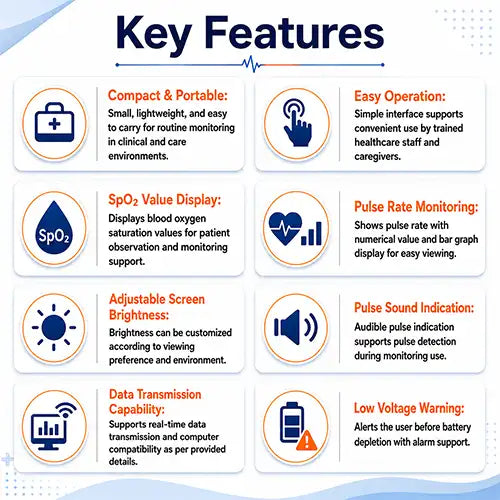
- Display clarity: A bright screen with large numbers helps older users and busy staff.
- SpO2 and PRbpm display: These are the core readings every device should show clearly.
- Waveform or signal indicator: This helps trained users judge whether the reading is reliable.
- Perfusion index: Useful in some models, but users must understand that PI is not a universal health score.
- Battery life: Important for home visits, ambulances, camps, and facilities with power interruptions.
- Auto shut-off: Helps conserve battery in high-volume use.
- Alarm function: Useful in clinical settings, though alarms should be appropriate and not excessive.
- Build quality: Strong hinges, good sensor alignment, and durable plastic matter in hospitals.
- Finger size suitability: Paediatric, adult, and large-finger use may require different designs.
- Cleaning and infection control: Smooth surfaces and clear cleaning instructions support safe reuse.
- Warranty and service: Essential for institutional procurement and distributor credibility.
- Documentation: User manuals, batch details, and compliance information support confident purchasing.
Features for hospitals
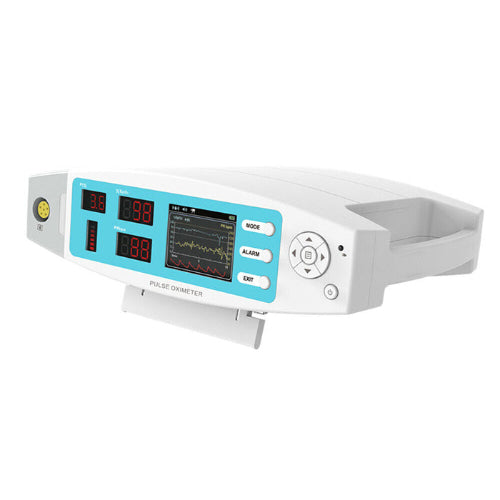
Hospitals should look beyond the lowest pulse oximeter price. A cheaper unit may become expensive if it fails quickly, has unreadable displays, lacks support, or produces inconsistent readings. Standardising models across wards can also make staff training easier and reduce confusion. For larger facilities, it may be useful to classify purchases by area. General wards may use standard fingertip units for spot checks. Emergency or critical care areas may need more advanced monitoring systems. Outreach teams may need portable, battery-efficient devices with rugged design.
Features for distributors
Medical equipment distributors should treat the pulse oximeter category as more than a commodity. Buyers are asking for reliability, availability, and after-sales confidence. A distributor who can explain pulse oximeter features in plain language is better positioned than one who competes only on oximeter price. Product differentiation may include better packaging, multilingual instructions, training leaflets, demonstration videos, warranty handling, and institutional supply readiness. In the Indian market, where buyers range from metro hospitals to small-town clinics, practical education can improve trust and reduce returns caused by incorrect use.
Buying considerations for Indian customers and institutions
If you plan to buy pulse oximeter units for home, clinic, hospital, or distribution, the right choice depends on purpose. A family purchasing one device for doctor-advised home monitoring has different needs from a hospital buying hundreds of units. A distributor serving both retail and institutional channels must understand these differences before positioning a product.
For home users
Home users should choose a simple fingertip pulse oximeter with a clear display, easy operation, reliable battery performance, and readable instructions. They should avoid making a purchase only because the pulse oximeter price is low. A very low-cost product may be difficult to trust if it lacks supplier details, warranty, or proper packaging. A home user should also know when to call a doctor. The device is helpful only when paired with common sense: symptoms, medical history, and professional advice matter. If the person is breathless or deteriorating, do not wait for repeated readings before seeking help.
For clinics and small hospitals
Small healthcare facilities in India often need devices that are affordable, durable, and easy to replace. They should maintain enough units for OPD, emergency, procedure rooms, and backup stock. Staff should be trained to clean devices, replace batteries, and identify unreliable readings. A basic procurement checklist can help:
- Define the use case: home-care kits, OPD, emergency, ward, ambulance, or camp.
- Decide whether spot-check or continuous monitoring is required.
- Review accuracy specifications and intended use.
- Check warranty, service, and replacement process.
- Confirm cleaning instructions and infection-control suitability.
- Test display readability and ease of use.
- Train users on correct measurement and escalation.
- Keep a log for faulty devices and replacements.
For hospitals and procurement teams
Hospital administrators must balance budget, quality, and timely procurement. The best approach is to treat pulse oximeters as part of a wider vital-signs monitoring strategy. This includes device selection, staff training, SOPs, maintenance, and stock planning. A large hospital may benefit from vendor evaluation that includes delivery timelines, documentation, technical support, and past supply reliability. During seasonal respiratory illness peaks, sudden demand can strain supply chains. A planned buffer stock reduces emergency purchases at unfavourable prices.
For distributors and consultants
Distributors and healthcare technology consultants can add value by guiding buyers toward appropriate models. Instead of promoting one device for every customer, segment the market:
- Retail home-care segment: simple, affordable, easy instructions.
- Clinic segment: durable device with warranty and quick replacement.
- Hospital segment: standardised models, documentation, service support.
- Ambulance and outreach segment: portable, rugged, strong battery life.
- Specialised care segment: advanced monitoring features and compatible sensors.

Pulse oximeters for home and everyday spot checks
Fingertip pulse oximeterContec CMS50D OLED Fingertip Pulse Oximeter for Home UseView productHome oxygen monitoringAccuSure Fingertip Pulse Oximeter for Home Use with 1 Year WarrantyView product
Compare fingertip options and select according to your monitoring requirement. Browse the full Pulse Oximeter collection.
Understanding pulse oximeter price without choosing blindly
Pulse oximeter price varies based on brand, sensor quality, display type, accuracy claims, alarms, build quality, warranty, packaging, and whether the device is positioned for wellness, home care, or clinical use. The oximeter price should be judged against total value, not just the amount printed on the invoice. For a home user, value means the device is easy to use and reliable enough for doctor-advised monitoring. For a hospital, value includes staff confidence, lower replacement frequency, documentation, vendor support, and consistent performance across many users. For a distributor, value includes sell-through, fewer complaints, repeat orders, and trust in the supply chain. A low purchase price can be attractive, especially when budgets are tight. However, a poor-quality device can create hidden costs: repeat purchases, user confusion, unnecessary panic, delayed escalation, and reputational risk for the supplier. The better procurement question is not “Which is cheapest?” but “Which device is fit for this use case at a responsible cost?”
Practical interpretation guide for safer use
Pulse oximeter readings should be interpreted in context. A single number may be affected by technique, circulation, device quality, and the patient’s condition. A trend over time, recorded correctly, is usually more useful than one isolated reading.
Reading checklist for home and clinic use
Use this guide when reviewing a reading:
- SpO2 95% to 100%: Often expected for many healthy people, but symptoms still matter.
- SpO2 93% to 94%: Recheck carefully and seek medical advice if persistent, falling, or linked with symptoms.
- SpO2 around 92% or below: Treat as concerning for many people; recheck and contact a doctor or emergency service depending on symptoms and local guidance.
- Rapid fall from usual baseline: Important even if the number is not extremely low.
- Normal SpO2 with severe symptoms: Do not ignore symptoms; seek medical assessment.
- Unstable reading: Check technique, finger warmth, battery, movement, and device placement.
This guide is not a substitute for medical advice. Hospitals and home-care providers should use clinician-approved thresholds. Patients with COPD, heart disease, sleep-related breathing disorders, pregnancy, or other specific conditions may need personalised instructions.
Record symptoms with numbers
A good monitoring log should include more than SpO2. Record temperature, PRbpm, breathing difficulty, cough, chest pain, weakness, medication changes, and whether the patient feels better, same, or worse. Indian government home-monitoring formats for COVID-19 included temperature, heart rate from pulse oximeter, SpO2, and how the patient felt. This structured record helps doctors make better decisions during teleconsultation or follow-up. It also reduces the risk of overreacting to one poor reading or underreacting to a clear downward trend.
The broader value for healthcare procurement
Pulse oximeters are small devices, but they represent a larger shift in healthcare technology: more monitoring is moving closer to the patient. Hospitals are expected to deliver faster assessment, families are more involved in home care, and distributors are expected to provide products that are both accessible and reliable. For Indian healthcare procurement, this creates a strategic opportunity. A well-chosen pulse oximeter programme can support patient observation, reduce workflow friction, and strengthen preparedness for seasonal demand. It can also improve standardisation across departments if procurement teams select models thoughtfully and train users properly. Healthcare technology consultants can support this process by mapping device choice to clinical need. They can help clients avoid both extremes: buying the cheapest possible device without quality checks, or overbuying advanced features that the setting does not need. The best recommendation is usually practical, evidence-aware, and aligned with how the device will actually be used.
Final takeaway
A pulse oximeter is valuable because it offers a fast, painless, and portable way to estimate oxygen saturation and pulse rate. Its benefits are clear in Indian homes, clinics, hospitals, ambulances, and distribution networks, but its safe use depends on correct technique and sensible interpretation. For users, the priority is to measure properly, record readings, and seek medical help when numbers are low or symptoms are worrying. For hospitals, distributors, and consultants, the opportunity is to combine the right pulse oximeter features, responsible pricing, reliable supply, and user education. That combination turns a small fingertip device into a meaningful part of better healthcare delivery.
Explore pulse oximeters at Meddey
Shop Pulse Oximeters
Explore Medical Collections
All Categories
Abdominal & Maternity Support

Accessories

Accu-Chek Instant Strips: Use, Compatibility, Price & Blood Sugar Testing Guide
Accu-Chek Instant Strips: Uses, Features & Complete Guide

Accupressure Products for Pressure Point Therapy, Pain Relief & Wellness

accupuncture

Acupuncture Needles & Supplies

Advanced Physiotherapy Machines & Lumbar Physiotherapy

Airways

Ambulance

Anatomy Models
Anesthesia Machine

Anesthesia Products
Ankle Support, Braces & Walker Boots for Recovery
Ankle Weights & Exercise Weights for Home & Rehab
You may also need
FOR YOURecommended for you
Save 33%
Save 31%
Save 35%
Save 19%
Save 36%
Save 38%