


Featured ChoiceSave 26%

Save 28%
Save 24%
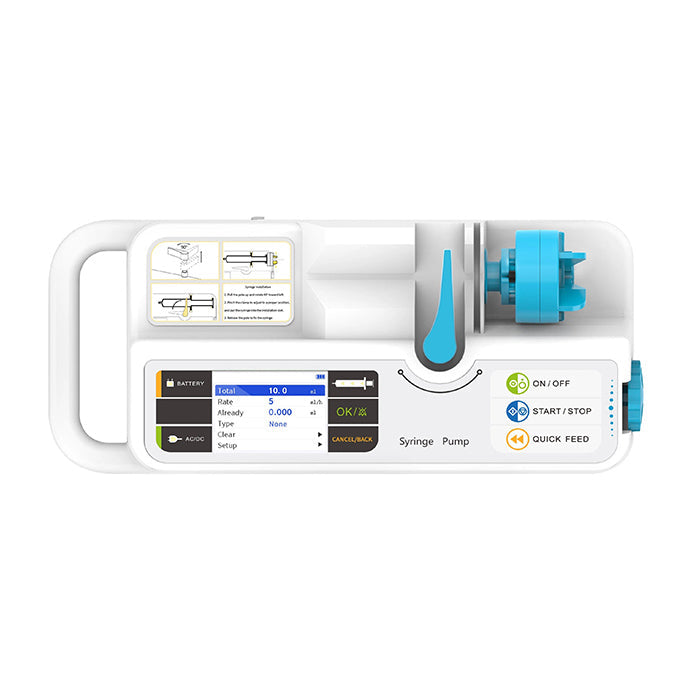
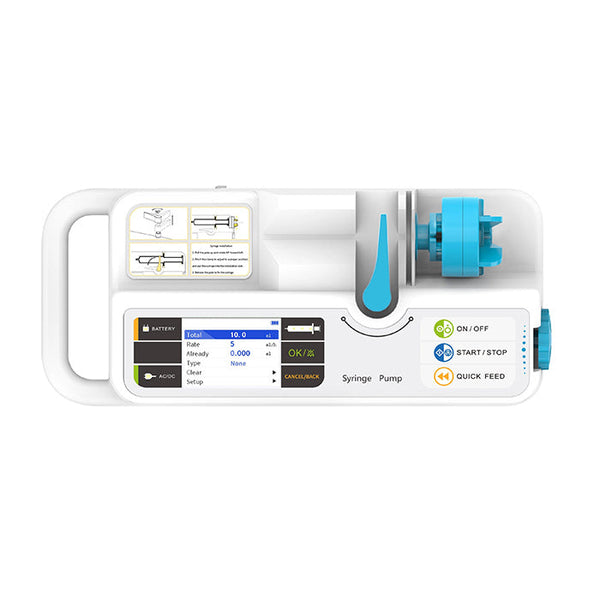
Syringe Pumps for Hospitals, ICUs & Clinics
Syringe Pump Guide: Models, Features & Buying Tips

A syringe pump helps trained healthcare professionals deliver fluid from a syringe at a controlled rate. Hospitals, ICUs, operation theatres, emergency departments and clinics commonly choose this type of infusion equipment when treatment requires carefully controlled delivery.
Meddey's range includes SP08, Byond and Contec models. Buyers can compare syringe compatibility, displays, operating modes, alarm functions, battery support and other practical features before choosing equipment for a healthcare facility.
Professional-use note: This is medical equipment rather than a general household wellness device. Trained healthcare professionals should select the settings, supervise operation and respond to alarms. Families arranging home infusion should follow instructions from their clinical team.
Quick Guide to Choosing a Syringe Pump
- Check syringe compatibility: Confirm which syringe sizes the model accepts.
- Compare operating modes: Some models offer rate, time, volume or dose-related options.
- Review alarms: Look for useful alerts for blockage, low battery, completion and syringe position.
- Check battery backup: This can help during transport or a temporary power interruption.
- Match the clinical setting: ICU, OT, emergency and general ward requirements can differ.
- Plan servicing: Include inspection, maintenance and staff training in the purchase decision.
What Is a Syringe Pump?
A syringe pump holds a loaded syringe and moves its plunger according to programmed settings. This allows clinical teams to control delivery over time without manually pressing the syringe plunger.
Infusion means delivering fluid or medication into the body in a controlled manner. The device manages this process electronically while staff monitor both the equipment and the patient.
Healthcare teams may choose this type of equipment when they need controlled delivery from a syringe and when the prescribed treatment suits the device and clinical setting.
Syringe Pump vs Volumetric Infusion Pump
A syringe-based device and a volumetric infusion pump perform related jobs, but they handle fluid differently.
The first moves the plunger of a syringe. In contrast, a volumetric pump usually moves fluid through compatible IV tubing from a larger bag or container.
Therefore, clinical teams choose between them according to treatment requirements, fluid volume, delivery method and hospital protocol.
For more fluid-delivery equipment, visit Meddey's Infusion Therapy Equipment collection.
Compare Meddey Models
| Model | Useful Features | Typical Buying Setting |
|---|---|---|
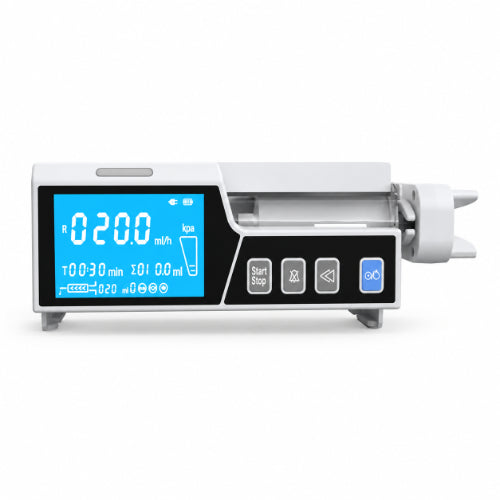
| SP08 | Multiple syringe sizes, 3.8-inch display, several operating modes and battery backup | Hospitals, wards and clinics |
| Byond | Multiple syringe sizes, several modes, alarm functions and stackable design | ICU, OT, emergency and general clinical care |
| Contec | 2.8-inch display, syringe recognition, alarms, occlusion settings and dual power support | Hospitals and clinical departments |
SP08 Syringe Pump
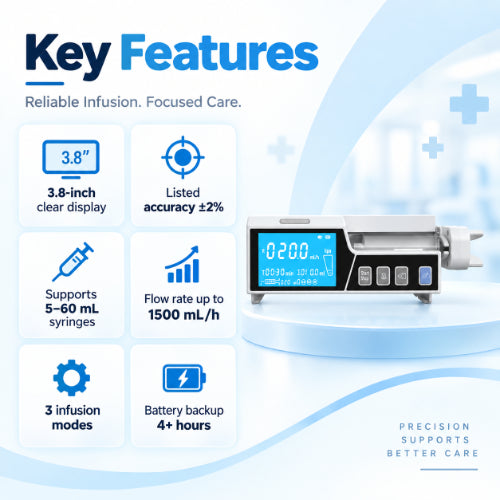
The SP08 supports several common syringe capacities. Meddey's current product information lists 5 ml, 10 ml, 20 ml, 30 ml, 50 ml and 60 ml options.
The unit includes a 3.8-inch display and lets trained users choose operating modes related to speed, time and volume. Meddey also lists a stated accuracy of no more than ±2% and battery operation of at least four hours under the specified conditions.

Clinical staff should confirm the correct configuration for the syringe in use and follow the product instructions instead of relying only on a short online specification summary.
View the SP08 Syringe Infusion Pump for Hospital & ICU Use on Meddey.
Byond Syringe Pump
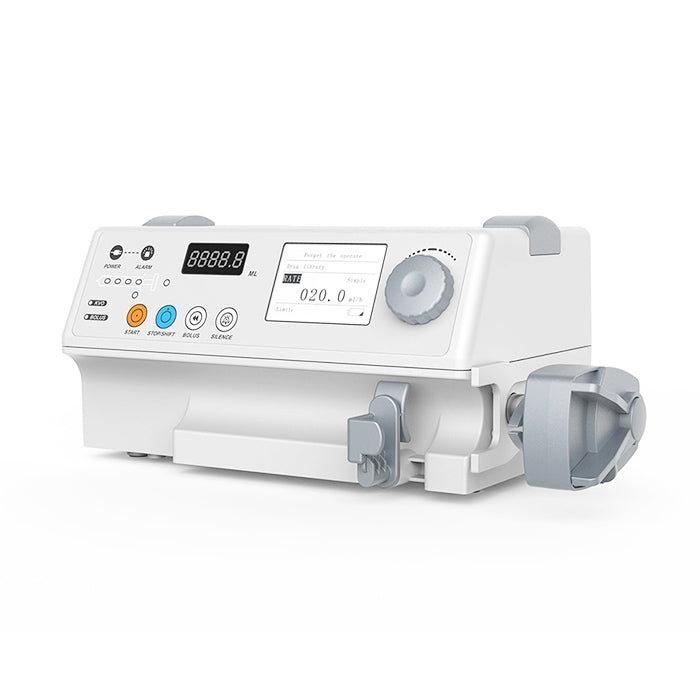
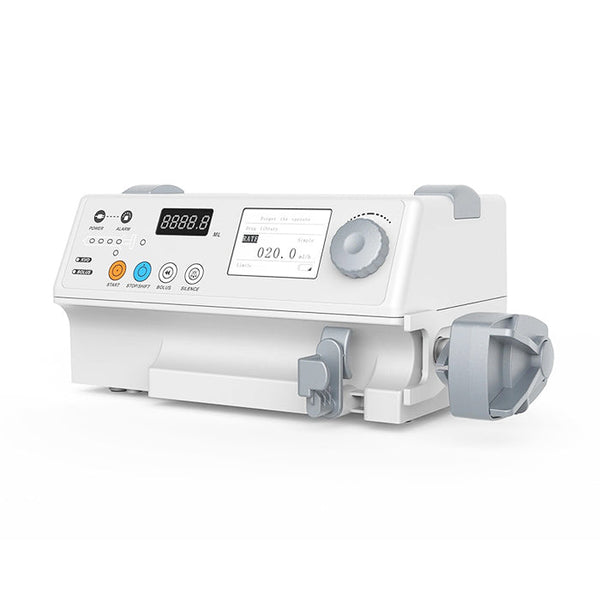
The Byond model supports several common syringe sizes, including 5 ml, 10 ml, 20 ml, 30 ml and 50/60 ml according to Meddey's current listing.
It offers operating options such as rate mode, time-volume mode and dosage-weight mode. In addition, audible and visual alerts can help staff notice conditions such as blockage, low battery, near-empty status or infusion completion.
Occlusion means a blockage or restriction in the infusion pathway. When the equipment detects a relevant pressure condition, it can alert staff so they can investigate according to clinical procedure.
The model also provides rechargeable battery support and a stackable design. As a result, healthcare facilities can organise several compatible units where the clinical workflow requires them.

View the Byond model on Meddey.
Contec Syringe Infusion Device
The Contec model offers a compact option for professional healthcare settings. The current product information shows a 2.8-inch display, while manufacturer information describes functions such as syringe recognition, alarms and adjustable occlusion monitoring.
The equipment can also provide battery-backed operation. This may help staff when moving equipment or during a temporary interruption to mains power.

The device also includes functions such as KVO on supported configurations. Clinical teams should confirm exact specifications from the current manual before procurement or operation.
View the Contec model on Meddey.
Important Features to Compare
Syringe Compatibility
Before buying a syringe pump, check the syringe sizes and compatible brands or specifications for the exact model. Several supported sizes can provide more flexibility across hospital departments.
However, staff should not assume that every syringe automatically works correctly with every device. Follow the compatibility information and operating instructions supplied for the model.
Display and Controls
A clear display helps staff review operating information. Simple menus can also make routine setup easier for trained users.
Nevertheless, screen size alone does not determine device quality. Procurement teams should consider the complete system, including controls, alarms, maintenance and training.
Alarm Functions
Medical infusion equipment may alert users to conditions such as low battery, completion, obstruction or incorrect syringe placement.
These alerts support clinical monitoring, but staff still need to understand the meaning of each alarm and follow the correct response process.
Battery Backup
Battery operation can support patient transport or temporary use away from a mains socket. Therefore, hospitals should compare stated battery performance and include battery checks in routine equipment maintenance.
Occlusion Monitoring
Occlusion monitoring helps staff identify increased pressure that may indicate a restricted infusion path. Some models let trained users choose from several pressure settings according to clinical requirements.
Who Should Operate This Equipment?
Trained doctors, nurses or other authorised healthcare professionals should operate a syringe pump according to the prescription, product instructions and facility protocol.
Biomedical or technical teams may also handle inspection, servicing, calibration and equipment-management tasks.
A family buying equipment for professionally supervised home care should follow the training and instructions supplied by the responsible healthcare team. Online product content should not replace those instructions.
Syringe Pumps for Hospitals and ICUs
Hospitals may include syringe infusion equipment in ICUs, operation theatres, emergency areas and wards where clinicians need controlled fluid delivery from a syringe.
Procurement teams should compare compatibility, alarms, power options, mounting, service support and staff familiarity. In addition, they should consider how each model fits existing maintenance and training systems.
For institutional orders, long-term support often matters as much as the initial selling price.
Equipment for Clinics
Clinics that provide suitable infusion services may also need compact infusion equipment. In smaller facilities, clear controls, dependable power and access to technical service can make daily operation easier.
However, equipment alone cannot create a safe infusion service. Clinical teams also need suitable prescriptions, trained staff, monitoring and infection-control procedures.
Can a Syringe Pump Be Used at Home?
Some patients receive professionally managed infusion therapy at home. In these cases, the healthcare team should select suitable equipment, provide training and explain what to do if an alarm or equipment problem occurs.
Household customers should never change prescribed medication, dose or delivery settings independently. Instead, contact the responsible clinician when anything appears unusual.
Home-care safety: Follow the exact care plan and device instructions supplied by the healthcare team. If an alarm continues, the equipment appears damaged or the patient develops unexpected symptoms, contact the responsible healthcare professional.
Medical Pump vs Manual Syringe
A manual syringe depends on hand pressure. A medical infusion device uses a powered mechanism to move the syringe plunger according to programmed parameters.
These products therefore serve different purposes. Disposable syringes and needles should remain in their own product categories rather than this collection.
For regular disposable products, browse Meddey's Syringes collection.
Safety and Monitoring
Incorrect programming, blocked tubing, battery problems or equipment faults can affect infusion delivery. For this reason, hospitals should use trained staff and clear operating procedures.
- Follow the manufacturer's instructions for the exact model.
- Train staff before they operate unfamiliar equipment.
- Use compatible syringes and accessories.
- Check the programmed settings before starting treatment.
- Respond promptly to alarms according to clinical procedure.
- Remove damaged or unreliable equipment from clinical use.
- Maintain batteries and arrange routine technical inspection.
- Secure the equipment appropriately during transport.
What Does KVO Mean?
KVO means Keep Vein Open. Some devices can provide a low-flow function according to their configuration after a programmed stage finishes.
Healthcare professionals should use this function only when it matches the treatment plan, device instructions and facility protocol.
What Is a Bolus Function?
A bolus means delivering a quantity over a shorter period than a standard continuous infusion. Some infusion devices include functions that support this type of programmed delivery.
Only trained professionals should select these settings according to the prescription and clinical procedure.
Syringe Pump Price in India
The syringe pump price can vary according to brand, syringe compatibility, alarm system, operating modes, display, battery support and other features.
Hospitals should also consider warranty, service support, maintenance, calibration and training costs. Therefore, the lowest initial price may not always provide the best long-term procurement value.
For current prices and offers, open the individual Meddey product pages because online pricing can change.
How to Choose a Syringe Pump for Procurement
Start by identifying the clinical department and intended workflow. Next, compare supported syringe sizes, alarms, operating modes, battery capability and service requirements.
After that, check whether staff already know the model or whether they need additional training. Finally, consider warranty, technical support and long-term maintenance.
For related products, Meddey's Infusion collection includes other fluid-delivery equipment and clinical supplies.
Frequently Asked Questions
What is a syringe pump used for?
Healthcare professionals use it to control delivery from a syringe according to programmed settings when the treatment requires this type of infusion.
Is it the same as a volumetric infusion pump?
No. A syringe-based unit moves a syringe plunger, while a volumetric pump generally moves fluid through compatible tubing from a larger container.
Which syringe sizes can these models accept?
Compatibility varies. For example, Meddey's SP08 listing includes sizes from 5 ml through 60 ml, while the Byond listing also supports several commonly used capacities.
What does an occlusion alarm mean?
It warns staff about pressure that may indicate a blockage or restriction in the infusion path. Clinical staff should investigate according to the device instructions and hospital procedure.
What does KVO mean?
KVO stands for Keep Vein Open. It refers to a low-flow function available on some compatible devices.
Do these devices have battery backup?
Several Meddey models include battery operation. Check the exact product specification because battery performance can vary.
Can hospitals use them in ICUs?
Yes, healthcare facilities commonly use this type of infusion equipment in professional critical-care environments when clinically appropriate.
Can an untrained patient programme one?
No. A patient or family member should follow the exact training and care plan supplied by the responsible healthcare team.
How often does the equipment need servicing?
Follow the manufacturer's maintenance instructions and the healthcare facility's biomedical-equipment policy rather than using one general schedule for every model.
What should a hospital compare before buying?
Compare syringe compatibility, operating modes, alarms, battery backup, controls, warranty, service support, maintenance needs and staff-training requirements.
Choosing the Right Syringe Pump
The right syringe pump depends on the clinical setting and procurement requirements. SP08 offers broad syringe-size compatibility and several operating modes. Byond adds multiple alarms and a stackable format, while the Contec model provides another compact option with monitoring and alarm functions.
Most importantly, compare the complete workflow rather than choosing from one specification alone. Staff training, compatible consumables, maintenance, technical support and patient monitoring all remain important after purchase.
Need help comparing medical infusion equipment?
Contact Meddey Customer Care for current specifications, availability, quotations or hospital procurement requirements.
Call / WhatsApp: +91 85860 12345
Medical Device Disclaimer: This guide provides general product-comparison and procurement information. It does not provide instructions for prescribing, programming or administering an infusion. Healthcare professionals should follow the product manual and appropriate clinical protocols.
Explore Medical Collections
All Categories
Abdominal & Maternity Support

Accessories

Accu-Chek Instant Strips: Use, Compatibility, Price & Blood Sugar Testing Guide
Accu-Chek Instant Strips: Uses, Features & Complete Guide

accupuncture

Acupuncture Needles & Supplies

Advanced Physiotherapy Machines & Lumbar Physiotherapy

Airways
Alcohol Swab: Uses, Safe Use and Disposal Guide
Ambu Bag Full Form: Is There an Official Meaning?
Ambu Bag: Parts, Uses and Safety Guide
Ambu Full Form: What the Name Means and BVM Basics

Ambulance

Anatomy Models
Anesthesia Machine
You may also need
FOR YOURecommended for you
Save 26%
Save 28%
Save 24%