


Featured ChoiceSave 40%

Save 16%
What customers say
★★★★★ 5.0 · 5 reviews
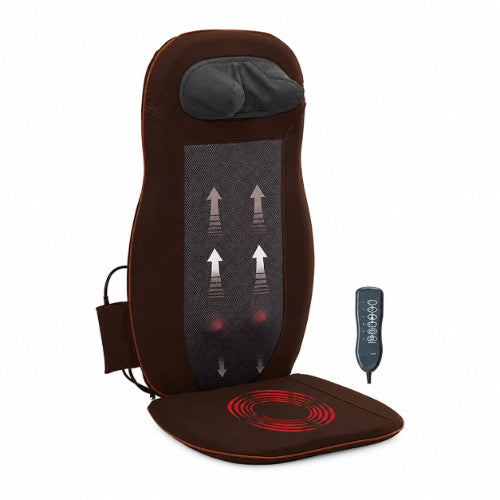
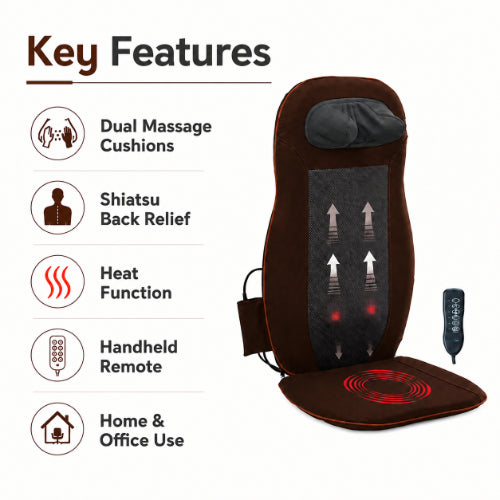
 Dual Cushion Back Seat Massager
“Great for back pain relief, very relaxing!”
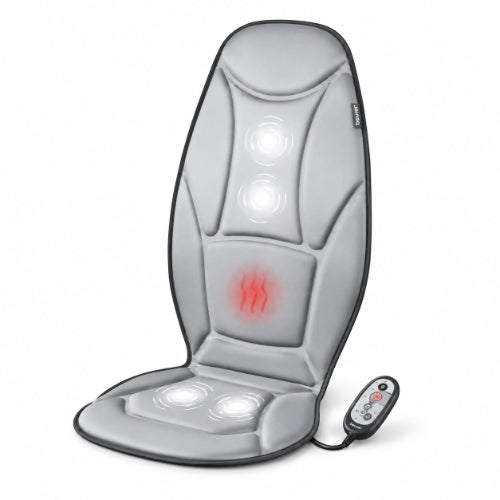
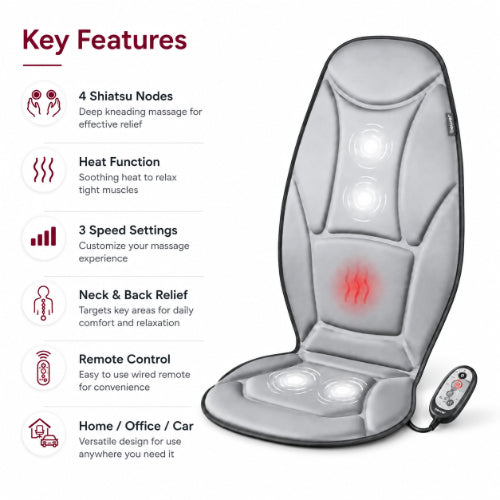
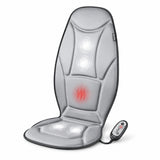 Beurer MG155 Seat Massager with Heat – Shiatsu Back & Neck Relief
“Lightweight and easy to attach to any chair, it features customizable massage intensity and heat settings. ...”
“With multiple massage settings and a built-in heat function, this seat massager helps relax sore muscles an...”
Back massager: is it right for you and how to use it safely

Back massager use may suit some adults, but your health and the massager instructions determine suitability. Use the lowest intensity, avoid spine bones and damaged skin, and seek medical advice when health conditions raise concerns. This guide explains product features, careful setup, medical precautions, and warning signs without promising health results. Massage carries risks, particularly with forceful pressure or certain medical conditions.
Is a back massager right for you?
A back massager may fit an optional home comfort routine if its instructions permit your intended use. Your health, skin condition, and ability to control the massager also matter. It should not replace medical assessment or prescribed care. People with certain conditions may need to modify or avoid massage.
Start with your reason for considering one. Are you exploring a home comfort accessory, or trying to understand a new back symptom? Keep those decisions separate. A product demonstration cannot explain why a symptom has appeared.
Before choosing a massager, consider whether you can:
-
Read and follow its safety instructions.
-
Reach the controls without twisting your back.
-
Notice unwanted pressure, heat, or skin changes.
-
Switch it off and move away without help.
-
Explain any unusual sensation to someone assisting you.
Treat these as practical checks, not medical clearance. If any answer is uncertain, discuss your needs before using the massager.
Avoid judging suitability through another person's experience. A relative's preferred setting tells you little about your own back. Their medicines, bone health, skin sensitivity, and medical history may differ. Ask about your circumstances rather than copying their routine.
Back massager or seat massager: what should you compare?
What are the main types of back massagers for home use? For this guide, compare a back massager with a seat massager. Then examine each model's placement instructions, controls, massage action, and optional heat.
Do not rely on the product name alone. Request the actual manual and check its intended use. Manufacturer instructions describe permitted placement and restrictions for that specific massager.
Use this table as a comparison worksheet rather than a list of promised features:
|
Choice |
What to check |
Practical question |
|---|---|---|
|
Back massager |
Approved placement and support |
Can I position it without awkward reaching? |
|
Seat massager |
Required chair shape and securing method |
Does my chair match the instructions? |
|
Model with shiatsu action |
Moving contact points and adjustment options |
Can I avoid unwanted pressure on bones? |
|
Model with heat |
Heat controls and medical warnings |
Can I leave heat switched off? |
|
Model with adjustable intensity |
Starting level and control sequence |
Can I lower the setting easily? |
Do not assume every model includes every feature. A photograph may show a control without explaining what it changes. Read the description alongside the manual, and ask the supplier about unclear points.


For an Indian home, consider the actual setup space. Check your chair, nearby socket, walking route, and storage area. Make those checks before bringing a massager into a shared room.

How does a shiatsu back massager work?
How does a shiatsu back massager work? It uses moving massage heads to imitate pressure and kneading movements. The exact movement and available controls depend on the model.
The word “shiatsu” describes the intended massage action. Do not treat it as proof of medical suitability. A familiar product label does not answer questions about pregnancy, fragile bones, medicines, or an implanted device.
When reading a demonstration, focus on what you can control. Identify where the contact points move and which areas the manual permits. Ask whether you can change the movement or intensity independently.
Also separate speed from pressure when checking specifications. Ask what each adjustment actually changes. Do not assume a faster movement means firmer pressure, or a slower movement means gentler contact.
Make a simple control map before use:
-
Find the power control.
-
Identify any intensity adjustment.
-
Locate the heat control, if present.
-
Check any area-selection control.
-
Learn how to stop the movement.
Keep that map beside the manual if several people share the massager. Use the model's actual button names rather than guessing from symbols. This preparation gives everyone the same clear reference.

Which features matter most on a massager?
Prioritise controls you can understand and reach. A long feature list matters less if changing a setting feels confusing. Try reading the instructions while looking at the actual controller.
Make adjustable intensity a selection priority. Also check whether heat has a separate control. Ask the supplier to explain any feature that the manual leaves unclear.
Use a practical feature review:
|
Feature |
What to confirm before use |
|---|---|
|
Adjustable intensity |
The lowest setting and how to return to it |
|
Heat control |
Whether heat can remain off during massage |
|
Auto shut-off |
What stops automatically and how the feature operates |
|
Power control |
Whether you can reach and identify it easily |
|
Contact surface |
Whether the cover is intact and correctly fitted |
|
Instructions |
Whether they match the exact model supplied |
|
Support information |
Where to report a fault or request clarification |
Do not confuse convenience with medical approval. An adjustable product can still be unsuitable for a particular person. Likewise, a safety feature does not cancel a warning in the manual.
Keep the manual available after setup. It contains more than operating instructions. Review its warnings, cleaning directions, approved accessories, and fault guidance before relying on the massager. Manufacturers provide model-specific manuals for these checks.
Does auto shut-off make a massager safe?
Why does auto shut-off matter on a back massager? It provides an automatic stopping function instead of relying only on manual switching. Confirm its exact operation in your model's instructions. Some manufacturer manuals describe it as a safety feature.
Treat automatic stopping as backup, not permission to ignore the device. Stay awake and remain able to respond. Manufacturer safety instructions may specifically prohibit use while sleeping.
Before use, ask the supplier to clarify what happens when automatic stopping activates. Does the entire device stop? Does heat stop too? Use the manual's answer rather than assuming.
Do not repeatedly restart a massager simply because it stopped. First check whether the stop matches normal operation or indicates a problem. If the behaviour seems unusual, switch it off and consult the troubleshooting instructions.
Also distinguish automatic stopping from an easy-to-reach power button. You need both clear instructions and a practical way to stop voluntarily. Avoid a setup that leaves the controller trapped behind your back.
When another person helps, agree who handles the power. Ask them not to restart or change settings without telling you. Keep the arrangement simple enough to follow without debate.
Is the heat function safe to use?
Heat may feel pleasant, but it also introduces a burn risk. Do not apply heat over numb skin or areas with reduced sensation. Do not use it over broken skin, infection, or known poor circulation. Seek advice when unsure.
A back massager with heat is not automatically more suitable than one without it. Consider heat separately from massage pressure. You may decide to leave it off, even when the massager offers it.
Do not turn the warmth up because you cannot clearly feel it. Reduced skin sensation requires caution rather than a stronger setting. NHS guidance advises against applying heat to areas with poor sensation or diabetic nerve damage.
Use these questions when reviewing the heat feature:
-
Can I identify when heat is active?
-
Can I turn heat off independently?
-
Does the manual restrict heat for my health condition?
-
Can I check the contact area without awkward movement?
-
Do I understand what to do if heat feels excessive?
Follow the maker's directions on clothing, covers, and contact. Do not improvise extra layers or add another heat source.
Stop if you notice burning, uncomfortable warmth, or skin irritation. Do not treat an unpleasant sensation as something to tolerate. Heat guidance advises removing the heat source when burning or discomfort occurs.

Medical checks before using a back massager
Speak with a doctor before use if a medical condition could change your response to massage. Relevant concerns include fragile bones, bleeding problems, blood clots, nerve damage, recent surgery, and certain serious illnesses. Pregnancy also needs individual consideration.
Bring the product manual to that conversation. “Can I use massage?” is less useful than discussing a particular massager. Show its intended placement, moving parts, intensity controls, and heat warnings.
Use this list to prepare information, not to diagnose yourself:
|
Information to share |
Details to bring |
|---|---|
|
Medicines |
Names of prescribed and non-prescribed medicines |
|
Bone health |
Known osteoporosis, fractures, or related medical advice |
|
Skin condition |
Wounds, bruising, swelling, burns, or irritation |
|
Sensation |
Numbness or difficulty noticing temperature |
|
Procedures |
Recent surgery and any ongoing restrictions |
|
Implants |
Pacemaker or other implanted-device information |
|
Pregnancy |
Advice already received from your maternity team |
Mention changes since your last medical review. Include new medicines, unusual bruising, or altered skin sensation. Do not assume an earlier conversation covers a changed situation.
Ask for clear boundaries if your doctor permits use. These may concern placement, heat, pressure, or avoiding the massager altogether. Write down anything you might otherwise forget.
If professional advice and the product warning seem inconsistent, pause. Ask the clinician and manufacturer to clarify before proceeding. Do not choose whichever answer sounds more convenient.
Can you use a back massager with a pacemaker?
Is it safe to use a back massager with a pacemaker? Do not assume compatibility; ask your cardiac-device team about the exact model. The American Heart Association lists some massage products as low risk, while still advising device-specific precautions.
This distinction matters. “Low risk” does not mean unrestricted use in every position. Your team needs information about both your implant and the proposed product.
Prepare the following details:
-
The massager's exact model.
-
Its manual and relevant warnings.
-
Where you intend to place it.
-
Whether it includes magnets or other features requiring review.
-
Your implanted-device identification information.
Ask whether any separation or placement restrictions apply. Follow the advice for your own implant rather than borrowing someone else's instructions. The American Heart Association advises discussing uncertain household devices with your healthcare professional.
Also check the massager's restrictions. A manufacturer may require medical consultation for pacemaker users and prohibit contact near the heart region.
Do not test compatibility by trying the product and waiting for symptoms. Resolve the question first. Keep the relevant instructions with the device so another household member does not overlook them.
What if you have osteoporosis or past fractures?
Can someone with osteoporosis use a back massager? They should ask their doctor before use, especially with severe osteoporosis or a fracture history. Clinical guidance identifies fragile bones and fractures as reasons for extra precautions or avoiding massage.
Do not use age alone to make this decision. Instead, share the person's known bone-health information with their clinician. Include any restrictions already given after a fracture or medical assessment.
Avoid the idea that stronger pressure is necessary. A firm sensation does not establish suitability. NCCIH reports rare serious massage injuries, including bone fractures, particularly with vigorous massage or vulnerable users.
If a clinician permits a specific device, ask them to explain any placement restrictions. Show how the contact points meet the back. Do not assume padding makes direct pressure over fragile areas acceptable.
For family assistance, keep communication straightforward. Ask the user to describe what they feel without encouraging them to continue. Stop if the person reports pain or cannot clearly explain an unexpected sensation.
Do not use a home trial to decide whether bone health is a concern. Medical assessment comes first when osteoporosis or a fracture history is already known.
Is a massager suitable if you take blood thinners?
Should people on blood thinners use a back massager? They should consult their prescribing clinician before use. Vigorous massage may be unsuitable for someone taking anticoagulant medicine.
Tell the clinician the medicine's name rather than saying only “a blood thinner.” Bring your current medicine list. Ask about the proposed product, its pressure settings, and its intended contact area.
Do not change, skip, or stop prescribed medicine to use a massager. Keep the medication decision with your prescribing clinician. Treat the massager as optional rather than something that requires changing essential care.
Ask specifically about existing bruises and easy bruising. Clinical guidance lists bleeding disorders and blood-thinning medicines among reasons to discuss massage safety.
If bruising appears during or after use, stop using your massager. Do not apply further pressure to the bruise or try a stronger setting elsewhere. Contact your healthcare professional for advice about unexplained or concerning bruising.
Make sure anyone helping knows about the precaution. They should not press the device harder because you requested a stronger sensation. Follow the agreed medical restrictions, even when another household member uses different settings.
What to ask about a back massager during pregnancy
Can I use a back massager during pregnancy? Ask your maternity clinician about the exact massager before use. Also follow its instructions, because some manufacturers prohibit use during pregnancy.
Do not transfer advice about professional pregnancy massage directly to an electric massager. Guidance about trained therapists addresses a different situation. ACOG discusses appropriate positioning and therapists trained to work with pregnant people, not blanket approval for home devices.
Bring the manual to your appointment rather than relying on an online demonstration. Ask whether the device is appropriate at all. If its instructions prohibit pregnancy use, do not treat a lower setting as an exception.
Mention any pregnancy complications or restrictions already discussed with your maternity team. Ask whether pressure, heat, or the required position raises concerns. Avoid inventing a position that the manufacturer does not describe.
Household members should not encourage a trial based on their own experience. Keep the decision with the pregnant person and their healthcare team. General massage guidance also advises checking suitability during pregnancy.
An unanswered question is a reason to pause. You do not need to try the massager simply because it is available at home.
Should you use a massager over bruised or broken skin?
Can I use a back massager over bruises or broken skin? No; avoid bruised, broken, burned, irritated, injured, or swollen areas. Clinical and manufacturer guidance identifies damaged skin and wounds as areas requiring avoidance or special precautions.
Check the intended contact area before switching on. Use a mirror or ask for help if you cannot see your back. The purpose is to notice a problem, not to decide its cause.
Look for changes such as:
-
Cuts, grazes, or open areas.
-
Existing bruises or unexplained marks.
-
Swelling or a visibly inflamed patch.
-
Blisters, burns, or irritated skin.
-
A surgical wound or dressing.
Do not press through clothing simply because a mark is covered. Also avoid shifting the device slightly across a swollen area to find a tolerable spot. Ask a clinician about unexplained swelling before considering massage.
Do not remove a dressing so the device can make contact. Follow your wound-care instructions instead. Clinical guidance advises avoiding pressure around healing wounds.
If you discover a new skin change after use, stop and assess it. Seek medical advice for concerning changes rather than repeating the same setup. Keep note of the contact location and settings for that conversation.
How to keep a back massager off the spine
Should a back massager be used directly on the spine bones? No; avoid direct pressure over the bony spine. Manufacturer guidance specifically warns against massaging bones, including the spine.
Follow the placement diagram for your exact model. Do not assume the device belongs wherever you notice a symptom. Its intended contact points and support requirements should guide setup.
Start with the massager switched off. Place it as instructed, then check your seated position and access to controls. Ask for help if you cannot inspect the arrangement without twisting.
Do not force your back against a contact point. If the approved setup places unwanted pressure on bone, stop. Recheck the instructions or ask the supplier for clarification rather than improvising padding.
Use a stable position that allows you to move away. Avoid wedging the controller beneath your body or trapping the cable behind furniture. Keep the route for standing clear.
Also check clothing around moving parts. Secure loose fabric, scarves, jewellery, and hair before use. Manufacturer instructions warn against putting objects into rotating parts.
Treat the illustration below as a setup reminder, not personalised anatomical guidance. Your device manual remains the reference for its approved placement and operation.

Which intensity should a new massager start on?
What intensity should I start with on a new back massager? Start with the lowest available intensity and light contact. Manufacturer instructions commonly direct users to begin at a low setting and avoid uncomfortable pressure.
Do not copy the setting used during a demonstration. Learn the controls before trying adjustments. If the starting action already feels too strong, stop rather than trying to become accustomed to it.
Make changes deliberately. Read what a button controls before pressing it. If several functions activate together, consult the manual instead of guessing which sensation belongs to which feature.
Do not press harder to compensate for an unfamiliar sensation. Equally, do not keep increasing intensity because you expect a dramatic response. A stronger setting is not a requirement.
Keep heat off while learning the controls if the model allows independent operation. This separates two decisions: understanding massage action and deciding whether warmth is appropriate. Check the manual before choosing that setup.
Stop on pain, numbness, bruising, or another concerning reaction. Do not use a lower setting to continue over an affected area. Medical guidance identifies damaged skin, nerve problems, and easy bruising as reasons for caution.
How to set up a massager, step by step
Use a repeatable preparation sequence rather than switching on immediately. Keep the manual nearby and follow its model-specific directions. The steps below organise those checks; they do not replace the instructions.
-
Review suitability. Resolve medical concerns and read the product warnings before proceeding.
-
Inspect the massager. Check its cover, cable, plug, controller, and supplied accessories for visible damage.
-
Prepare the space. Choose a dry indoor area and remove clutter around the chair.
-
Confirm placement. Position the massager only as its instructions describe.
-
Check contact. Avoid spine bones, damaged skin, and any medically restricted area.
-
Locate the controls. Keep power, intensity, and heat controls within easy reach.
-
Start low. Select the lowest available intensity rather than a remembered household setting.
-
Stay attentive. Stop when something feels wrong, even if the device continues operating normally.
-
Finish properly. Switch off and disconnect power as the manual directs.
Electrical safety instructions also warn against using visibly damaged equipment or exposing the massager to water. They require following the supplied power arrangements.
If someone assists, explain the plan first. Ask them to change nothing without checking with you. Agree on a clear request to stop, and keep the power control accessible to both of you.

Will a seat massager fit your chair safely?
Before using a seat massager, compare your chair with the manual's requirements. Check the securing method, permitted position, and available adjustment. Do not assume any chair shown in a lifestyle photograph is suitable.
Use a practical fit review:
-
Place the massager exactly as instructed.
-
Check that the chair remains stable.
-
Keep both feet supported in a comfortable position.
-
Confirm that you can reach the controller.
-
Check that the cable does not cross your walking route.
-
Leave enough space to stand without catching the device.
If you must twist, slouch, or brace yourself to reach a control, reconsider the setup. Ask whether another permitted chair offers clearer access. Do not modify the product to suit unsuitable furniture.
Look closely at where the moving contact points meet your back. Stop if the approved arrangement creates unwanted pressure over bone. Manufacturer guidance warns against direct massage over spine bones.
Avoid adding household objects beneath or behind the massager unless the maker allows them. Instead, ask the supplier about permitted adjustments. Keep setup decisions grounded in the actual manual.
Recheck fit for each user. Do not assume a shared chair position works for everyone in the household.

What electrical safety checks does a massager need?
Treat electrical setup as part of preparation, not an afterthought. Use the supplied or manufacturer-approved power arrangement. Manufacturer instructions warn against damaged equipment, liquid exposure, and incorrect power supplies.
For an Indian household, verify the electrical rating against your local supply. Do not assume an imported massager becomes suitable through a plug adapter alone. Ask the supplier or a qualified electrician if the rating is unclear.
Keep liquids away from the device and its connection points. Choose a dry location rather than placing it beside a bathroom entrance or water container. Check that nobody needs to step across the cable.
Avoid crushing the cable beneath chair legs or trapping it in moving furniture. Do not pull the cable to reposition the massager. Follow the manual's directions for disconnecting and storage.
Stop using equipment that smells unusual, sparks, or behaves unpredictably. Switch it off and disconnect it when safe. Do not keep testing a suspected electrical fault.
Contact the supplier or an authorised service provider instead of opening the housing. Manufacturer guidance reserves electrical repairs for qualified people.
Keep the model details and support information together. That makes reporting a fault simpler and avoids confusion between similar-looking devices.
How to clean and store a massager
Read the care section before choosing a cleaning method. Do not assume a removable-looking cover is washable. Ask the supplier if the instructions do not clearly explain what can be removed.
Before cleaning, switch off and disconnect the massager as instructed. Allow heated parts to cool. Manufacturer care guidance commonly requires unplugging before cleaning and warns against unauthorised repair.
Follow a simple care routine:
-
Use only the cleaning method the manual permits.
-
Keep moisture away from electrical parts.
-
Refit any approved removable cover correctly.
-
Inspect seams and contact surfaces before reuse.
-
Store the device where sharp objects cannot damage it.
-
Avoid hanging or carrying it by its cable.
Manufacturer storage guidance warns against sharp objects and cable strain.
Do not hide a damaged surface beneath an extra cloth. Stop using the product and ask about repair or replacement. A makeshift cover does not answer whether the underlying device remains suitable.
Store the manual with the device, or keep a clearly identified digital copy. Make sure another household member can find it. Include support details and any written medical restrictions relevant to the user.
Before returning a stored device to use, repeat the inspection. Check its condition rather than relying on how it worked previously.
Can family members share one back massager?
Treat every household member as a separate user. Your clearance, preferences, and settings do not transfer to another person. Massage precautions depend on medical history, medicines, wounds, implants, and other individual factors.
Keep shared instructions simple. Place the manual somewhere accessible and explain where the power control sits. Ask everyone to return settings to the starting position described in the manual.
For an older relative, ask practical questions without making assumptions. Can they read the controls? Can they reach the switch? Can they clearly describe unexpected heat or pressure?
Offer help with setup, but do not choose intensity on their behalf. Ask before changing any setting. Avoid comments that encourage someone to tolerate an unpleasant sensation.
Do not give the device to a child because an adult uses it. Check the product's intended users and restrictions. Keep equipment and packaging stored according to its safety instructions.
If someone needs assistance, agree on who will stay nearby. Make sure the user can always stop it. Assistance should make communication easier, not override the person's decision.
Clean shared contact surfaces according to the manual. Inspect the device between users, and keep individual medical advice separate from general operating instructions.
Which back massager claims should you question?
Think of a back massager as an optional home accessory, not a diagnostic tool. It cannot tell you why a symptom exists. Do not postpone healthcare because you are still experimenting with settings. NCCIH advises against delaying medical care because of massage.
Read promotional language carefully. Separate a description of movement from a claim about health. “Kneading action” describes what a mechanism does; it does not establish suitability for your condition.
Use a simple information filter:
|
Statement you encounter |
What to ask instead |
|---|---|
|
A strong sensation is necessary |
Does the manual require this, and is it comfortable? |
|
Everyone at home can share it |
Has each person's suitability been considered? |
|
Heat makes every model preferable |
Is heat appropriate for this user's skin and health? |
|
More features mean greater suitability |
Can the user understand and control those features? |
|
Another person recommends their setting |
What instructions and precautions apply to me? |
Do not measure your decision against a dramatic online demonstration. You are free to stop, decline heat, or decide against using the product.
Keep prescribed care separate from device experimentation. If a clinician has given you restrictions, follow them. Ask for clarification before replacing or modifying any part of your care plan.
When to stop a massager and see a doctor
Stop immediately if you develop pain, numbness, tingling, weakness, bruising, burning, or skin damage. Seek medical advice for new or concerning symptoms rather than trying another setting. Massage guidance identifies skin injury, nerve problems, and bruising concerns as reasons for caution.
Switch off first. Move away carefully and inspect the contact area if possible. Do not press on the affected spot to check whether another attempt feels different.
Tell the clinician what happened, where contact occurred, and which functions were active. Mention medicines and relevant medical conditions. Keep the manual available if they need to understand the device.
Some symptoms need urgent assessment rather than a routine appointment. Seek emergency care for new bladder or bowel control changes, numbness around the genitals or bottom, or significant new leg weakness. Serious injury and rapidly worsening symptoms also require urgent attention.
Do not wait for a device supplier to assess those symptoms. Contact local emergency care or attend the nearest emergency department. Product troubleshooting cannot replace medical assessment.
For a suspected device fault without physical symptoms, stop using it and contact support. Keep medical concerns and equipment concerns separate. If both occur together, address the person's immediate safety first.
Questions to take to your doctor
Prepare specific questions rather than asking for a general endorsement. Your clinician can consider your health, but needs enough information about the proposed device. Bring its manual, your medicine list, and details of any relevant implant.
Useful questions include:
-
Does my medical history make this device unsuitable?
-
Do my medicines create bleeding or bruising concerns?
-
Are any areas of my back off limits?
-
Should I avoid the heat function?
-
Does reduced skin sensation change your advice?
-
Do I need advice from my cardiac-device team?
-
What symptoms should make me stop and seek assessment?
Ask the clinician to explain unfamiliar terms in everyday language. Repeat the advice back in your own words. This helps reveal uncertainty before you return home.
If you receive conditional advice, write down the conditions. Avoid reducing a detailed conversation to “the doctor said yes.” Clinical massage guidance stresses sharing health information and following precautions tailored to the person.
Return to the question if your health or medicines change. Do not assume approval for one device covers another. A different model may require a fresh review of placement, controls, and manufacturer warnings.

Final checklist: are you ready to use a massager?
Use this checklist to organise your final review. It does not override medical advice or the product manual. If an important point remains unresolved, leave the device off.
-
I have read the manual for this exact model.
-
I have discussed relevant medical conditions before use.
-
I know whether my medicines require extra precautions.
-
I have checked the intended contact area for skin damage.
-
I will avoid direct pressure over spine bones.
-
I can identify and reach the power control.
-
I understand the lowest intensity setting.
-
I have checked the heat warnings and can leave it off.
-
I understand the automatic stopping function.
-
I have inspected the device and its electrical connections.
-
I can move away without twisting or catching the cable.
-
I know which symptoms mean stopping or seeking urgent care.
Keep the checklist available for anyone assisting you. Ask them to read the instructions rather than relying on memory. Review the setup again whenever the user, chair, device, or relevant health information changes.
Key takeaway: prepare first, start low, stay alert
Choose a back massager through careful checks, not stronger sensations or a longer feature list. Understand its controls, follow its placement instructions, and keep heat as a separate decision. Give medical precautions priority over convenience.
Start low, stay attentive, and stop when something feels wrong. Avoid spine bones and injured skin. When suitability is uncertain, pause and speak with the appropriate healthcare professional before proceeding. Massage safety depends on the person and the circumstances, not simply the product label.
Explore Medical Collections
All Categories
Abdominal Belt: Support After Surgery, in Pregnancy and After Delivery

Accessories
Accu-Chek Instant Strips: Use, Compatibility, Price & Blood Sugar Testing Guide
Accu-Chek Instant Strips: Uses, Features & Complete Guide

accupuncture

Acupuncture Needles & Supplies

Advanced Physiotherapy Machines & Lumbar Physiotherapy
AED Defibrillator: How It Works, Who Can Use It and Where to Place It

Airways
Alcohol Swab: Uses, Safe Use and Disposal Guide
Ambu Bag Full Form: Is There an Official Meaning?
Ambu Bag: Parts, Uses and Safety Guide
Ambu Full Form: What the Name Means and BVM Basics

Ambulance

Anatomy Models
You may also need
FOR YOURecommended for you
Save 40%
Save 16%