


Featured ChoiceSave 11%

Save 30%

Save 20%
What customers say
★★★★★ 5.0 · 1 review
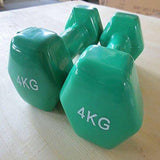
Dumbbells: how to pick the right weight for home workouts

Choose dumbbells you can lift for about 12–15 controlled repetitions without pain or changes in posture. Start lighter whenever you feel unsure, and judge each exercise separately. This guide explains weight selection, grip, flooring, storage, and gradual changes for home use.

How do I choose the right dumbbell weight as a beginner?
Choose a weight that lets you complete your planned repetitions with steady movement and comfortable control. The final repetitions should require effort, without forcing you to swing or change position. There is no single starting weight for every beginner.
Avoid choosing kilograms from someone else’s routine. Your starting point should reflect the exercise you understand and the movement you can control.
Treat your first few sessions as practice, not a test. You are learning how the dumbbells feel throughout each movement.
Use a simple dumbbell weight check
Start with the lightest available option that feels manageable. Follow this sequence for an exercise you already understand:
-
Practise the movement without holding dumbbells.
-
Pick up a light weight and establish your starting position.
-
Complete a few slow repetitions while breathing normally.
-
Continue towards your planned count only while your movement stays controlled.
-
Put the dumbbells down carefully before assessing the weight.
-
Reduce the load if you swing, struggle, or lose your starting position.
Starting small, moving smoothly, and adding weight gradually follow established guidance for lifting handheld weights. Avoid turning this check into an all-out effort.
Make the decision after putting the weight down. Do not keep lifting while debating whether the next repetition will work.
Write down the weight per hand and a short note
Write down the weight of each dumbbell, rather than only the combined amount. This makes your notes easier to follow later.
For example, two dumbbells weighing 3 kg each create a 6 kg combined load. Your notes could simply say “3 kg per hand”.
For an adjustable dumbbell, confirm what the displayed number represents. Check whether the stated load includes the handle and attached plates.
Also record the exercise name and completed repetitions. A number without an exercise gives little help when choosing your next session’s weight.
Use plain notes such as “steady throughout” or “started swinging near the end”. These observations tell you more than a label like “beginner weight”.
If you cannot judge your technique, ask a qualified professional to watch. Learning the movement should come before choosing a heavier load.
Does one weight suit every dumbbell exercise?
Use your weight check for each exercise, rather than carrying one result across your entire session. Keep your exercise notes separate.
A weight that feels manageable in one movement may not feel manageable in another. Your decision should follow the actual movement, not the number alone. Professional guidance also stresses correct technique for every exercise.
The table below offers practical observations to record. It is not a suggested exercise routine or a kilogram chart.
|
Dumbbell movement |
What to observe |
What to record |
|---|---|---|
|
Curl |
Whether your upper body stays still |
Any swinging near the final repetitions |
|
Row |
Whether your starting position remains steady |
Any change in posture as you pull |
|
Whether you lift without shrugging or jerking |
The point where control changes |
|
|
Press |
Whether both hands follow the intended path |
Any uneven movement or discomfort |
|
Squat holding dumbbells |
Whether you control both the movement and weights |
Any difficulty holding or setting them down |
Ask someone qualified to explain unfamiliar movements before adding dumbbells. A written description cannot confirm whether your own technique is correct.
Keep a short record for each dumbbell exercise
Give each exercise its own entry. Include the weight, repetitions, and one short note about control.
You might find that one exercise needs a lighter setting than another. That does not make your session inconsistent.
Do not round every exercise up to your heaviest comfortable weight. Keep the lighter option available when your notes suggest you need it.
Before your next session, read the previous entry. This gives you a clear starting decision instead of relying on memory.
Why is good form more important than heavy dumbbells?
Good form means performing the intended movement rather than moving the dumbbells by any available method. If heavier weights change your technique, reduce the load or repetitions. Controlled movement matters more than completing a count with poor technique.
Think of the weight as a tool for practising the exercise. It should not decide how you move.
Watch for signs your form is slipping
Look for movements you did not intend to make. These might include leaning backwards, jerking the weight, or rushing the lowering phase.
Use smooth, steady movement instead of swinging or thrusting dumbbells. Start with small loads and increase them slowly over time.
Choose one observation before each set. For example, focus on keeping the lowering movement as controlled as the lifting movement.
Avoid trying to correct several things while holding a difficult load. Put the dumbbells down, reset, and simplify your next attempt.
Keep breathing during the movement
Do not hold your breath while lifting dumbbells. Breathe out during the effort and breathe in as you return.
Ask a professional to demonstrate this rhythm if it feels confusing. Practise it with a lighter weight before returning to your usual setting.
A mirror or short recording can help you notice obvious movement changes. However, neither replaces individual feedback when you are unsure.
Keep your attention on the exercise itself. Avoid turning your head towards a screen while holding dumbbells in motion.
End the set when you cannot maintain the technique you were taught. Do not chase an untidy final repetition.

What is the difference between fixed and adjustable dumbbells?
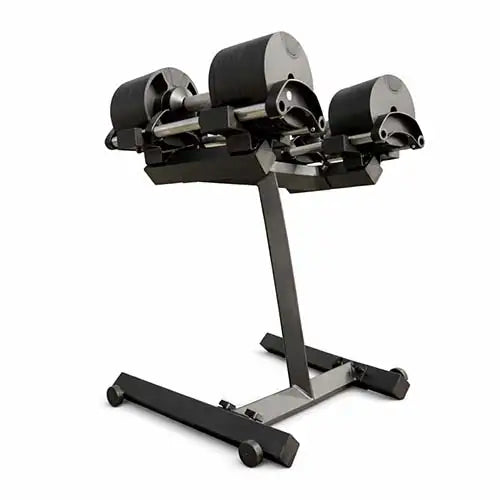
Fixed dumbbells have one permanent weight. An adjustable dumbbell allows different loads through removable plates or a selection mechanism. Adjustable designs can provide several settings within a smaller storage footprint than multiple fixed pairs.
Neither design removes the need to check your weight and technique. Choose around your actual exercises, available space, and willingness to adjust settings.
Fixed pairs are simple but take up more room
With fixed dumbbells, you select the required pair and begin your preparation. There is no weight-selection mechanism to operate between exercises.
However, covering several weights means keeping several individual dumbbells. Include their resting positions when planning your home space.


Before deciding on a dumbbell set, list the weights you currently use. Leave future additions as a separate decision.
This prevents you from treating a large number of pieces as a useful feature by itself. Every pair needs a clear purpose and storage position.
If two household members share dumbbells, write down both people’s requirements. Do not assume one person’s comfortable load will guide the other.
How does an adjustable dumbbell change weight?
Some adjustable dumbbells use plates secured with locking screws. Others use selector pins that engage selected plates while leaving the remaining plates behind. Follow the operating method for your exact design.

Do not assume every adjustable system works in the same way. Learn the selection process before including weight changes in a session.
Pay attention to the starting setting, intermediate settings, and highest setting. A wide range matters less if the lower settings do not meet your needs.
Also check the space needed to operate the mechanism. Include any base, remaining plates, and room for your hands.
Fixed or adjustable: a quick comparison
Use this table as a decision sheet, rather than a ranking.
|
Decision point |
Fixed dumbbells |
Adjustable dumbbells |
|---|---|---|
|
Changing weight |
Select another dumbbell |
Change the setting or plates |
|
Several available loads |
Requires several individual weights |
Can provide several settings within one system |
|
Preparation |
Check the chosen weight and condition |
Also complete the required selection checks |
|
Shared home use |
Different weights can remain separately available |
Users may need to reset the load |
|
Storage planning |
Account for every individual weight |
Account for the complete system and its components |
These differences depend on the exact adjustable design and the number of fixed dumbbells involved. Check the supplied operating information before deciding.
How big are the jumps between weight settings?
Look at the gap between settings, not only the maximum load. Adjustable dumbbells can differ in both starting loads and available increments.
For illustration, moving from 2 kg to 3 kg adds half the original load. A seemingly small kilogram change can still be a large relative increase.
Write down the actual sequence of available weights. Then compare that sequence with the weights in your exercise record.
Avoid choosing around a high maximum you cannot currently use. Give equal attention to the lightest setting and your next manageable step.

Do rubber-coated dumbbells protect your floor?
Rubber-coated dumbbells can soften contact and reduce noise compared with exposed metal contact. However, coating does not make a heavy object harmless to flooring. Manufacturers describe some rubber coatings as quieter and gentler on floors.
For a tiled, stone, or wooden home floor, plan for careful handling first. Do not treat rubber as permission to drop dumbbells.
Coated heads do not always mean a coated handle
Rubber dumbbells may have coated heads while keeping a metal handle. Some designs also coat the handle, so inspect these features separately.
Head coating answers a different question from hand grip. A comfortable outer surface does not tell you how the handle will feel.
Check the actual surfaces you will touch and place down. Avoid making decisions from the colour or overall appearance alone.
For your floor plan, mark a specific set-down area. Keep it within easy reach without placing it in your standing position.
Put the weights down gently and protect your floor
Lower dumbbells deliberately rather than releasing them near the floor. Follow any handling restrictions supplied with adjustable designs.
Some adjustable dumbbell manuals specifically prohibit dropping because it can damage plates or locking parts. A soft floor covering does not cancel that restriction.
If you use a protective mat, check its stability and flooring compatibility. Keep its edges flat and outside your stepping path.
Do not assume a thicker mat solves every floor concern. Ask about your particular surface when its care requirements are unclear.
In a flat, choose a set-down position away from shared walking routes. Keep the same position throughout the session.
Finish your floor plan before lifting. Moving household items while holding dumbbells makes the session unnecessarily awkward.

What dumbbell grip suits sweaty hands?
For sweaty hands, assess handle texture, diameter, and comfort together. Knurled metal and textured coated handles are available, but their feel differs. There is no single handle choice that answers every person’s needs.
Treat grip as something to check during your weight assessment. Do not assume a heavier dumbbell will have the same handle dimensions.
Check how the dumbbell handle sits in your palm
Hold the handle in the intended position with a light, manageable load. Notice whether you can close your hand comfortably around it.
Avoid judging grip by roughness alone. Include handle thickness and shape in your assessment, since these features vary between designs.
Use these observations when comparing handles:
-
Your fingers can close around the handle without an awkward stretch.
-
The texture feels secure without becoming sharply uncomfortable.
-
You can maintain the intended hand position throughout the movement.
-
Your hand does not crowd against the dumbbell heads.
-
You can put the dumbbell down without changing to an awkward grip.
These are practical comfort checks, not a guarantee of grip under every condition.
Keep your hands and handles dry
Keep a small towel within reach before starting. Pause and put the dumbbells down if your hands feel slippery.
Wipe sweat from the handles after use and dry them thoroughly. Follow the cleaning guidance for the handle material.
Do not apply household oil to improve the feel of a handle. Use only care products approved for the particular dumbbells.
If you repeatedly struggle to hold a manageable load, seek technique advice. Do not solve the problem by squeezing through discomfort.

Warm up before lifting dumbbells
Warm up before your dumbbell session rather than starting immediately with your usual load. General lifting guidance recommends five to ten minutes of light activity beforehand. Then rehearse your intended dumbbell movements with little or no load.
Keep the warm-up separate from your weight test. Its purpose is preparation, not proving that you can handle a heavier setting.
Rehearse the movement before adding weight
Use the same starting position and movement pattern you plan to use with dumbbells. Keep the rehearsal slow and comfortable.
If the movement feels unfamiliar, get it checked before loading it. Do not use the first heavy repetition to discover how it works.
You can organise your preparation in this order:
-
Complete your light warm-up activity.
-
Rehearse the first intended movement without dumbbells.
-
Check the dumbbells and selected load.
-
Try the movement with a light, manageable weight.
-
Begin your planned set only when you feel ready.
Avoid rushing because you have limited time. Shorten the session rather than removing all preparation.
Keep your towel, notes, and set-down area ready before picking up the dumbbells. This reduces interruptions once you begin.
If a warm-up movement causes pain, do not add weight to it. Stop and seek advice when symptoms persist or concern you.
Plan simple first dumbbell sessions you can review
Plan a small number of familiar dumbbell exercises rather than testing every movement you know. The aim is a clear record of your starting point.
Choose a session layout you can repeat without moving furniture between exercises. Place your notes where you can read them after setting weights down.
Plan before each set and record it afterwards
Before lifting, confirm the exercise, intended repetitions, and weight per hand. This avoids changing the plan halfway through a difficult set.
Afterwards, record what happened without judging the whole session. One exercise feeling awkward does not explain every other exercise.
Use a simple record like this:
|
Exercise |
Weight per hand |
Repetitions completed |
Control note |
Next decision |
|---|---|---|---|---|
|
Familiar movement A |
Record your load |
Record your count |
Steady or changed |
Keep or reduce |
|
Familiar movement B |
Record separately |
Record separately |
Note the specific issue |
Review before repeating |
|
Familiar movement C |
Record separately |
Record separately |
Include handling difficulty |
Adjust the setup |
The letters are simply space for your own exercise names. Do not treat the table as a prescribed routine.
Note how handling the dumbbells felt
Record difficulty picking up or putting down the dumbbells. Your session includes these moments, not just the repetitions.
Also note whether weight changes interrupted your preparation. This can help you organise adjustable settings more clearly next time.
End with one practical change, such as moving your notes or using a lighter setting. Avoid rewriting your entire approach after one session.
How do I know when to move up to heavier dumbbells?
Consider a small increase when your current weight feels clearly manageable across your planned repetitions with consistent technique. Increase gradually rather than making a large jump. If the heavier load changes your movement, return to the previous weight.
Use your exercise record to support the decision. Do not increase every movement together simply because one has become easier.
What to check before you increase the weight
Before increasing, look back at several entries. Check whether your notes describe steady control or repeated problems near the end.
Ask yourself these practical questions:
-
Did I complete the intended repetitions without changing my starting position?
-
Did I control the lowering movement as well as the lifting movement?
-
Could I keep breathing rather than bracing through a struggle?
-
Did I put the dumbbells down in a controlled way?
-
Does the next available setting feel like a manageable step?
Do not treat a calendar date as a deadline. There is no need to change weights because another week has passed.
Change one thing at a time
When you test a heavier setting, keep the rest of your plan familiar. Avoid simultaneously changing several exercises or adding extra work.
Use the smallest appropriate increase available to you. If it feels too large, keep your current weight rather than forcing the change.
Do not improvise extra weight attachments unless the manufacturer explicitly approves them. Adjustable components are not automatically interchangeable between different systems.
If your equipment leaves an awkward gap, discuss the next step with a qualified professional. You do not need to fill that gap immediately.
Progress in your notes can also mean clearer technique and more consistent control. A heavier number is not the only useful observation.
How much rest do you need between dumbbell workouts?
Leave at least one full day between sessions that work the same muscles. Allow more time if you remain significantly sore, tired, or uncomfortable.
This answers the practical question of how often muscles should rest between dumbbell workouts. Your schedule should include recovery rather than treating it as an interruption.
Put rest days in your calendar
For example, a Monday session followed by a Wednesday session leaves Tuesday between them. This is a scheduling example, not an individual prescription.
Do not assume that different exercise names always mean completely separate demands. Review your planned movements with a professional when organising repeated sessions.
Write your intended days beside your exercise record. This makes it easier to notice when sessions have become crowded together.
What to do after an unusually hard session
If your previous session felt much harder than expected, review it before repeating. Check your recorded weight, repetitions, and technique notes.
Significant soreness, fatigue, and pain are reasons to rest rather than push through. Avoid using a fixed timetable to override those signs.
Returning after a break also deserves a fresh weight check. Begin with a manageable load instead of automatically copying an old entry.
Keep recovery decisions simple. When you feel uncertain, postpone the demanding session and seek advice about persistent symptoms.
Stop when a dumbbell exercise causes pain
If a dumbbell exercise causes pain, stop the exercise and put the weight down carefully. Do not force more repetitions to finish your count. Seek medical advice for persistent pain or symptoms that concern you.
Do not use pain as evidence that you selected an effective weight. You do not need to prove anything by repeating the painful movement.
Write down what happened, not a diagnosis
Once the dumbbells are down, note which movement caused the problem. Include where you felt it and whether it continued afterwards.
You can also record the load and the point in the movement when symptoms started. These details may help your clinician or physiotherapist understand the situation.
Avoid writing a diagnosis in your training notes. “Pain near the elbow during lowering” is more useful than an unsupported explanation.
Do not keep changing grips and weights to test the same pain repeatedly. Get advice when you cannot understand what is happening.
Which symptoms need urgent medical help?
Seek urgent medical help for sudden chest pain that persists, especially with breathlessness, sweating, or light-headedness. Do not assume chest symptoms after lifting come only from the movement.
Stop your session if you feel faint or develop excessive breathlessness. Blacking out, chest pain, or severe breathlessness require urgent assessment.
For non-urgent concerns, ask what needs to change before returning to dumbbells. Bring your notes rather than relying on memory.
Follow individual advice about restarting, movement choices, and load. A general article cannot determine the cause of your pain or clear you to continue.
When should you ask a doctor before using dumbbells?
Ask a doctor before starting dumbbell exercises if you have a chronic condition that could affect activity. Examples include arthritis, diabetes, or heart disease. Your clinician can advise on appropriate activity and limits.
Also discuss recent surgery, an unresolved injury, or existing restrictions before selecting weights. Do not use a light starting load as a substitute for that discussion.
Bring specific questions to your appointment
Explain that you want to use dumbbells at home. Describe the movements you are considering and any difficulties you already experience.
Useful questions include:
-
Are there movements or positions I should avoid?
-
Do I need a physiotherapist to check my technique?
-
How should I judge an appropriate starting load?
-
Which symptoms mean I should stop?
-
When should we review the plan?
Ask for explanations in everyday words. You should understand the advice before trying to apply it while holding weights.
If you receive different advice from your own clinician, follow that advice. General guidance cannot account for your complete medical history.
Is home lifting right for older adults?
For older adults considering dumbbells at home, the decision should reflect health, symptoms, and movement needs. Ask a doctor or physiotherapist when you are unsure about a particular movement.
Do not choose a dumbbell set simply because someone describes it as age-friendly. Product wording cannot assess your personal circumstances.
Explain any difficulty with balance, standing, or holding objects during your consultation. Problems staying steady warrant discussion before beginning a new activity.
Request a demonstration of any recommended dumbbell movement. Include how to pick up, hold, and put down the weight.
If another household member assists, let them hear the same guidance. Their own experience should not replace your individual plan.
Where should you store dumbbells in a small home?
Keep dumbbells in a dry, stable place outside walking routes. Plan their resting position before choosing how many individual weights to keep.
For adjustable designs, include every component in your storage plan. Follow the supplied storage and handling requirements for that system.
A compact footprint is useful only if you can reach and return the dumbbells comfortably. Measure the usable space, not just an empty corner.
Separate lifting space from storage space
Mark where you will stand or sit during your planned movements. Then choose a nearby position for putting the weights down.
Avoid making a doorway, passage, or household seating area the temporary resting place. Keep access clear before the session begins.
For shared rooms, agree when the area will be used. Ask household members not to move the dumbbells during your session.
Use this planning table to assess possible locations:
|
Possible location |
What to check before using it |
|---|---|
|
Dedicated floor corner |
Clear access, stable surface, and no exposed walking route |
|
Low storage space |
Enough room to reach, grip, and return each dumbbell |
|
Rated storage stand |
Stated load capacity, stability, and compatibility |
|
Space beside furniture |
Clearance from feet, doors, and moving furniture parts |
|
Enclosed storage |
Dry conditions and a base rated for the full load |
Do not assume ordinary furniture can support a dumbbell set. Confirm its stated capacity before placing heavy weights on it.
Keep parts together, dry, and away from children
Choose one location for unused plates and other supplied components. Do not leave them scattered around the lifting area.
Return each component according to the operating guidance. Check the selected load again when you next prepare to lift.
Keep children and pets away from the dumbbells during use and storage. Plan this boundary before starting, especially in a shared living room.
Avoid damp balcony corners or places exposed to rain. Manufacturer care guidance commonly stresses dry storage and protection from moisture.
Finish each session by returning the dumbbells to their defined position. A storage plan only helps when you use it consistently.

Inspect and clean dumbbells before the next session
Look over your dumbbells before lifting. For adjustable designs, follow the specified checks for plate selection and locking parts.
Do not invent a general lock test from another design. Some systems require specific checks that differ from other adjustable dumbbells.
Clean by material and watch for damage
Wipe away sweat after use and dry the surfaces thoroughly. Use cleaning methods approved for the coating, handle, and adjustment system.
Avoid soaking mechanisms or applying an unapproved lubricant. Consult the supplied care guidance when a selector becomes stiff or difficult to operate.
Do not ignore a new rattle, damaged component, or unreliable selector. Set the dumbbells aside and seek the manufacturer’s service advice.
Check whether your exact adjustable design has an applicable safety notice. Product recalls can concern plates disengaging during use.
Use this plain checklist before lifting
-
Confirm the exercise and intended weight per hand.
-
Check that your lifting and set-down areas remain clear.
-
Make sure your hands and handles feel dry.
-
Inspect the dumbbells for visible damage.
-
Complete the required checks for an adjustable dumbbell.
-
Confirm both selected loads when using a pair.
-
Finish your warm-up before the working set.
-
Keep your previous exercise notes nearby.
-
Stop if pain or concerning symptoms appear.

Summary: control first, then choose your equipment
Start with a manageable weight, record each exercise separately, and let controlled movement guide later changes. Choose fixed or adjustable dumbbells around the settings and space you actually need.
Treat grip, careful set-downs, rest, and storage as part of using dumbbells at home. You do not need a large dumbbell set to make thoughtful decisions.
Your next step is simple: choose one familiar exercise, prepare your space, and record a controlled starting load. Seek individual guidance whenever technique, pain, or health concerns leave you unsure.
Explore Medical Collections
All Categories
Abdominal Belt: Support After Surgery, in Pregnancy and After Delivery

Accessories
Accu-Chek Instant Strips: Use, Compatibility, Price & Blood Sugar Testing Guide
Accu-Chek Instant Strips: Uses, Features & Complete Guide

accupuncture

Acupuncture Needles & Supplies

Advanced Physiotherapy Machines & Lumbar Physiotherapy
AED Defibrillator: How It Works, Who Can Use It and Where to Place It

Airways
Alcohol Swab: Uses, Safe Use and Disposal Guide

Ambu Bag Full Form: Is There an Official Meaning?
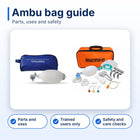
Ambu Bag: Parts, Uses and Safety Guide

Ambu Full Form: What the Name Means and BVM Basics

Ambulance

Anatomy Models
You may also need
FOR YOURecommended for you
Save 11%
Save 30%
Save 20%